
Best Evening Habits for Deep Sleep & Faster Body Recovery

Your evening routine plays a direct role in how well your body repairs itself, balances hormones, and restores energy for the next day. Poor nighttime habits can reduce deep sleep, slow recovery, and increase fatigue—even if you sleep for 7–8 hours.
This Day 30 guide focuses on science-backed evening habits that improve sleep quality, muscle recovery, and mental relaxation.
Why Evening Habits Matter for Recovery
Your body doesn’t “turn off” at night—it shifts into repair mode. During deep sleep:
- Growth hormone is released for muscle recovery
- Brain clears toxins and resets cognitive function
- Cortisol (stress hormone) naturally drops
- Cells repair inflammation and oxidative stress
Poor evening habits (late screen time, heavy meals, irregular sleep) disrupt this process.
According to Sleep Foundation: Sleep Foundation – Sleep Hygiene Guide consistent nighttime routines significantly improve sleep quality and recovery efficiency.
1. Set a Fixed Sleep Schedule
Going to bed and waking up at the same time daily helps regulate your circadian rhythm.
Best practice:
- Sleep window: 10:00 PM – 6:00 AM (ideal range varies slightly by person)
- Avoid shifting bedtime by more than 1 hour on weekends
This stabilizes melatonin production and improves deep sleep cycles.
2. Reduce Screen Exposure 60–90 Minutes Before Bed
Blue light from phones and laptops suppresses melatonin production, delaying sleep onset.
Better alternatives:
- Reading a physical book
- Light stretching
- Journaling or reflection
This simple change alone can improve sleep onset by 20–30%. The CDC’s healthy sleep recommendations also encourage limiting screen exposure before bedtime to support better sleep.
3. Optimize Your Evening Nutrition
Heavy or sugary meals late at night can disrupt digestion and reduce sleep quality.
Evening nutrition rules:
- Eat dinner 2–3 hours before sleep
- Prefer light meals (protein + fiber + healthy fats)
- Avoid high sugar or spicy foods late at night
If you are using supplements for recovery support, explore: Best Sleep & Recovery Supplements
4. Create a Wind-Down Routine (Critical Habit)
A consistent wind-down routine signals your brain that sleep is coming.
Example routine:
- 10 minutes slow breathing
- Light stretching or yoga
- Warm shower
- Low light environment
This reduces cortisol and activates the parasympathetic nervous system (rest-and-digest mode).
5. Use Evening Supplements Strategically
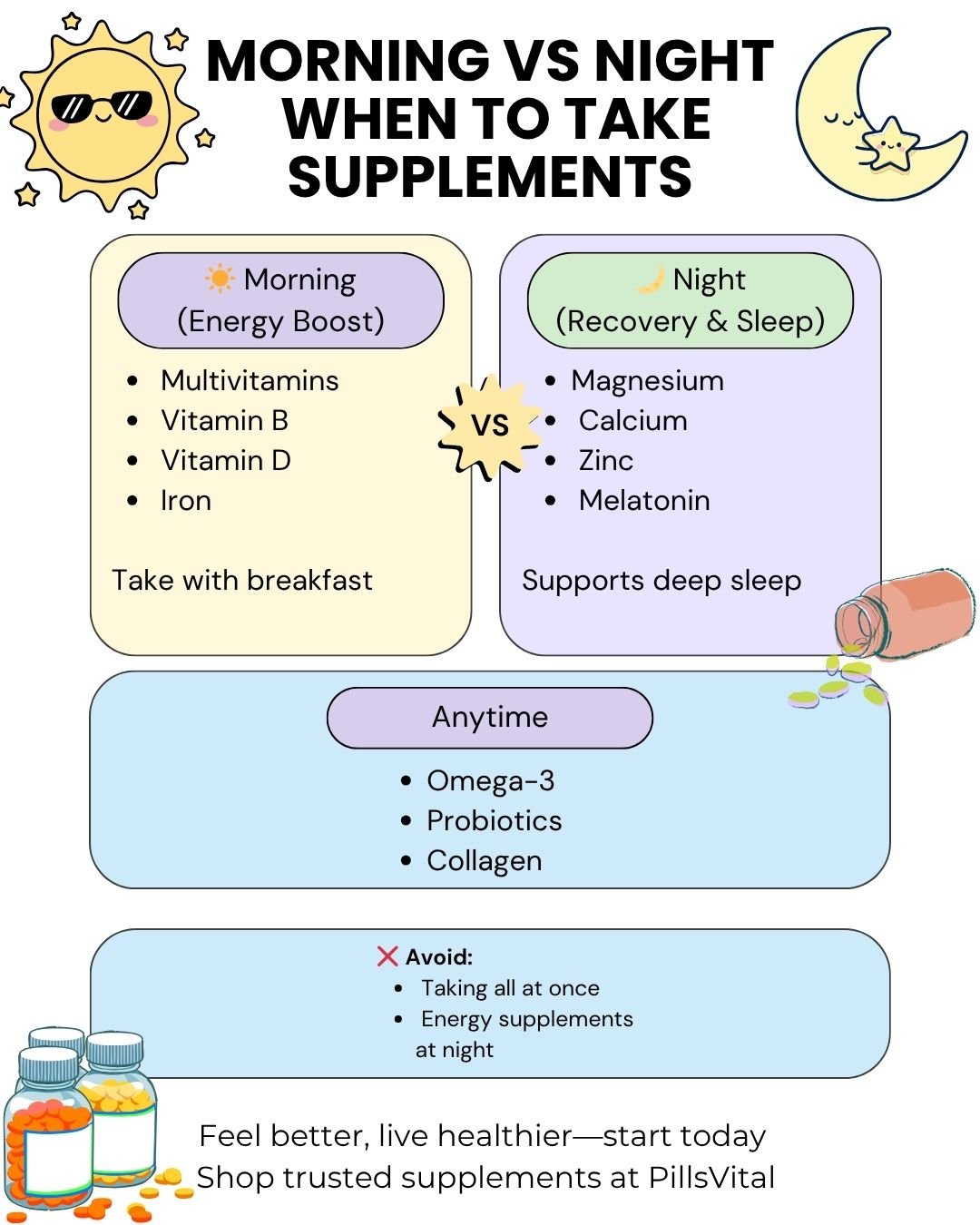
Certain supplements are more effective at night because they support relaxation and recovery. If you’re considering sleep-support supplements, consult a qualified healthcare professional or review trusted product information before use. Learn more from the NIH Office of Dietary Supplements.
Common evening-support supplements include:
- Magnesium (relaxation & muscle recovery)
- L-theanine (calming effect)
- Melatonin (short-term sleep regulation support)
Timing matters:
- Take calming supplements 30–60 minutes before bed
For full timing breakdown: Morning vs Night Supplements
6. Limit Stimulants After Afternoon
Caffeine has a long half-life (5–7 hours), meaning late consumption still affects sleep.
Avoid after 2–3 PM:
- Coffee
- Energy drinks
- Strong tea
- Pre-workout supplements
Even small doses can reduce deep sleep quality.
7. Prepare Your Sleep Environment
Your bedroom should support deep rest, not stimulation.
Ideal conditions:
- Room temperature: 18–22°C
- Dark environment (blackout curtains if possible)
- Minimal noise or use white noise
- Comfortable mattress and pillow support
A controlled environment improves REM sleep consistency.
8. Gentle Movement Before Bed
Light movement helps reduce muscle stiffness and improves circulation.
Good options:
- Stretching
- Yoga (slow flow)
- Mobility exercises
- Short walk after dinner
Avoid intense workouts close to bedtime—they raise adrenaline and delay sleep.
9. Mental Reset (Stress Dump Technique)
Unprocessed thoughts are one of the biggest sleep disruptors.
Try this:
- Write down tomorrow’s tasks
- Note down worries or thoughts
- Close the journal and “park” them for tomorrow
This reduces cognitive overload and helps faster sleep onset.
10. Align with a Daily Health System
Sleep is not isolated—it works best when combined with consistent daily habits.
To build a full structure, explore: Daily Health Supplements Routine
This helps you connect sleep, nutrition, and supplementation into one system.
Sample Evening Routine (Optimized Flow)
- 7:30 PM → Light dinner
- 8:30 PM → Walk or gentle stretching
- 9:00 PM → Reduce lights + no screens
- 9:15 PM → Journaling / stress reset
- 9:30 PM → Calming supplement routine
- 9:45 PM → Warm shower + relaxation
- 10:00 PM → Sleep
Consistency matters more than perfection.
Common Mistakes to Avoid
- Using phone in bed
- Sleeping at inconsistent times
- Eating heavy meals late night
- Ignoring stress before sleep
- Overusing caffeine after afternoon
Even fixing one or two of these can significantly improve recovery.
Final Thoughts
Better sleep starts with better evening habits. Simple changes like following a consistent bedtime, limiting screen time, eating a light dinner, and creating a relaxing bedtime routine can significantly improve sleep quality and overnight recovery. While supplements may provide additional support, they work best alongside healthy lifestyle habits. Start with one or two changes, stay consistent, and you’ll be more likely to wake up feeling refreshed, energized, and ready for the day.
❓ FAQs
1. What are the best evening habits for better sleep?
The best evening habits for better sleep include maintaining a consistent bedtime, avoiding screens 60–90 minutes before bed, eating a light dinner, limiting caffeine in the evening, creating a relaxing bedtime routine, and keeping your bedroom cool, dark, and quiet.
2. How long before bed should I stop using my phone?
Experts recommend avoiding phones, tablets, and other electronic devices at least 60–90 minutes before bedtime. Blue light from screens can reduce melatonin production, making it harder to fall asleep.
3. Can evening supplements improve sleep quality?
Some supplements, such as magnesium, L-theanine, and melatonin, may support relaxation and sleep when used appropriately. However, they should complement healthy sleep habits and be taken according to a healthcare professional’s advice.
4. What foods should I avoid before bedtime?
Avoid heavy meals, spicy foods, sugary snacks, and caffeinated beverages within a few hours of bedtime. These can interfere with digestion and reduce sleep quality.
5. Does exercising at night affect sleep?
Light stretching, yoga, or a gentle walk in the evening can promote relaxation and improve sleep. However, intense workouts close to bedtime may increase alertness and make it more difficult to fall asleep.
6. How many hours of sleep do adults need?
Most healthy adults need between 7 and 9 hours of quality sleep each night to support physical recovery, mental performance, and overall health.
7. How can I improve my recovery while sleeping?
Improving recovery involves following healthy evening habits such as maintaining a regular sleep schedule, reducing stress before bed, eating a balanced dinner, staying hydrated, and creating a comfortable sleep environment.
8. How long does it take to notice improvements from better evening habits?
Many people notice better sleep quality within one to two weeks of consistently following healthy evening habits, although individual results may vary.
🩺 Related Guides


Dr. Emily Carter specializes in evidence-based health education and wellness content. She focuses on simplifying complex medical topics related to cancer awareness, nutrition, preventive healthcare, skincare, and lifestyle wellness for readers worldwide.
This content is reviewed for medical accuracy, clarity, and alignment with current public health research. The article is intended for educational and informational purposes only and should not replace professional medical advice, diagnosis, or treatment.