
Ivermectin vs Fenbendazole Explained: Why These Two Medicines Are Often Compared Online
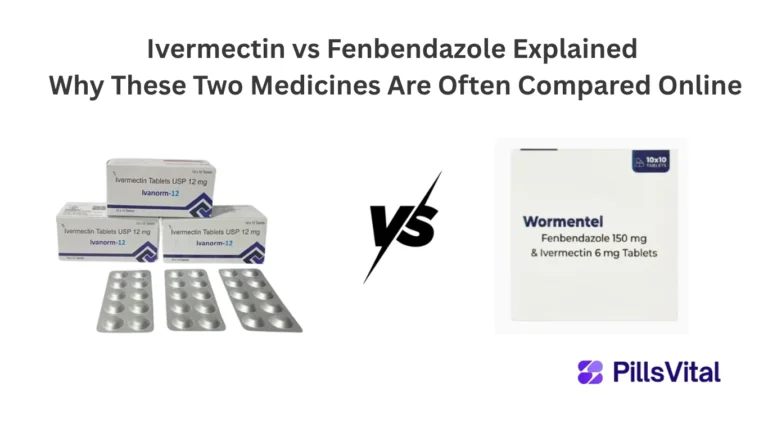
Ivermectin vs fenbendazole is a common comparison in online health searches because both medicines are associated with antiparasitic treatment. However, they are different drugs with different mechanisms, uses, formulations, and safety considerations. Ivermectin has established uses in human medicine for certain parasitic infections, while fenbendazole is primarily a veterinary antiparasitic medicine. Understanding these differences is important before interpreting online claims about their effectiveness, human use, or potential applications.
For official medication safety information, readers can review guidance from the U.S. Food and Drug Administration (FDA).
| Feature | Ivermectin | Fenbendazole |
|---|---|---|
| Drug class | Macrocyclic lactone antiparasitic | Benzimidazole anthelmintic |
| Main medical context | Used in humans for certain parasitic infections | Primarily used as a veterinary dewormer |
| Main biological target | Glutamate-gated chloride channels in susceptible parasites | Parasite β-tubulin/microtubules |
| Human-approved uses | Yes, for specific conditions and formulations | Not generally approved as a human medicine |
| Veterinary use | Yes, in specific veterinary products | Yes |
| Same medicine? | No | No |
| Appropriate human treatment | Depends on diagnosis | Should not be assumed appropriate because of online claims |
| Self-medication | Not recommended | Not recommended |
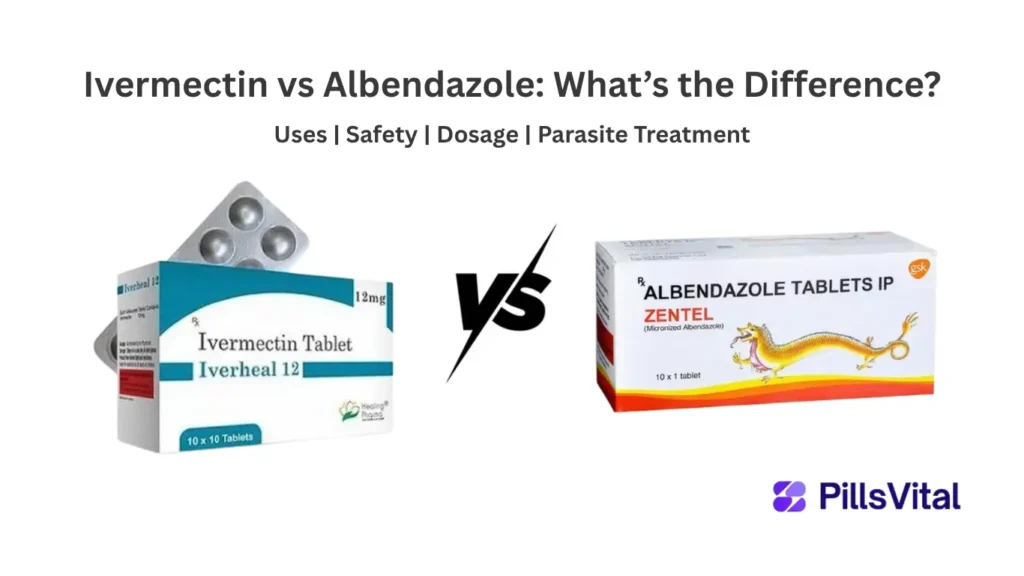
Another useful comparison is Ivermectin vs Albendazole: What’s the Difference?, which explains how two commonly discussed antiparasitic medicines differ.
Why Are People Comparing Ivermectin and Fenbendazole?
One major reason is that both medicines belong to the broader category of antiparasitic drugs. They were developed to target parasites, but they do so in completely different ways.
Another reason is the growing amount of online discussion around repurposed medicines. In recent years, internet communities have become increasingly interested in older medications being studied for new applications.
However, online popularity does not automatically equal proven medical benefit.
That is why understanding the actual differences between these medicines is important before believing claims shared online.
Two Medicines, Two Completely Different Strategies
Although ivermectin and fenbendazole are both used against parasites, their biological approach is very different.
Ivermectin Focuses on Nerve Signaling
Interrupting parasite nerve and muscle communication
Ivermectin primarily affects the nervous system of parasites. It interferes with signals that parasites need for movement and survival.
This causes paralysis in susceptible parasites, allowing the body to eliminate them more easily.
Because of this mechanism, ivermectin is often associated with parasites that depend heavily on nerve signaling for survival.
Fenbendazole Focuses on Cellular Energy
Fenbendazole is a benzimidazole anthelmintic that binds parasite β-tubulin and disrupts microtubule formation/function.
Fenbendazole works differently. Instead of targeting nerve communication, it interferes with the parasite’s ability to absorb nutrients and maintain internal cell structures.
Without energy production, parasites gradually weaken and die.
This different mechanism is why fenbendazole is commonly used for intestinal worms in veterinary medicine.
Why These Medicines Became Popular in Online Discussions
The internet has played a major role in increasing public awareness of both medicines.
Several factors contributed to this:
- Viral social media posts
- Online testimonials
- Alternative health communities
- Discussions about drug repurposing
- Increased curiosity around older medicines
This created a situation where millions of people began searching for information about medications they had never previously heard about.
However, medical researchers often warn that internet popularity can move faster than scientific evidence.
Can Ivermectin Replace Fenbendazole, or Vice Versa?
No. Ivermectin and fenbendazole should not be treated as interchangeable medicines.
Although both are antiparasitic drugs, they belong to different drug classes and have different biological targets. The appropriate treatment depends on the parasite involved, the person’s medical history, the location of the infection, and whether the medicine is approved and appropriate for that particular condition.
Ivermectin is an antiparasitic medicine used in humans for certain specific parasitic infections. Its effects involve ion channels that are important for nerve and muscle function in susceptible parasites.
Fenbendazole belongs to the benzimidazole group of anthelmintic medicines. It binds to parasite β-tubulin and interferes with microtubule function. Fenbendazole is primarily associated with veterinary medicine rather than routine human treatment.
Therefore, a person should not assume that fenbendazole can substitute for ivermectin simply because both appear in online discussions about parasites.
Why the Parasite Matters
Different parasites respond differently to medications. A treatment that works against one organism may be ineffective against another. To learn which parasitic infections ivermectin is actually used to treat, see our What Parasites Does Ivermectin Treat? guide.
For example, doctors may consider factors such as:
- the suspected or confirmed parasite
- where the parasite is located
- symptoms and severity
- laboratory or diagnostic results
- age and body weight
- pregnancy status when relevant
- other medicines being taken
- kidney or liver considerations
- available approved treatment options
This is why choosing an antiparasitic medicine based only on a comparison article, social-media post, or anecdotal experience can be unsafe.
The Difference Between Research Interest and Proven Medical Use
One important issue many articles ignore is the difference between:
- early-stage research
- laboratory findings
- animal studies
- human clinical evidence
A medicine being discussed in research papers does not automatically mean it is approved, effective, or safe for every use discussed online.
Trusted medical organizations such as World Health Organization (WHO) emphasize the importance of evidence-based healthcare decisions and verified scientific research.
Scientific studies usually move through several stages:
- Laboratory testing
- Animal research
- Human clinical trials
- Regulatory review
- Long-term safety monitoring
This process exists because many treatments that look promising early may later prove ineffective or unsafe.
What About Using Fenbendazole Instead of Ivermectin?
There is not enough evidence to assume that veterinary fenbendazole is a suitable human replacement for an approved human antiparasitic treatment.
Veterinary medicines are formulated and regulated for particular animal species. A product designed for dogs, horses, cattle, or another animal should not automatically be considered appropriate for people.
If a person believes they have a parasitic infection, the safer approach is to obtain an appropriate diagnosis and discuss treatment options with a qualified healthcare professional.
Veterinary Medicine Confusion: Why It Matters
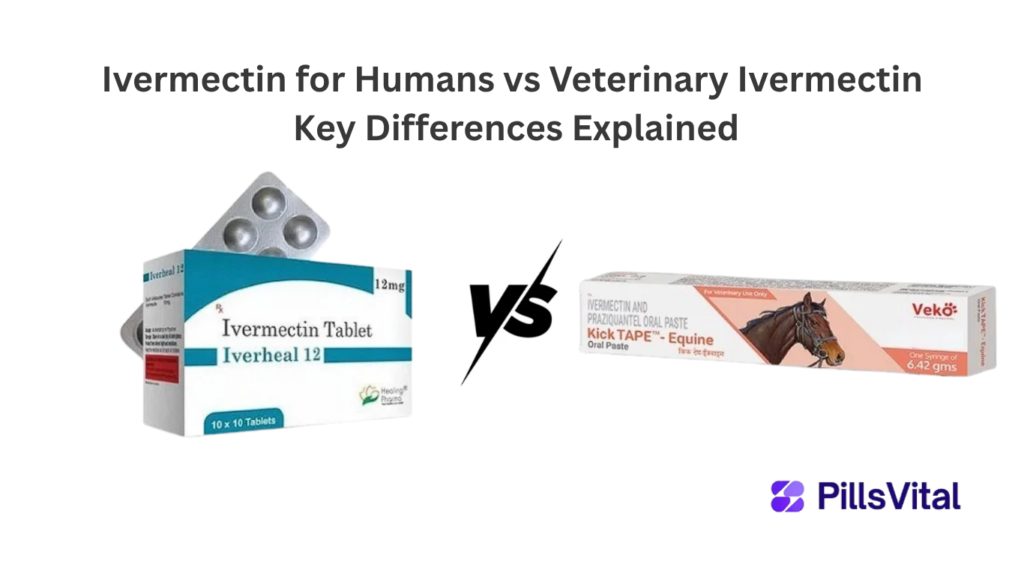
One reason ivermectin vs fenbendazole searches are so common is because both medicines are widely known in veterinary medicine. People interested in the differences between human and animal formulations can also read our Human vs Veterinary Ivermectin: Key Differences Explained guide.
But there is a major difference between:
- veterinary formulations
- pharmaceutical-grade human medicines
Animal medications may contain:
- different concentrations
- different inactive ingredients
- species-specific dosing
- formulations unsuitable for humans
Additional medicine safety information can also be found through MedlinePlus Drug Information.
This is especially important because dosage calculations for animals may differ dramatically from human dosing practices.
Why Parasites Require Different Treatment Approaches
A common misconception online is that all antiparasitic medicines work the same way.
In reality, parasites vary enormously.
Some affect:
- the digestive system
- the skin
- blood circulation
- muscle tissue
- internal organs
Different parasites also have different life cycles, defense mechanisms, and biological structures.
That is why treatment selection depends on:
- accurate diagnosis
- laboratory testing
- medical history
- body weight
- overall health condition
There is no universal “one medicine fixes everything” approach.
Why Drug Repurposing Creates Public Curiosity
Drug repurposing means studying existing medicines for possible new applications.
Researchers explore repurposing because older medicines may:
- already have manufacturing systems
- have existing safety data
- be more affordable
- reach patients faster if proven effective
This scientific approach is not unique to ivermectin or fenbendazole. Many medicines throughout history have been repurposed after additional research.
However, responsible research requires controlled clinical evidence instead of relying on isolated anecdotes or viral claims.
Internet Claims vs Scientific Standards
Health information spreads online faster than ever before.
But scientific standards remain important because:
- testimonials cannot replace clinical trials
- individual experiences vary
- placebo effects can occur
- incorrect self-diagnosis is common
- dosage mistakes can become dangerous
Reliable medical guidance depends on large-scale evidence, not only viral posts.
Why Self-Medication Can Become Risky
Self-medicating with antiparasitic medicines without professional guidance may increase risks. Readers should also understand the potential adverse effects before considering ivermectin; see our Ivermectin Side Effects: Warning Signs, Risks & Safety Guide.
such as:
- incorrect dosing
- delayed diagnosis
- masking serious conditions
- medicine interactions
- liver stress
- toxicity concerns
Some symptoms linked to parasites may actually be caused by completely unrelated medical conditions.
The Mayo Clinic Medication Safety Guide provides general guidance about responsible medicine use and potential risks of improper dosing.
That is why professional evaluation matters before starting treatment.
The Bigger Picture Behind Antiparasitic Medicines
The growing public interest in ivermectin and fenbendazole reflects a larger trend:
people increasingly want to understand medicines, research, and alternative treatment discussions for themselves.
This curiosity can encourage people to learn more about science and healthcare. But it also highlights the importance of critical thinking and evidence-based information.
The safest approach is combining curiosity with trusted medical guidance and reliable scientific sources.
Readers should always rely on trusted medical sources, qualified healthcare professionals, and verified scientific information instead of online rumors or viral health trends.
Ivermectin vs Fenbendazole for Humans
One of the most important distinctions in this comparison is the difference between medicines used in human healthcare and products primarily developed for animals.
Ivermectin has established human medical uses for certain parasitic infections. However, the fact that ivermectin is used in humans does not mean it is appropriate for every parasite or every illness.
Fenbendazole, by contrast, is primarily a veterinary antiparasitic medicine. Its presence in online discussions about human health has led some people to assume that veterinary use proves human effectiveness. It does not.
Is Fenbendazole Approved for Human Use?
Fenbendazole should not be assumed to be an approved human treatment simply because it is a recognized antiparasitic medicine.
Approval and authorization depend on the specific medicine, formulation, indication, dose, and regulatory authority. Evidence from laboratory experiments, animal studies, or veterinary use does not automatically establish that a medicine is safe and effective for humans.
Why Veterinary Fenbendazole Is a Concern
People sometimes encounter fenbendazole through veterinary products and online discussions. Using an animal product for human treatment can create several problems, including uncertainty about formulation, dosing, inactive ingredients, product quality, and whether the medicine has been adequately studied for the intended human condition.
A veterinary label is not a substitute for human medical approval.
What Should Someone Do Instead?
If symptoms suggest a parasitic infection, diagnosis should come before choosing medication whenever possible.
Depending on the suspected infection, healthcare professionals may use medical history, physical examination, laboratory testing, stool testing, imaging, or other diagnostic methods.
The goal is not simply to find an antiparasitic medicine. The goal is to identify the actual cause of symptoms and select a treatment supported by appropriate evidence.
Key Takeaway
Human use should never be inferred from veterinary use.
Ivermectin and fenbendazole should therefore be evaluated according to their specific evidence, approved indications, formulations, and safety information—not simply because both are described online as “dewormers.”
Ivermectin vs Fenbendazole for Cancer: What Does Research Actually Show?
Cancer is another reason these medicines are frequently compared online.
Laboratory research has investigated ivermectin and fenbendazole in cancer-related models, which has contributed to increased online interest. However, laboratory findings are not the same as demonstrating that a medicine successfully treats cancer in people.
Why Laboratory Research Is Not the Same as a Cancer Treatment
A substance may affect cancer cells in a laboratory experiment without producing the same effect in a human body.
Researchers must consider:
- whether the drug reaches the relevant tissue at an effective concentration
- whether the effect occurs in humans
- whether the treatment improves survival or other meaningful outcomes
- whether the potential benefits outweigh adverse effects
- how the medicine interacts with established cancer treatments
These questions require appropriately designed human clinical research.
What About Fenbendazole?
Fenbendazole has attracted attention because of laboratory and online discussions concerning possible anticancer effects. However, interest generated by preclinical research should not be interpreted as proof that fenbendazole is an established cancer treatment.
People with cancer should not replace chemotherapy, immunotherapy, targeted therapy, radiation, surgery, or another prescribed treatment with an unproven veterinary medicine.
What About Ivermectin?
Ivermectin has also been investigated in laboratory research for possible effects relevant to cancer biology. These findings have generated scientific interest, but laboratory or early-stage research does not establish ivermectin as a general cancer treatment.
Why This Distinction Matters
Cancer treatment decisions are particularly important because delaying an evidence-based treatment can allow a cancer to progress.
If you see claims that ivermectin or fenbendazole “cures cancer,” look for evidence from well-designed human clinical trials rather than testimonials, laboratory experiments, or social-media posts.
Research interest is not the same as proven clinical benefit.
Key Takeaway
Human use should never be inferred from veterinary use.
Ivermectin and fenbendazole should therefore be evaluated according to their specific evidence, approved indications, formulations, and safety information—not simply because both are described online as “dewormers.”
Final Thoughts
Ivermectin and fenbendazole may both appear in searches for antiparasitic medicines, but that does not make them interchangeable.
Different drug class + different biological target + different approved uses = different medicines.
Treatment should be selected according to the diagnosed infection and evidence-based medical guidance rather than internet popularity.
The conversation around ivermectin vs fenbendazole is often driven by internet trends, but the real story is more complex.
These medicines:
- work differently
- target different biological processes
- are used in different settings
- carry different safety considerations
Understanding those differences helps separate scientific information from online hype.
When it comes to antiparasitic medicines, informed decisions should always be based on evidence, professional advice, and responsible use rather than social media popularity alone.
❓ FAQs
What is the difference between ivermectin and fenbendazole?
Ivermectin and fenbendazole are different antiparasitic medicines. Ivermectin belongs to the macrocyclic lactone class and has established uses in human medicine for certain parasitic infections. Fenbendazole belongs to the benzimidazole class and is primarily used in veterinary medicine. They have different biological targets and should not be considered interchangeable.
Are ivermectin and fenbendazole the same drug?
No. Ivermectin and fenbendazole are chemically and pharmacologically different medicines. Although both are antiparasitic drugs, they work through different mechanisms and have different approved uses and formulations.
Can ivermectin and fenbendazole be used interchangeably?
No. One should not automatically be substituted for the other. The appropriate antiparasitic treatment depends on the specific parasite, infection site, patient characteristics, and available evidence. A healthcare professional can determine which treatment is appropriate.
Is fenbendazole approved for human use?
Fenbendazole is primarily a veterinary medicine and should not be assumed to be an approved human treatment simply because it is discussed online. Evidence from veterinary use, laboratory research, or animal studies does not automatically establish safety and effectiveness in humans.
Can humans take veterinary fenbendazole?
People should not use veterinary fenbendazole products as a substitute for medicines intended and evaluated for human use. Veterinary products may have different formulations, concentrations, labeling, and quality requirements. Anyone considering treatment for a suspected infection should consult a qualified healthcare professional.
Does fenbendazole treat the same parasites as ivermectin?
Not necessarily. Different parasites have different biological characteristics and may respond differently to medications. Treatment should therefore be based on identifying the suspected or confirmed parasite rather than assuming that all antiparasitic medicines work against the same organisms.
Why are ivermectin and fenbendazole compared for cancer?
Both medicines have appeared in online discussions about potential cancer-related research. However, laboratory or preclinical findings do not establish that either medicine is an effective general cancer treatment in humans. Cancer treatment should be based on appropriate clinical evidence and guidance from qualified oncology professionals.
Is ivermectin a human medicine?
Yes. Ivermectin has established human medical uses for certain parasitic infections and is available in specific human formulations. However, it is not appropriate for every infection or condition, and treatment should follow the indication and directions provided by a qualified healthcare professional.
Why should veterinary medicines not be used by humans?
Veterinary medicines are developed and formulated for specific animal species. Their concentrations, inactive ingredients, dosing instructions, and regulatory approvals may differ from human medicines. Veterinary use therefore does not automatically mean that a product is safe or appropriate for people.
What should I do if I think I have a parasitic infection?
A suspected parasitic infection should ideally be evaluated by a healthcare professional. Diagnosis may involve medical history, examination, laboratory testing, or other investigations depending on the symptoms and suspected organism. Avoid choosing an antiparasitic medicine solely from online comparisons or testimonials.
💊 Related Ivermectin Guides

Dr. Emily Carter specializes in evidence-based health education and wellness content. She focuses on simplifying complex medical topics related to cancer awareness, nutrition, preventive healthcare, skincare, and lifestyle wellness for readers worldwide.
This content is reviewed for medical accuracy, clarity, and alignment with current public health research. The article is intended for educational and informational purposes only and should not replace professional medical advice, diagnosis, or treatment.