🚚 Worldwide Shipping | πŸ”’ Secure Checkout | πŸ’¬ 24/7 Support

Welcome to PillsVital β€” Essential Care, Trusted Globally

Contact Us

+1 (354) 200-7417

Email Support

pillsvital8@gmail.com

Our Location

United States

Parasitic infections affect millions of people worldwide and require targeted treatment based on the specific parasite involved. Two commonly prescribed antiparasitic medications are ivermectin and praziquantel. Although both medications are used to treat parasitic diseases, they work in completely different ways and target different organisms.

Understanding the differences between ivermectin vs praziquantel can help patients better understand their treatment options and why healthcare providers choose one medication over another.

In this guide, we’ll compare the parasites treated, mechanisms of action, side effects, and important considerations for both medications.

What Is Praziquantel?

Praziquantel is an antiparasitic medication primarily used to treat infections caused by flatworms, including tapeworms and flukes.

Common conditions treated with praziquantel include:

  • Schistosomiasis
  • Liver fluke infections
  • Lung fluke infections
  • Certain tapeworm infections
  • Neurocysticercosis (in combination with other treatments)

Praziquantel is considered the first-line treatment for many trematode and cestode infections.

According to praziquantelΒ prescribing information, the medication is commonly used to treat infections caused by tapeworms and flukes.

Ivermectin vs Praziquantel: Quick Comparison

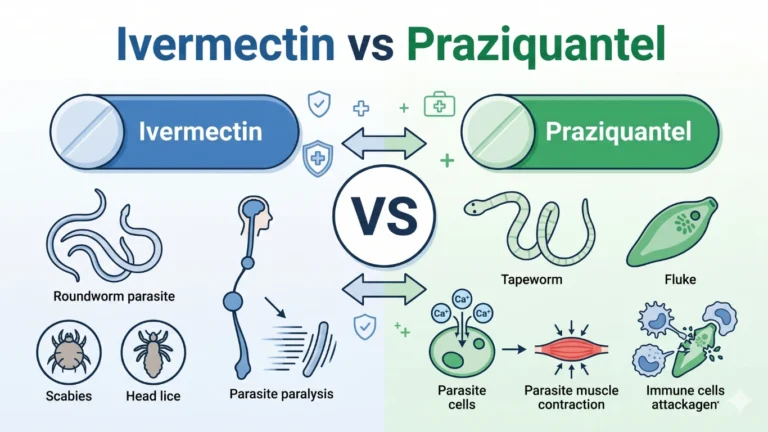
FeatureIvermectinPraziquantel
Drug ClassAntiparasiticAntiparasitic
Primary TargetsNematodes and ectoparasitesTapeworms and flukes
Common UsesStrongyloidiasis, onchocerciasis, scabiesSchistosomiasis, tapeworm infections
MechanismCauses parasite paralysisCauses parasite muscle contraction and death
Prescription RequiredYesYes
Available FormsTablets, topical formsTablets
WHO Essential MedicineYesYes

Parasites Treated: Ivermectin vs Praziquantel

One of the most important differences between ivermectin and praziquantel is the type of parasites they are designed to eliminate. Although both medications are classified as antiparasitic drugs, they target entirely different groups of organisms. Understanding these distinctions helps healthcare providers select the most effective treatment for a specific parasitic infection.

Parasites Treated by Ivermectin

Ivermectin is primarily effective against nematodes (roundworms) and certain external parasites that live on the skin. It has become one of the most widely used antiparasitic medications worldwide because of its broad activity against several medically significant parasites.

Roundworms (Nematodes)

Roundworms are long, cylindrical parasites that can infect various tissues and organs in the human body. Ivermectin works exceptionally well against several species of nematodes.

Strongyloides stercoralis

Strongyloides stercoralis causes strongyloidiasis, an intestinal infection that can persist for decades if left untreated. The parasite enters the body through contaminated soil and migrates through the bloodstream before settling in the intestines. Ivermectin is considered the first-line treatment because it effectively kills the larvae and adult worms responsible for the infection.

Ivermectin is the first-line treatment for infections caused by Strongyloides stercoralis, a roundworm capable of causing chronic intestinal infection.

Onchocerca volvulus

Onchocerca volvulus is the parasite responsible for onchocerciasis, commonly known as river blindness. The infection is transmitted through the bites of infected blackflies and can cause severe skin disease and vision impairment. Ivermectin helps reduce the number of microfilariae (immature worms) circulating in the body, significantly decreasing symptoms and slowing disease progression.

Wuchereria bancrofti

This parasite causes lymphatic filariasis, a disease that can lead to severe swelling of the limbs and genital region. In many mass drug administration programs, ivermectin is used alongside other antiparasitic medications to reduce transmission and control the spread of infection within affected communities.

External Parasites

In addition to treating internal worm infections, ivermectin is highly effective against several parasites that live on the surface of the body.

Scabies Mites

Scabies is caused by the mite Sarcoptes scabiei, which burrows into the skin and causes intense itching and rash. Oral ivermectin is often prescribed for widespread infections, outbreaks in healthcare facilities, or cases that do not respond to topical treatments.

Head Lice

Head lice infestations are common worldwide, particularly among school-aged children. Ivermectin can eliminate lice by disrupting their nervous system and preventing survival.

Body Lice

Body lice live in clothing and bedding rather than directly on the skin. In severe infestations, ivermectin may be recommended as part of a comprehensive treatment plan.

Because ivermectin is active against both internal worms and external parasites, it offers a versatile treatment option for a wide range of parasitic diseases.

Parasites Treated by Praziquantel

Unlike ivermectin, praziquantel is primarily used to treat flatworms, including tapeworms and flukes. These parasites have a different biological structure and require a completely different treatment approach.

Tapeworms (Cestodes)

Tapeworms are segmented flatworms that live within the digestive tract and absorb nutrients from the host.

Taenia Species

Species such as Taenia saginata (beef tapeworm) and Taenia solium (pork tapeworm) can infect humans through contaminated or undercooked food. Praziquantel is highly effective at destroying these parasites and promoting their elimination from the body.

Diphyllobothrium Species

Commonly known as fish tapeworms, these parasites can grow several meters long within the human intestine. Praziquantel remains one of the most reliable treatments for these infections.

Flukes (Trematodes)

Flukes are leaf-shaped flatworms that often infect the liver, lungs, blood vessels, or intestines.

Schistosoma Species

Schistosomiasis affects millions of people worldwide, particularly in tropical and subtropical regions. The disease is caused by blood flukes belonging to the genus Schistosoma. Praziquantel is considered the gold-standard treatment and is recommended by global health organizations for schistosomiasis control programs.

Clonorchis sinensis

Known as the Chinese liver fluke, this parasite infects the bile ducts and may contribute to chronic liver disease if left untreated. Praziquantel effectively removes the parasite and reduces long-term complications.

Paragonimus westermani

This lung fluke infects the respiratory system and may cause symptoms resembling tuberculosis. Praziquantel is highly effective in eliminating the parasite and resolving infection.

Because praziquantel specifically targets flatworms, it is generally not used for the roundworm infections commonly treated with ivermectin.

Mechanism of Action: How Do They Work?

Although both medications are antiparasitic drugs, their mechanisms of action are entirely different. Their unique modes of action explain why each medication is effective against specific groups of parasites.

How Ivermectin Works

Ivermectin works by targeting the nervous and muscular systems of susceptible parasites. It binds selectively to specialized proteins known as glutamate-gated chloride channels, which are found in many nematodes and arthropods but not in humans.

Once ivermectin attaches to these channels, several biological changes occur:

Increased Chloride Ion Flow

The drug causes chloride ions to enter parasite cells at an abnormally high rate. This disrupts the normal electrical balance required for nerve and muscle function.

Nerve Signal Disruption

The excessive chloride influx prevents nerves from transmitting signals properly. As communication between nerve cells breaks down, the parasite loses control over its movements.

Muscle Paralysis

Without proper nerve stimulation, the parasite’s muscles become paralyzed. The organism can no longer move through tissues, attach to host structures, or feed effectively.

Parasite Death or Elimination

Immobilized parasites eventually die or are naturally removed by the host’s immune system and bodily processes.

As a result, affected parasites become unable to survive, reproduce, or continue causing disease. This targeted action makes ivermectin highly effective against many roundworms and external parasites while maintaining a favorable safety profile in humans.

πŸ‘‰ Read more about how ivermectin affects parasites in our article: How Does Ivermectin Work?

How Praziquantel Works

Praziquantel uses a completely different strategy to eliminate parasites. Rather than targeting chloride channels, it affects calcium movement within parasite cells.

Increased Calcium Permeability

Praziquantel rapidly increases the permeability of parasite cell membranes to calcium ions. This sudden influx of calcium triggers a cascade of physiological changes.

Rapid Muscle Contraction

The elevated calcium levels cause intense and sustained contraction of the parasite’s muscles. The worm loses its normal flexibility and becomes immobilized.

Paralysis

As muscular activity becomes uncontrolled, the parasite becomes paralyzed and can no longer maintain its position within the host.

Damage to the Parasite Surface

Praziquantel also damages the parasite’s outer protective covering, known as the tegument. This damage exposes parasite tissues to the host’s immune defenses.

Immune-Mediated Destruction

Once exposed, the parasite becomes vulnerable to attack by the body’s immune system. White blood cells recognize and destroy the damaged organism more effectively.

The combined effects of muscular paralysis and immune system attack ultimately result in parasite death and elimination. This mechanism is particularly effective against tapeworms and flukes, which is why praziquantel remains the preferred treatment for these infections worldwide.

Researchers continue to study the unique mechanism of actionΒ of antiparasitic medications to improve treatment outcomes and parasite control strategies.

Effectiveness Against Different Infections

When Ivermectin Is Preferred

Healthcare providers may choose ivermectin for:

  • Strongyloidiasis
  • River blindness
  • Scabies outbreaks
  • Head lice infestations
  • Certain filarial infections

Its effectiveness against nematodes makes it the preferred option for these conditions.

When Praziquantel Is Preferred

Praziquantel is usually prescribed for:

  • Schistosomiasis
  • Tapeworm infections
  • Liver fluke infections
  • Lung fluke infections

For these infections, praziquantel often achieves cure rates exceeding 80–90% when used appropriately.

Side Effects: Ivermectin vs Praziquantel

Both medications are generally well tolerated, but side effects can occur.

Common Ivermectin Side Effects

Patients may experience:

  • Dizziness
  • Nausea
  • Mild diarrhea
  • Fatigue
  • Headache
  • Abdominal discomfort

In some parasitic infections, symptoms may result from the body’s reaction to dying parasites rather than the medication itself.

πŸ‘‰ Learn more about possible reactions in Ivermectin Side Effects: What to Expect.

Common Praziquantel Side Effects

Reported side effects include:

  • Headache
  • Dizziness
  • Abdominal pain
  • Nausea
  • Fatigue
  • Fever

Most side effects are temporary and resolve within a short period.

Safety Considerations

Ivermectin Precautions

Patients should inform healthcare providers about:

  • Liver disease
  • Neurological disorders
  • Current medications
  • Pregnancy status
  • Breastfeeding

Drug interactions may affect treatment outcomes.

Praziquantel Precautions

Important considerations include:

  • Existing liver conditions
  • History of seizures
  • Pregnancy considerations
  • Concurrent medications

Certain medications may alter praziquantel blood levels.

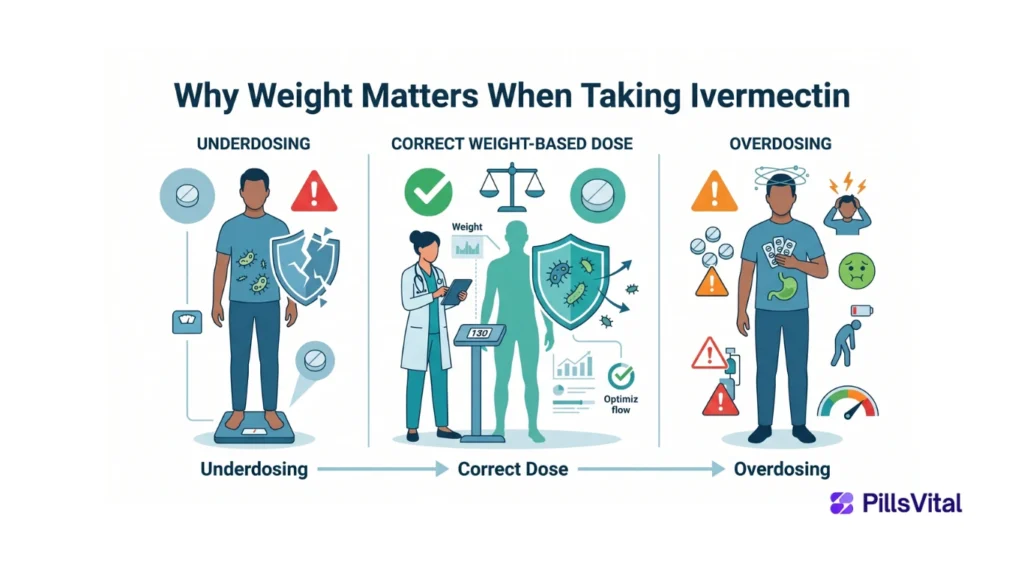
Because ivermectin is a prescription medication, patients should follow healthcare provider instructions and approved dosing recommendations.

Can Ivermectin and Praziquantel Be Used Together?

In some specialized treatment settings, healthcare professionals may prescribe both medications as part of a broader parasite management strategy.

However:

  • Self-medication is not recommended.
  • Treatment plans depend on parasite species.
  • Proper diagnosis is essential.
  • Medical supervision is necessary.

Patients should always follow professional medical advice regarding combination therapy.

Scientific Evidence Supporting Their Use

Both medications are recognized by major global health organizations.

Ivermectin

Extensive research has demonstrated effectiveness against:

  • Strongyloidiasis
  • Onchocerciasis
  • Scabies

Praziquantel

Numerous studies support its use for:

  • Schistosomiasis
  • Tapeworm infections
  • Fluke infections

According to the World Health Organization (WHO) Essential Medicines List, both ivermectin and praziquantel play important roles in the treatment of parasitic diseases worldwide.

Which Medication Is Better?

Neither medication is universally better.

The correct choice depends entirely on:

  • The parasite involved
  • Location of infection
  • Patient health status
  • Clinical diagnosis

Choose Ivermectin For:

βœ“ Strongyloidiasis
βœ“ Scabies
βœ“ Head lice
βœ“ River blindness

Choose Praziquantel For:

βœ“ Schistosomiasis
βœ“ Tapeworm infections
βœ“ Liver flukes
βœ“ Lung flukes

Accurate diagnosis remains the most important factor in selecting treatment.

Conclusion

When comparing ivermectin vs praziquantel, the most important distinction is the type of parasites they treat. Ivermectin is primarily used against roundworms and external parasites, while praziquantel is highly effective against tapeworms and flukes. Their mechanisms of action, treatment applications, and side effect profiles differ significantly, making proper diagnosis essential before treatment begins.

By understanding these differences, patients can better appreciate why healthcare providers select one medication over another and the importance of targeted antiparasitic therapy.

❓ FAQs

Is ivermectin the same as praziquantel?

No. They are different medications that target different types of parasites and work through different biological mechanisms.

Neither is stronger overall. Each is highly effective against the parasites it is designed to treat.

No. Scabies is typically treated with medications such as ivermectin or permethrin.

Generally, ivermectin is not considered a primary treatment for tapeworm infections. Praziquantel is usually preferred.

In many countries, both ivermectin and praziquantel require a prescription from a licensed healthcare provider.

Related Health Resources
Dr Emily Carter PharmD
Written By
Dr. Emily Carter, PharmD
Medical Content Reviewer & Health Research Writer

Dr. Emily Carter specializes in evidence-based health education and wellness content. She focuses on simplifying complex medical topics related to cancer awareness, nutrition, preventive healthcare, skincare, and lifestyle wellness for readers worldwide.

🩺
Medically Reviewed
Reviewed for Accuracy & Readability
Educational & Informational Health Content

This content is reviewed for medical accuracy, clarity, and alignment with current public health research. The article is intended for educational and informational purposes only and should not replace professional medical advice, diagnosis, or treatment.

Leave a Reply

Your email address will not be published. Required fields are marked *