
Ivermectin vs Mebendazole: Which Is Used for Different Parasites?
Written By: PillsVital Health Editorial Team
Last Updated: August 2026
Medical Review: August 2026
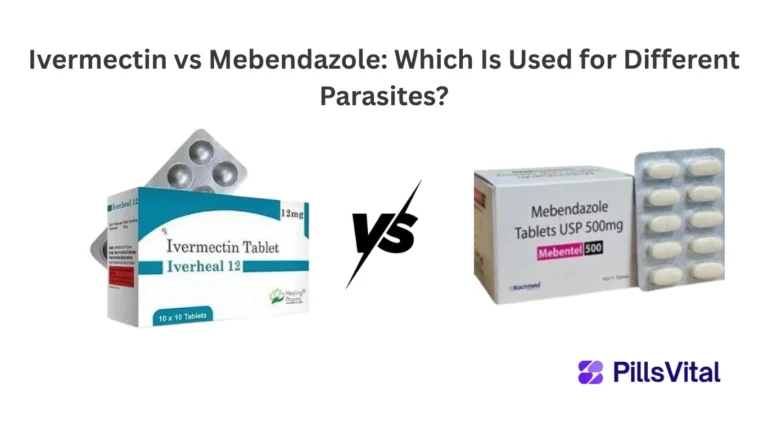
Ivermectin and mebendazole are different antiparasitic medicines used for different types of parasitic infections. They are not the same medicine and should not be considered interchangeable. The appropriate treatment depends on the specific parasite, the location and severity of the infection, the patient’s age and health history, and applicable clinical guidance.
Ivermectin is used for certain parasitic infections, including intestinal strongyloidiasis and onchocerciasis in its FDA-approved oral tablet indications. Some topical ivermectin products have other approved uses, such as treatment of head lice.
Mebendazole is another antiparasitic medicine that is used for certain intestinal worm infections. Because different parasites respond differently to medicines, comparing ivermectin and mebendazole should focus on which parasite is being treated, rather than asking which medicine is universally better.
This guide explains the differences between ivermectin and mebendazole, their commonly recognized uses, parasite-specific considerations, safety issues, and why treatment should be selected according to the diagnosed infection. According to the World Health Organization (WHO) Two commonly prescribed antiparasitic medications are ivermectin and mebendazole.
Ivermectin vs Mebendazole: Quick Comparison
| Feature | Ivermectin | Mebendazole |
|---|---|---|
| What is it? | Antiparasitic medicine | Antiparasitic/anthelmintic medicine |
| Same medicine? | No | No |
| Main role | Used for certain parasitic infections | Used for certain intestinal worm infections |
| Works against every parasite? | No | No |
| Interchangeable? | No | No |
| Appropriate choice | Depends on the diagnosed infection | Depends on the diagnosed infection |
| Human and veterinary products | Human formulations are different from veterinary products | Use the formulation intended for humans |
| Should they automatically be combined? | No | No |
Ivermectin and Mebendazole for Parasites
Ivermectin and mebendazole are both antiparasitic medicines, but they have different clinical uses and are not interchangeable.
The important question is not simply whether ivermectin or mebendazole is “better.” Instead, treatment should be matched to the specific parasite and type of infection. Some parasitic infections respond to ivermectin, while others are more appropriately treated with mebendazole or another antiparasitic medicine.
For example, ivermectin is an established treatment for certain infections caused by Strongyloides stercoralis. The CDC identifies strongyloidiasis as a parasitic disease caused by Strongyloides species, and recent CDC material describes ivermectin as the treatment of choice for strongyloidiasis.
This does not mean ivermectin treats every intestinal worm infection. Likewise, mebendazole should not be assumed to be an alternative for every infection for which ivermectin may be used.
The correct medicine depends on identifying the parasite and selecting treatment appropriate for that infection.
What Is Ivermectin Used For?
Ivermectin is an antiparasitic medicine with several human uses depending on the formulation and indication.
In the United States, FDA-approved oral ivermectin tablets include indications for intestinal strongyloidiasis and onchocerciasis. Certain topical ivermectin formulations have other approved uses, including head-lice treatment.
The medicine should therefore be discussed according to its specific indication rather than described broadly as a treatment for “all parasites.”
Different parasitic infections require different medicines, and a diagnosis or clinical assessment may be necessary before treatment is selected.
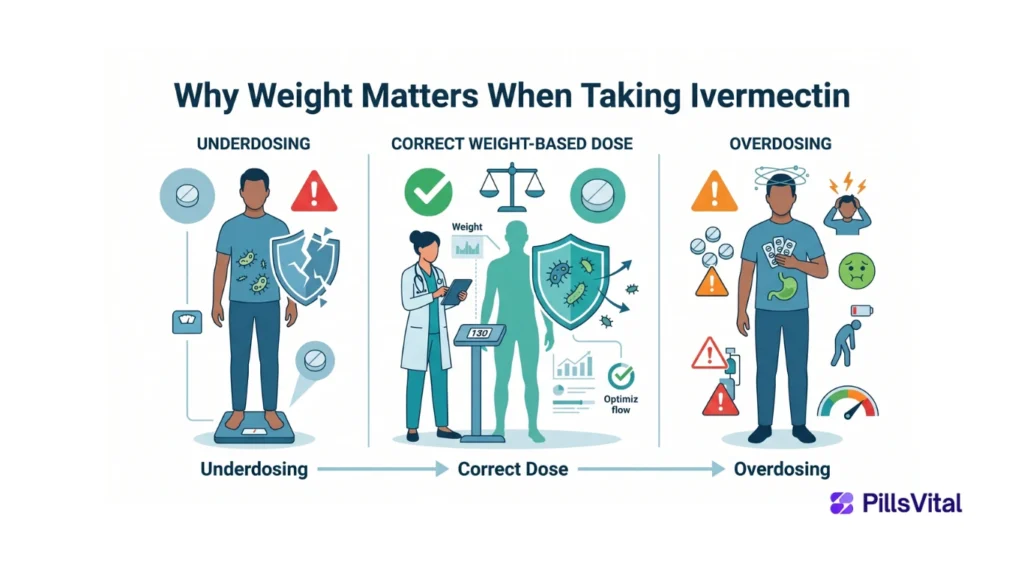
To understand dosage recommendations, read our guide on: Ivermectin Weight-Based Dosing Guide
What Is Mebendazole Used For?
Mebendazole is an antiparasitic medicine used for certain intestinal worm infections.
Its usefulness depends on the particular parasite involved. A person should not assume that mebendazole will treat every type of parasitic infection simply because it is commonly described as a “deworming” medicine.
When comparing mebendazole with ivermectin, the most useful approach is to consider:
- Which parasite is involved?
- Where is the infection located?
- What treatment is recommended for that infection?
- What patient factors need to be considered?
- Are there other medicines or conditions that affect treatment?
Ivermectin vs Mebendazole for Different Parasites
The choice between ivermectin and mebendazole depends primarily on the parasite being treated.
Strongyloidiasis
Ivermectin has an established role in treating strongyloidiasis. CDC information identifies Strongyloides stercoralis as the main cause of human strongyloidiasis, and current CDC-associated literature describes ivermectin as the treatment of choice.
Mebendazole should not automatically be substituted for ivermectin for this infection.
Other Intestinal Worm Infections
Mebendazole is commonly used for certain intestinal worm infections. However, the appropriate treatment varies according to the species of parasite and the clinical circumstances.
Important Point
A search for “ivermectin vs mebendazole” does not provide enough information to determine which medicine an individual should take.
The parasite should be identified first whenever possible, and treatment should follow appropriate medical guidance.
How Do These Medications Work?
Although both ivermectin and mebendazole are used to treat parasitic infections, they eliminate parasites through very different biological mechanisms. Understanding how each medication works can help explain why they are used for different types of infections.
Ivermectin Mechanism
Ivermectin works by targeting the nervous system and muscle function of susceptible parasites. It binds to specific proteins known as glutamate-gated chloride channels, which are found in many parasites but not in humans. If you’re new to this medication and want a broader overview of how it works and common misconceptions, read our guide on The Truth About Ivermectin.
When ivermectin attaches to these channels:
Chloride ions flow into parasite cells.
Nerve signals become disrupted.
Muscle activity is impaired.
The parasite becomes paralyzed.
The organism can no longer feed, move, or reproduce.
The parasite eventually dies and is removed by the body’s natural processes.
Because ivermectin affects nerve and muscle function, it is particularly effective against parasites that rely heavily on these neurological pathways for survival.
What Happens After Taking Ivermectin?
Once absorbed into the bloodstream, ivermectin circulates throughout the body and reaches tissues where parasites may be present.
This allows it to target parasites in locations such as:
- The intestines
- Skin tissues
- Lymphatic tissues
- Bloodstream
- Subcutaneous tissues
This broad distribution is one reason ivermectin is effective against conditions such as:
- Strongyloidiasis
- Onchocerciasis (river blindness)
- Scabies
- Head lice
- Certain roundworm infections
Why Doesn't Ivermectin Harm Human Nerves?
Humans do not possess the same glutamate-gated chloride channels found in parasites. In addition, the blood-brain barrier helps prevent significant amounts of ivermectin from entering the central nervous system under normal circumstances.
This selective action allows ivermectin to target parasites while generally remaining safe when used as prescribed.
Key Advantages of Ivermectin’s Mechanism
- Works against both intestinal and tissue-dwelling parasites
- Acts relatively quickly against susceptible organisms
- Effective for several external parasite infestations
- Can reach parasites located beyond the digestive tract
- Often requires only one or a few doses depending on the infection
Mebendazole Mechanism
Mebendazole works in a completely different way. Instead of attacking the parasite’s nervous system, it targets the parasite’s ability to obtain energy.
Worms depend heavily on glucose as their primary fuel source. Mebendazole interferes with this process by blocking the formation of microtubules inside parasite cells.
Microtubules are important cellular structures that help parasites:
- Absorb nutrients
- Transport materials within cells
- Maintain normal cell function
- Grow and reproduce
When mebendazole disrupts these structures:
- Glucose absorption decreases dramatically.
- Energy production slows.
- The worm’s energy reserves become depleted.
- Cellular functions begin to fail.
- The parasite weakens and eventually dies.
What Happens After Taking Mebendazole?
Unlike ivermectin, mebendazole is only minimally absorbed into the bloodstream. Most of the medication remains within the gastrointestinal tract.
This makes it especially useful for treating worms that live inside the intestines.
Common infections treated with mebendazole include:
- Pinworms (Enterobius vermicularis)
- Roundworms (Ascaris lumbricoides)
- Hookworms
- Whipworms (Trichuris trichiura)
Because the medication stays largely within the digestive system, it directly exposes intestinal worms to high concentrations of the drug.
Why Does Mebendazole Sometimes Take Longer?
Mebendazole does not usually kill worms instantly. Instead, it gradually starves them by preventing nutrient uptake.
As energy stores become exhausted:
- The worm weakens.
- Movement slows.
- Reproduction stops.
- The parasite dies.
- Dead worms are naturally expelled through bowel movements.
This process may take several days depending on the type and severity of infection.
Key Advantages of Mebendazole’s Mechanism
- Highly effective against many intestinal worms
- Targets parasite metabolism rather than nerve function
- Minimal absorption reduces systemic exposure
- Broad activity against common gastrointestinal helminths
- Frequently used in community deworming programs worldwide
Comparing Their Mechanisms
| Feature | Ivermectin | Mebendazole |
|---|---|---|
| Primary Target | Nervous system and muscle cells | Energy metabolism |
| Main Action | Causes paralysis | Blocks glucose uptake |
| Speed of Effect | Often rapid | More gradual |
| Absorption | Absorbed into bloodstream | Mostly remains in intestines |
| Best For | Tissue and intestinal parasites | Intestinal worms |
| External Parasites | Yes | No |
| Common Uses | Strongyloidiasis, scabies, lice | Pinworms, hookworms, whipworms |
Ivermectin vs Mebendazole: Parasite Coverage Comparison
| Parasite Infection | Ivermectin | Mebendazole |
|---|---|---|
| Strongyloides | ✓ Preferred | Limited |
| Onchocerciasis | ✓ Preferred | Not used |
| Scabies | ✓ Effective | Not effective |
| Head Lice | ✓ Effective | Not effective |
| Pinworms | Sometimes | ✓ Preferred |
| Roundworms | ✓ Effective | ✓ Effective |
| Hookworms | Sometimes | ✓ Preferred |
| Whipworms | Limited | ✓ Effective |
Treatment recommendations may vary depending on the parasite species, geographic location, and patient characteristics. Readers can learn more about common parasitic infections through the CDC Parasites Resource Center.
Roundworms: Which Medication Is Better?
Roundworms are among the most common intestinal parasites worldwide.
Both ivermectin and mebendazole may be used for certain roundworm infections.
Ivermectin Advantages
- Effective against some roundworm species
- Often used in mass deworming programs
- Useful for mixed parasitic infections
Mebendazole Advantages
- Strong activity against intestinal roundworms
- Long history of clinical use
- Frequently recommended for routine deworming
For uncomplicated intestinal roundworm infections, mebendazole is often selected because of its broad activity in the gut.
Pinworms: Mebendazole Is Usually Preferred
Pinworms are extremely common, particularly among school-aged children.
Symptoms include:
- Anal itching
- Sleep disturbances
- Irritability
Why Mebendazole Is Commonly Used
- High cure rates
- Simple dosing
- Effective against adult worms
Can Ivermectin Treat Pinworms?
Some studies suggest ivermectin may have activity against pinworms, but it is generally not considered the standard first-line treatment.
For most pinworm infections, mebendazole remains the preferred choice.
Hookworms: Understanding Treatment Differences
Hookworms attach to the intestinal wall and feed on blood.
Potential complications include:
- Iron-deficiency anemia
- Fatigue
- Nutritional deficiencies
Mebendazole for Hookworms
Mebendazole has long been used for hookworm infections and remains a common treatment option.
Ivermectin for Hookworms
Ivermectin may have some effectiveness depending on the species involved but is not usually the primary treatment choice.
For many hookworm infections, mebendazole or related medications are generally favored.
Strongyloidiasis: Where Ivermectin Excels
Strongyloidiasis is caused by Strongyloides stercoralis. This infection can persist for decades and may become life-threatening in immunocompromised individuals. The Centers for Disease Control and Prevention (CDC) .
Why Ivermectin Is Preferred
- High cure rates
- Recommended by many treatment guidelines
- Effective against larval forms
Mebendazole generally shows lower effectiveness against Strongyloides infections.
In these cases, ivermectin is often considered the treatment of choice.
Skin Parasites: A Major Difference
One of the biggest distinctions between ivermectin and mebendazole is treatment of external parasites.
Ivermectin Treats
- Scabies
- Head lice
- Certain skin parasites
Mebendazole Does Not
Mebendazole primarily targets intestinal worms and is not used for skin infestations.
This is an important difference when comparing ivermectin vs mebendazole.
Safety and Side Effects Comparison
Both ivermectin and mebendazole are generally considered well-tolerated when used according to prescribed dosing guidelines. Most side effects are mild, temporary, and resolve without medical intervention. However, the type and frequency of side effects can vary depending on the medication, the infection being treated, the dose administered, and individual patient factors.
Common Ivermectin Side Effects
Because ivermectin is absorbed into the bloodstream and distributed throughout the body, some side effects may affect multiple organ systems.
Dizziness
Dizziness is one of the most commonly reported side effects of ivermectin.
Patients may experience:
- Lightheadedness
- Feeling unsteady when standing
- Mild balance disturbances
- Temporary weakness
Dizziness is often more noticeable:
- Shortly after taking the medication
- When standing up quickly
- In older adults
- During treatment of heavy parasite infections
Patients experiencing dizziness should avoid driving or operating machinery until they know how the medication affects them.
Nausea
Some individuals develop mild stomach upset after taking ivermectin.
Symptoms may include:
- Feeling sick to the stomach
- Reduced appetite
- Occasional vomiting
- General digestive discomfort
These symptoms are usually temporary and improve as the body processes the medication.
Diarrhea
Digestive disturbances can occur during treatment.
Possible symptoms include:
- Loose stools
- Increased bowel movements
- Mild abdominal discomfort
- Temporary digestive changes
In some cases, diarrhea may also result from the body’s response to dying parasites rather than the medication itself.
Fatigue
Some patients report feeling unusually tired after treatment.
Symptoms may include:
- Low energy levels
- Increased need for rest
- Mild weakness
- Reduced physical stamina
Fatigue is often temporary and typically resolves within a few days.
For certain parasitic infections, fatigue may also occur as the immune system responds to parasite elimination.
Mild Skin Reactions
Skin-related side effects are occasionally reported.
Examples include:
- Mild itching
- Rash
- Redness
- Temporary irritation
In patients being treated for parasitic skin infections such as scabies, symptoms may temporarily worsen before improving as parasites are eliminated.
Reactions Related to Parasite Die-Off
In some infections, especially those involving a large parasite burden, symptoms may occur as parasites die and trigger an immune response.
These reactions can include:
- Fever
- Headache
- Muscle aches
- Joint pain
- Swollen lymph nodes
These effects are often associated with the body’s inflammatory response rather than direct medication toxicity.
Common Mebendazole Side Effects
Mebendazole is absorbed only minimally into the bloodstream and acts primarily within the gastrointestinal tract. As a result, most side effects are digestive in nature.
Stomach Discomfort
Mild stomach irritation is one of the most frequently reported side effects.
Patients may experience:
- Digestive uneasiness
- Feeling of fullness
- Mild cramping
- Temporary gastrointestinal discomfort
These symptoms are usually short-lived and resolve without treatment.
Nausea
Some individuals experience mild nausea during treatment.
Symptoms may include:
- Upset stomach
- Temporary loss of appetite
- Mild queasiness
Nausea is generally mild and rarely requires discontinuation of therapy.
Abdominal Pain
Abdominal discomfort may occur as worms become weakened and die.
Patients may notice:
- Mild cramping
- Intermittent stomach pain
- Digestive pressure
- Temporary bowel discomfort
These symptoms are often self-limiting and improve after treatment is completed.
Diarrhea
Changes in bowel habits can occur during treatment.
Symptoms may include:
- Loose stools
- Increased bowel movements
- Temporary digestive upset
This effect is usually mild and resolves as the infection clears.
Headache
A small percentage of patients report headaches while taking mebendazole.
Symptoms may include:
- Mild pressure sensations
- General headache
- Temporary discomfort
Headaches are typically short-lived and improve without specific treatment.
Rare but More Serious Side Effects
Although uncommon, both medications may occasionally cause more significant adverse reactions.
Patients should seek medical attention if they experience:
- Severe allergic reactions
- Difficulty breathing
- Facial swelling
- Severe skin rash
- Persistent vomiting
- Severe abdominal pain
- Confusion or neurological symptoms
- Signs of liver problems such as yellowing of the skin or eyes
Serious reactions are rare but require prompt evaluation.
Which Medication Has Fewer Side Effects?
Both medications have well-established safety records.
Ivermectin
Most commonly causes:
- Dizziness
- Fatigue
- Mild gastrointestinal symptoms
- Temporary skin reactions
Mebendazole
Most commonly causes:
- Stomach discomfort
- Abdominal pain
- Nausea
- Diarrhea
- Headache
Because mebendazole remains largely within the digestive tract, its side effects are typically concentrated in the gastrointestinal system. Ivermectin, which circulates throughout the body, may cause a broader range of mild systemic effects.
Which Medication Works Faster?
The speed of treatment depends on:
- Type of parasite
- Severity of infection
- Dosage used
- Patient factors
Generally:
- Ivermectin often acts rapidly against susceptible parasites.
- Mebendazole may require several days for complete parasite elimination.
Symptom improvement may occur before the parasites are fully eradicated.
Can Ivermectin and Mebendazole Be Taken Together?
Ivermectin and mebendazole are different medicines, and they should not be combined simply because both are used against parasites.
Whether more than one antiparasitic medicine is appropriate depends on the diagnosed infection, the medicines involved, the patient’s health history, and professional medical judgment.
Do not use a combination of antiparasitic medicines as a general “deworming” strategy without appropriate medical advice.
If a healthcare professional has prescribed both medicines, follow the prescribed directions and ask the prescriber or pharmacist about the purpose of each medicine and any potential interactions.
Are Ivermectin and Mebendazole the Same?
No. Ivermectin and mebendazole are different medicines.
They belong to different drug families and have different pharmacologic properties and clinical uses.
Although both may be described as antiparasitic medicines, this does not mean they treat the same infections or can automatically replace one another.
The appropriate medicine depends on the parasite and the individual patient’s circumstances.
Choosing Between Ivermectin and Mebendazole
The best choice depends largely on the parasite being treated.
Ivermectin May Be Preferred For
- Strongyloidiasis
- Onchocerciasis
- Scabies
- Head lice
- Certain roundworm infections
Mebendazole May Be Preferred For
- Pinworms
- Hookworms
- Whipworms
- Common intestinal roundworms
Proper diagnosis is essential because different parasites respond differently to treatment.
Because different parasites respond differently to treatment, obtaining an accurate diagnosis is essential. The WHO guidance on soil-transmitted helminth infections highlights the importance of targeted treatment and prevention strategies.
Which Is Better: Ivermectin or Mebendazole?
There is no single answer because neither medicine is universally better.
The choice depends on the parasite and infection being treated.
For example, ivermectin has an established role in treating strongyloidiasis, while other intestinal worm infections may be treated with different medicines depending on the organism involved.
Therefore, instead of asking:
“Which drug is stronger?”
a more useful question is:
“Which treatment is recommended for the specific parasite causing the infection?”
This approach helps avoid inappropriate self-treatment.
Ivermectin vs Mebendazole: Safety Considerations
Both medicines should be used according to their appropriate human indications and product instructions.
Ivermectin safety
Ivermectin should be used in the appropriate human formulation and under appropriate medical guidance. The FDA warns that veterinary ivermectin products are different from human formulations and should not be used by people. Taking excessive amounts of ivermectin can cause serious toxicity.
Potential symptoms of ivermectin toxicity can include nausea, vomiting, diarrhea, dizziness, low blood pressure, loss of coordination, seizures, and other serious effects.
Mebendazole safety
Mebendazole should also be used according to its approved indication and product instructions. Patients should tell their healthcare professional about other medicines they take and any relevant medical conditions before treatment.
Important
Do not choose between ivermectin and mebendazole based only on an online comparison. If you suspect a parasitic infection, professional evaluation can help determine whether testing or treatment is appropriate.
When Should You Talk to a Healthcare Professional?
Speak with a healthcare professional if:
- You think you have a parasitic infection.
- You have persistent abdominal symptoms or unexplained gastrointestinal problems.
- You have unexplained weight loss or prolonged diarrhea.
- You have symptoms after travel or possible parasite exposure.
- You are unsure which parasite may be causing your symptoms.
- You take other medicines that could affect treatment decisions.
- You are pregnant, planning pregnancy, or treating a child.
- You have an underlying medical condition or weakened immune system.
- You are considering taking more than one antiparasitic medicine.
A healthcare professional can determine whether testing is needed and which treatment is appropriate.
Conclusion
When comparing ivermectin vs mebendazole, neither medication is universally better. Each has unique strengths depending on the type of parasite involved.
Mebendazole is commonly used for intestinal worms such as pinworms, hookworms, and whipworms. Ivermectin is particularly effective for Strongyloides infections, scabies, head lice, and certain other parasitic diseases.
The most effective treatment depends on accurate diagnosis, medical evaluation, and adherence to recommended dosing instructions.
For the most up-to-date public health information regarding parasitic infections, prevention strategies, and treatment recommendations, consult trusted sources such as the CDC Parasites Portal and the World Health Organization (WHO).
❓ FAQs
Are ivermectin and mebendazole the same?
No. They are different antiparasitic medicines with different uses. The appropriate treatment depends on the parasite being treated.
Is ivermectin better than mebendazole?
Not generally. Neither medicine is universally better. The appropriate choice depends on the specific parasitic infection and clinical circumstances.
Can ivermectin and mebendazole be taken together?
They should not be combined automatically. Whether multiple antiparasitic medicines are appropriate depends on the diagnosis and individual circumstances. Follow advice from a qualified healthcare professional.
What parasites does ivermectin treat?
Ivermectin has established human uses for certain parasitic infections, including strongyloidiasis and onchocerciasis in FDA-approved oral tablet indications. Other formulations have additional approved uses.
What parasites does mebendazole treat?
Mebendazole is used for certain intestinal worm infections. The specific indication should be checked against current prescribing information or guidance for the particular infection.
Can humans take ivermectin?
Human ivermectin products exist for specific approved indications. However, veterinary ivermectin products should never be substituted for human products.
Can humans take mebendazole?
Mebendazole is a human antiparasitic medicine used for certain worm infections. Its suitability depends on the individual’s age, condition, diagnosis, and applicable product guidance.
What is the difference between ivermectin and mebendazole?
They are different antiparasitic medicines. Ivermectin has specific uses against certain parasitic infections, while mebendazole is used for certain intestinal worm infections. They are not interchangeable.
Are ivermectin and mebendazole used for parasites in humans?
Yes, both have human medical uses against certain parasitic infections. However, the appropriate medicine depends on the specific parasite and clinical situation.
Can ivermectin and mebendazole treat all parasites?
No. Neither medicine treats every type of parasite. Different organisms require different treatments.
Related Health Resources
-
Covilife MBD 275 (Ivermectin 25mg + Mebendazole 250mg) Tablets
$92.00 – $260.00Price range: $92.00 through $260.00 This product has multiple variants. The options may be chosen on the product page -
Mebendazole 500mg (Mebentel) tablets
$92.00 – $342.00Price range: $92.00 through $342.00 This product has multiple variants. The options may be chosen on the product page -
Ivermectin 20mg (Covilife 20mg) Tablets
$132.00 – $275.00Price range: $132.00 through $275.00 This product has multiple variants. The options may be chosen on the product page -
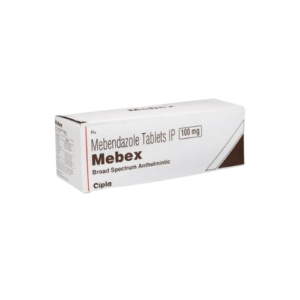
Mebendazole 100mg (Mebex) tablets
$42.00 – $115.00Price range: $42.00 through $115.00 This product has multiple variants. The options may be chosen on the product page
💊 Related Ivermectin Guides



Dr. Emily Carter specializes in evidence-based health education and wellness content. She focuses on simplifying complex medical topics related to cancer awareness, nutrition, preventive healthcare, skincare, and lifestyle wellness for readers worldwide.
This content is reviewed for medical accuracy, clarity, and alignment with current public health research. The article is intended for educational and informational purposes only and should not replace professional medical advice, diagnosis, or treatment.
One Response