
How Quickly Does Ivermectin Start Working? A Day-by-Day Treatment Guide
Updated: Aug 25, 2026
Medical Content Reviewer, on Aug 25, 2026

If you have recently started ivermectin treatment, one of the first questions you may have is: how quickly does ivermectin start working?
The answer is not the same for everyone. Ivermectin begins acting against susceptible parasites after it is taken or applied, but noticeable symptom improvement may take longer. The timeline depends on the parasite being treated, the type of ivermectin used, the severity of the infection, and whether additional treatment is needed.
For some parasitic infections, improvement may become noticeable relatively quickly. With conditions such as scabies, however, itching and skin irritation can continue for days or even weeks after successful treatment because the body’s inflammatory response may persist after the mites have been eliminated.
This guide explains what you can reasonably expect after ivermectin treatment and when persistent symptoms may require medical review.
Important: Ivermectin should be used only for an appropriate diagnosis and according to a healthcare professional’s instructions. Do not increase the dose or repeat treatment simply because symptoms have not disappeared immediately.
How Quickly Does Ivermectin Start Working?
The phrase “starts working” can mean two different things.
First, it refers to when ivermectin begins acting on susceptible parasites. Second, it refers to when you actually notice your symptoms getting better.
These two events do not necessarily happen at the same time.
Ivermectin belongs to a group of medicines that can affect certain parasites. When used for an approved indication, it works by interfering with parasite nerve and muscle activity, ultimately helping eliminate susceptible parasites.
However, killing or disabling parasites does not always mean that itching, inflammation, digestive symptoms, or skin changes disappear immediately.
That is why you should not assume that ivermectin has failed simply because you do not feel completely better shortly after treatment. If you’re using ivermectin for a head-lice infestation, the expected response can differ depending on whether a topical or oral treatment is being used. See our detailed guide to ivermectin for head lice treatment for information about treatment, aftercare, and safety.
How Long Does Ivermectin Take to Work for Parasites?
There is no single treatment timeline that applies to every parasitic infection.
Ivermectin is used for certain human parasitic infections, including conditions caused by some intestinal or tissue-dwelling worms. The expected response depends on the specific infection and treatment regimen.
For some infections, symptoms may gradually improve after treatment begins. In other situations, follow-up testing may be necessary to determine whether the infection has cleared. Ivermectin is approved for specific parasitic infections, including intestinal strongyloidiasis and onchocerciasis; see the FDA information on ivermectin’s approved human uses for additional details.
Your healthcare professional may consider:
- The parasite responsible for the infection
- The severity of the infection
- Your age and body weight
- Other medications you take
- Whether one or more doses are required
- Whether symptoms are actually caused by the parasite being treated
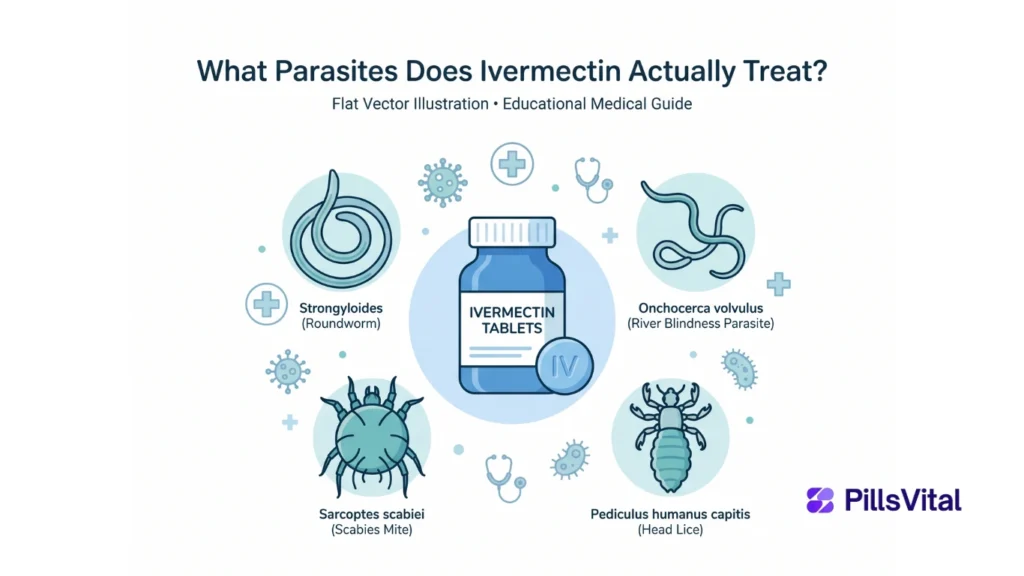
Therefore, how long ivermectin takes to work for parasites should be considered on an infection-by-infection basis rather than as a universal number of hours. Ivermectin is used for certain parasitic infections, but it does not work against every type of parasite. Learn more about what parasites does ivermectin treat and which infections may require different medications. What Parasites Does Ivermectin Treat?
How Long Does Ivermectin Take to Work for Scabies?
Scabies is one of the conditions where people can easily become confused about ivermectin’s effectiveness.
Even after successful treatment, itching and rash may continue because scabies symptoms are partly caused by the body’s immune reaction to mites and their products. For more information about ivermectin and scabies treatment recommendations, see the CDC scabies treatment guidelines.
CDC guidance states that scabies rash and itching can persist for less than two weeks after treatment. Persistent symptoms do not automatically mean that treatment failed.
This means you may still experience:
- Itching
- Redness
- Skin irritation
- Small bumps
- Dry or irritated skin
after treatment.
The important distinction is between persistent symptoms and ongoing infestation.
If live mites are still present, new burrows continue to appear, symptoms are worsening, or symptoms remain significant beyond the expected recovery period, medical reassessment may be appropriate. If you’re specifically using ivermectin for scabies, learn more about the expected recovery timeline and ways to prevent reinfection in our ivermectin for scabies treatment guide.
Why Does Itching Continue After Ivermectin?
This is one of the most common questions after scabies treatment.
The itching associated with scabies is partly an immune response. Even after the mites have been eliminated, inflammation can take time to settle.
Think of it this way:
Ivermectin acts against susceptible mites → mites are eliminated → the skin still needs time to recover.
Therefore, feeling itchy after treatment does not necessarily mean that you need another dose.
Taking extra ivermectin without medical advice can expose you to unnecessary risks.
CDC guidance also notes that persistent symptoms can have several explanations, including treatment failure, reinfection, incorrect treatment, or continuing skin inflammation.
Ivermectin Treatment Timeline: What You May Notice
Everyone responds differently, so this should be considered a general framework rather than a guaranteed schedule.
First 24 Hours
After taking ivermectin as prescribed, you may not notice a dramatic change immediately.
The medicine can begin acting against susceptible parasites, but your symptoms may remain unchanged.
Do not take another dose simply because you do not feel better within the first day.
Days 2–3
Some people may begin noticing gradual changes, depending on the condition being treated.
For skin conditions caused by parasites, itching and irritation can still be present.
For intestinal parasitic infections, symptom improvement may also depend on how much inflammation or irritation the infection caused before treatment.
Days 4–7
At this stage, gradual improvement may become easier to notice in some conditions.
However, the absence of complete symptom relief does not necessarily mean that ivermectin did not work.
With scabies, for example, itching can continue even after successful treatment.
Around 1–2 Weeks
For scabies, this is an important period for evaluating recovery.
CDC guidance indicates that rash and itching can persist for up to about two weeks after treatment.
If symptoms are improving gradually, that can be reassuring.
If symptoms are worsening, new burrows continue to appear, or live mites are observed, contact a healthcare professional for assessment.
Does Ivermectin Work After One Dose?
It depends on the condition being treated.
Some ivermectin treatment regimens involve a single dose, while others require additional doses.
Scabies is a particularly important example. CDC guidance recommends oral ivermectin at 200 micrograms per kilogram, with a repeat dose 14 days later in the standard regimen because oral ivermectin has limited activity against scabies eggs.
This is why you should follow the regimen prescribed for your particular diagnosis instead of assuming that one dose is always sufficient.
Do not repeat or increase ivermectin on your own.
What If I Still Have Symptoms After Ivermectin?
Persistent symptoms can happen for several reasons.
1. The skin needs time to recover
Inflammation may remain even after the parasite has been eliminated.
2. Reinfection occurred
With contagious infestations such as scabies, untreated household or close contacts can contribute to reinfection.
3. The treatment regimen was incomplete
Some conditions require repeated treatment.
4. The original diagnosis may be incorrect
Not every itchy rash or digestive symptom is caused by a parasite.
5. Treatment failure is possible
If symptoms continue or worsen, a healthcare professional may need to reassess the diagnosis and treatment.
For scabies, CDC guidance specifically identifies treatment failure, reinfection, incorrect treatment, and persistent dermatitis among possible explanations for ongoing symptoms.
Signs That Ivermectin May Be Working
Depending on the condition, improvement can include:
- Reduced itching
- Fewer new skin lesions
- Gradual reduction in redness
- Improvement in digestive symptoms
- Reduced parasite-related symptoms
- No appearance of new characteristic lesions
However, symptoms alone cannot always confirm that a parasitic infection has been eliminated.
Some infections require follow-up evaluation or testing.
When Should You Contact a Doctor?
Contact your healthcare professional if:
- Symptoms are getting worse instead of better
- New lesions or burrows continue appearing
- You believe you may have been reinfected
- Symptoms remain significant beyond the expected recovery period
- You develop signs of a secondary skin infection
- You experience concerning medication side effects
- You accidentally take more ivermectin than prescribed
For scabies specifically, persistent symptoms beyond approximately two weeks warrant consideration of treatment failure, reinfection, another skin condition, or another explanation.
Can You Take More Ivermectin If It Isn't Working?
You should not take additional ivermectin simply because symptoms have not disappeared yet.
The correct dose and schedule depend on the condition being treated. Taking excessive ivermectin can cause serious toxicity.
The FDA warns that excessive ivermectin exposure can cause problems including nausea, vomiting, diarrhea, low blood pressure, dizziness, problems with coordination, seizures, coma, and potentially death.
If you think your treatment has not worked, speak with a healthcare professional rather than changing the dose yourself.
Ivermectin and Veterinary Products: An Important Safety Warning
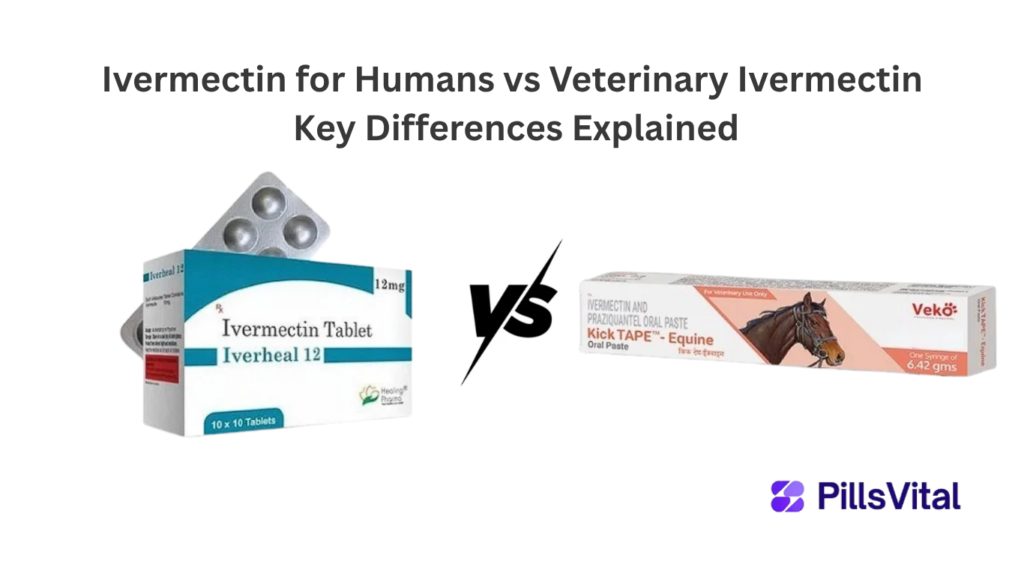
Human and veterinary ivermectin products are not interchangeable.
The FDA specifically warns against using animal ivermectin products in people because these formulations may have different concentrations, ingredients, and dosing instructions.
Only use an ivermectin product intended for humans and prescribed or recommended for your specific medical situation.
Does Ivermectin Treat COVID-19?
No.
Ivermectin should not be used to prevent or treat COVID-19.
The FDA states that ivermectin is not authorized or approved for preventing or treating COVID-19 in humans and that available clinical trial data do not establish it as an effective treatment for COVID-19.
This is important because online discussions sometimes mix approved antiparasitic uses with unsupported uses.
Frequently Asked Questions
How quickly does ivermectin start working?
Ivermectin begins acting against susceptible parasites after administration, but the time until noticeable symptom improvement varies by condition. Symptoms may persist even after the underlying parasite has been treated.
How long does ivermectin take to work for scabies?
Scabies symptoms do not necessarily disappear immediately. CDC guidance notes that itching and rash may persist for up to about two weeks after treatment.
How long does ivermectin take to work for parasites?
There is no universal timeline. The expected response depends on the particular parasite, infection severity, treatment regimen, and individual response.
Is itching after ivermectin normal?
It can happen, particularly after scabies treatment. Persistent itching does not automatically mean the treatment failed because inflammation can continue after the mites have been eliminated.
Should I take another ivermectin dose if I still itch?
Not unless your prescribed treatment plan calls for another dose or a healthcare professional advises you to take one.
What happens if ivermectin does not work?
A healthcare professional may need to determine whether the diagnosis was correct, whether reinfection occurred, whether the treatment regimen was completed correctly, or whether another treatment is necessary.
The Bottom Line
So, how quickly does ivermectin start working?
Ivermectin can begin acting against susceptible parasites after treatment, but the time needed to feel better varies considerably by the condition being treated.
For scabies, in particular, itching and rash can continue for up to around two weeks after treatment even when treatment has been successful.
The safest approach is to follow the prescribed ivermectin regimen, avoid taking extra doses without medical advice, and seek professional evaluation if symptoms worsen, persist unexpectedly, or suggest ongoing infection.
Ivermectin is a medication with specific approved uses—not a general treatment for every infection or illness. Using the correct formulation, dose, and treatment schedule is essential for both safety and effectiveness.
Related Health Resources
-
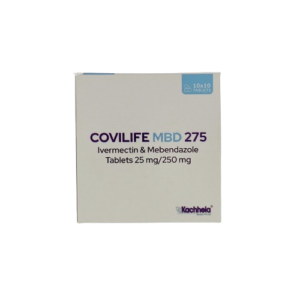
Covilife MBD 275 (Ivermectin 25mg + Mebendazole 250mg) Tablets
$92.00 – $260.00Price range: $92.00 through $260.00 This product has multiple variants. The options may be chosen on the product page -
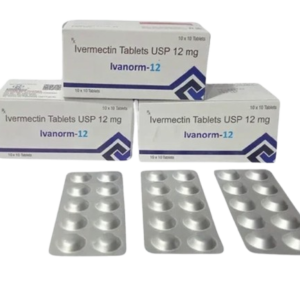
Ivermectin 12mg (Ivanorm) Tablet
$78.00 – $250.00Price range: $78.00 through $250.00 This product has multiple variants. The options may be chosen on the product page -
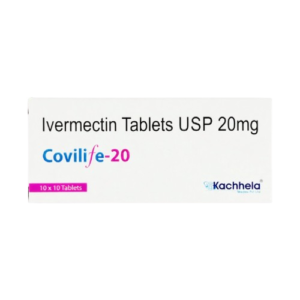
Ivermectin 20mg (Covilife 20mg) Tablets
$132.00 – $275.00Price range: $132.00 through $275.00 This product has multiple variants. The options may be chosen on the product page -
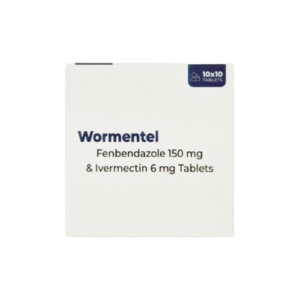
Wormentel DUO 156 (Fenbendazole 150mg & Ivermectin 6mg) Tablets
$92.00 – $260.00Price range: $92.00 through $260.00 This product has multiple variants. The options may be chosen on the product page
💊 Related Ivermectin Safety & Treatment Guides

Dr. Emily Carter specializes in evidence-based health education and wellness content. She focuses on simplifying complex medical topics related to cancer awareness, nutrition, preventive healthcare, skincare, and lifestyle wellness for readers worldwide.
This content is reviewed for medical accuracy, clarity, and alignment with current public health research. The article is intended for educational and informational purposes only and should not replace professional medical advice, diagnosis, or treatment.