
Allergy Symptoms and Treatment: Causes, Relief & Medicines
Written By: PillsVital Health Editorial Team
Last Updated: August 2026
Medical Review: August 2026
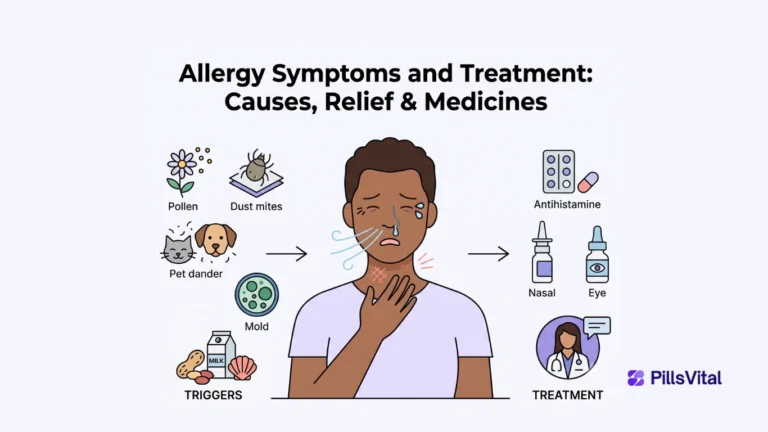
Sneezing every morning. A nose that stays blocked or keeps running. Itchy, watery eyes when you go outside. A rash that appears after using a particular product. Hives after eating a certain food.
These symptoms can all occur with allergies—but they don’t necessarily have the same cause or require the same treatment.
Understanding allergy symptoms and treatment is therefore about more than making a list of symptoms or naming an antihistamine. The useful question is:
What symptoms are you experiencing, what is likely triggering them, how severe are they, and which treatment approach matches that pattern?
Allergies occur when the immune system reacts to a substance that is usually harmless to most people. Depending on the allergen and route of exposure, the reaction can affect the nose, eyes, skin, lungs, digestive system, or multiple parts of the body. Most allergic symptoms are uncomfortable rather than dangerous, but some reactions can become medical emergencies.
This guide explains the different patterns of allergy symptoms, how doctors distinguish allergies from similar conditions, available treatment options, commonly used allergy medicines, and when self-care is no longer appropriate.
Medical disclaimer: This article provides general health information and is not a diagnosis or personalized treatment recommendation. Medicine selection and dosing should be based on the individual’s age, medical history, symptoms, other medicines, and healthcare professional or product guidance.
Allergy Symptoms at a Glance
The easiest way to understand allergies is to look at where the symptoms occur and what happens after exposure.
| Symptoms | Possible allergic pattern |
|---|---|
| Sneezing + clear runny nose | Allergic rhinitis |
| Itchy nose + watery eyes | Environmental/seasonal allergy |
| Congestion + postnasal drip | Allergic rhinitis |
| Itchy, raised skin welts | Hives |
| Red, itchy skin after contact | Contact allergy |
| Vomiting + hives after food | Possible food allergy |
| Swelling of lips/tongue/throat | Potentially serious allergic reaction |
| Wheezing + breathing difficulty | Possible severe allergic reaction or asthma-related problem |
| Symptoms after taking a medicine | Possible drug allergy |
These patterns are clues, not a diagnosis. Several non-allergic conditions can produce similar symptoms.
What Do Allergy Symptoms Feel Like?
Allergy symptoms vary according to the allergen and the part of the body exposed.
1. Nose and Sinus Symptoms
Allergic rhinitis is one of the most common allergy patterns.
Symptoms can include:
- Repeated sneezing
- Clear runny nose
- Stuffy or blocked nose
- Itchy nose
- Postnasal drip
- Itchy throat
- Reduced sense of smell
- Nasal irritation
A particularly useful clue is the combination of itching + sneezing + clear nasal discharge, especially when symptoms repeatedly occur after exposure to pollen, dust mites, pets, or other environmental triggers.
Cleveland Clinic notes that allergic rhinitis can occur seasonally or throughout the year depending on the allergen involved.
What treatment is commonly used?
Depending on the severity and pattern, treatment may include:
- Antihistamines
- Intranasal corticosteroids
- Nasal antihistamines
- Saline nasal treatments
- Allergen avoidance
- Immunotherapy for selected patients
The American Academy of Allergy, Asthma & Immunology lists antihistamines and nasal corticosteroids among commonly used treatments for allergic rhinitis and notes that immunotherapy can provide longer-term relief for appropriate patients.
2. Eye Allergy Symptoms
Allergies can cause a recognizable eye-symptom pattern.
You may experience:
- Itchy eyes
- Watery eyes
- Redness
- Burning or irritation
- Swollen eyelids
When eye itching occurs together with sneezing and nasal symptoms, an allergic cause becomes more plausible.
What helps allergy-related eye symptoms?
Depending on the cause, treatment may include:
- Avoiding the suspected allergen
- Artificial tears
- Cold compresses
- Allergy-specific eye drops
- Antihistamine treatment
Persistent eye pain, vision changes, significant light sensitivity, or severe redness should not automatically be attributed to allergies.
3. Skin Allergy Symptoms
Allergic skin reactions don’t all look alike.
Hives
Hives are raised, itchy areas that can appear suddenly and may move from one part of the body to another.
Contact dermatitis
Contact reactions generally occur where the skin has been exposed to a triggering substance and may produce:
- Redness
- Itching
- Rash
- Swelling
- Blisters in some cases
Possible triggers include certain metals, cosmetics, fragrances, latex, plants, and chemicals.
Treatment
Treatment depends on the cause and severity and may involve:
- Avoiding the trigger
- Skin care measures
- Antihistamines for appropriate itching-related symptoms
- Topical treatments prescribed or recommended for the specific reaction
If a rash repeatedly occurs without an obvious cause, identifying the trigger is often more valuable than repeatedly treating the symptom.
4. Food Allergy Symptoms
Food allergies deserve particular attention because reactions can affect several body systems.
Possible symptoms include:
- Tingling or itching in the mouth
- Hives
- Facial swelling
- Swelling of the lips or tongue
- Abdominal pain
- Vomiting
- Diarrhea
- Breathing problems
- Dizziness or fainting
Mayo Clinic lists foods, medicines, insect stings and airborne allergens among common allergy triggers and notes that food reactions can range from mild symptoms to anaphylaxis.
A suspected food allergy should not be repeatedly tested at home by deliberately eating the suspected food.
5. Medication Allergy Symptoms
A reaction after taking a medicine does not automatically mean you have a drug allergy.
A medication can cause:
- A predictable side effect
- Intolerance
- An adverse reaction
- A genuine immune-mediated allergy
Possible allergic symptoms include:
- Hives
- Itching
- Swelling
- Wheezing
- Breathing difficulty
- Other systemic symptoms
If you develop a suspected allergic reaction after starting a medicine, contact a healthcare professional rather than simply stopping and restarting the medicine without advice.
Mayo Clinic identifies some antibiotics, including penicillin-based medicines, among medications that can trigger allergic reactions.
Allergy Symptoms vs Cold: How Can You Tell the Difference?
This is one of the most useful questions for someone searching for allergy symptoms and treatment.
Allergies and respiratory infections can overlap significantly.
| Feature | More suggestive of allergy | More suggestive of infection |
| Repeated sneezing | ✓ | ✓ |
| Itchy eyes | ✓ | Less typical |
| Itchy nose | ✓ | Less typical |
| Clear runny nose | ✓ | ✓ |
| Fever | Usually absent | More suggestive |
| Body aches | Less typical | More suggestive |
| Symptoms after pollen/dust exposure | ✓ | No |
| Symptoms recurring in the same season | ✓ | No |
| Symptoms improve after leaving a trigger | ✓ | No |
| Symptoms spreading among household members | No | More suggestive of infection |
This isn’t a diagnostic test. If symptoms are persistent, severe, unusual, or worsening, medical assessment may be appropriate.
Why Do Allergy Symptoms Keep Coming Back?
One reason allergies can be frustrating is that symptom relief does not necessarily remove the underlying trigger.
For example:
Pollen exposure → immune response → histamine release → sneezing/runny nose → antihistamine reduces symptoms → new pollen exposure → symptoms return
The same concept can apply to:
Dust mites → pet allergens → mold → seasonal pollen
This is why effective allergy management often combines trigger reduction with symptom control rather than relying exclusively on medication.
How Are Allergies Diagnosed?
If you repeatedly experience symptoms but don’t know what is causing them, identifying the allergen can be more useful than guessing.
A healthcare professional may consider:
Medical history
You may be asked:
- When did symptoms start?
- How often do they occur?
- Are they seasonal?
- Do they happen at home or work?
- Do pets make them worse?
- What foods or medicines were involved?
- How quickly do symptoms appear after exposure?
Skin-prick testing
A small amount of suspected allergen is introduced to the skin and monitored for a reaction.
Blood testing
Blood tests can help identify immune sensitization to particular allergens.
Patch testing
Patch testing can be useful when a contact skin allergy is suspected.
Food or drug challenge
In selected situations, a specialist may use controlled exposure testing.
The NHS notes that allergy evaluation can involve skin-prick tests, blood tests, or controlled dietary approaches depending on the suspected allergy.
Allergy Symptoms and Treatment: What Are the Main Options?
There is no single “best allergy medicine” for every person.
Treatment generally falls into several categories.
1. Allergen Avoidance
If you know what triggers your symptoms, reducing exposure can be one of the most effective strategies.
For example:
Pollen
- Check pollen levels.
- Limit exposure when counts are high.
- Shower after spending significant time outdoors.
- Change clothes after outdoor activities.
Dust mites
- Wash bedding regularly.
- Reduce dust accumulation.
- Clean sleeping areas frequently.
- Consider appropriate allergen-control measures.
Pets
- Keep pets away from sleeping areas if they trigger symptoms.
- Clean surfaces regularly.
- Reduce exposure where practical.
Food
For confirmed food allergies, avoiding the triggering food is essential.
2. Antihistamines
Antihistamines are among the most commonly used medicines for allergy symptoms.
They work by blocking the effects of histamine, one of the chemicals involved in allergic reactions.
Depending on the medicine and individual circumstances, antihistamines can help with:
- Sneezing
- Itching
- Runny nose
- Watery eyes
- Hives
Examples include:
- Fexofenadine
- Cetirizine
- Loratadine
- Other antihistamines
Some antihistamines are more likely to cause drowsiness than others.
Cleveland Clinic lists fexofenadine, loratadine and cetirizine among antihistamines used for allergy symptoms.
A useful buyer-intent question:
Should you choose an antihistamine simply because it is marketed as “strong”?
Not necessarily.
The more useful considerations include:
- Which symptom are you treating?
- How often do symptoms occur?
- Does the medicine cause drowsiness?
- What other medicines do you take?
- Do you have other medical conditions?
- Is the product appropriate for your age?
That is a much better framework than claiming one antihistamine is universally “best.”
3. Nasal Corticosteroids
For persistent allergic rhinitis, nasal corticosteroids can be an important treatment option.
They work primarily by reducing inflammation inside the nasal passages.
They may help with:
- Nasal congestion
- Runny nose
- Sneezing
- Nasal itching
They are different from oral corticosteroids and should not be treated as interchangeable medicines.
The AAAAI includes nasal corticosteroid sprays among standard treatment options for allergic rhinitis.
4. Leukotriene Modifiers
Some patients may be prescribed medicines that target leukotriene pathways.
Montelukast is an example.
It may be considered in particular situations, including some patients with allergic rhinitis or asthma-related conditions.
However, it is not simply a replacement for an antihistamine for every person with allergies.
Its suitability should be discussed with a healthcare professional.
5. Immunotherapy
Medication can control symptoms, but immunotherapy takes a different approach.
Instead of simply suppressing symptoms, allergen immunotherapy gradually exposes an appropriate patient to controlled amounts of a specific allergen with the aim of reducing sensitivity over time.
Forms include:
- Allergy shots
- Sublingual immunotherapy tablets
AAAAI describes allergy shots as a long-term treatment that can reduce symptoms for many people with allergic rhinitis, allergic asthma, conjunctivitis and certain insect-sting allergies.
Immunotherapy must be selected and administered under appropriate medical supervision.
6. Emergency Treatment for Severe Allergic Reactions
This is where allergy treatment becomes completely different from ordinary symptom relief.
Anaphylaxis can cause:
- Throat or tongue swelling
- Difficulty breathing
- Wheezing
- Widespread hives
- Vomiting
- Severe dizziness
- Low blood pressure
- Loss of consciousness
Anaphylaxis is a medical emergency.
Antihistamines should not be treated as a substitute for epinephrine in anaphylaxis.
People who have been prescribed an epinephrine auto-injector should follow their emergency action plan and seek emergency medical care immediately.
Mayo Clinic and Cleveland Clinic both emphasize emergency epinephrine and urgent medical evaluation for anaphylaxis.
Which Allergy Treatment Fits Which Symptom?
This is where the article becomes genuinely useful to a buyer researching treatment options.
| Main problem | Common treatment approaches |
| Sneezing | Antihistamines, nasal treatments, trigger avoidance |
| Runny nose | Antihistamines, nasal treatments |
| Nasal congestion | Nasal corticosteroids and other appropriate treatments |
| Itchy/watery eyes | Allergy eye drops, antihistamines, trigger avoidance |
| Hives/itching | Antihistamines and evaluation of trigger |
| Contact rash | Remove trigger + appropriate skin treatment |
| Persistent allergic rhinitis | Combination treatment and possible specialist evaluation |
| Recurrent severe reactions | Specialist assessment + emergency action plan |
| Confirmed severe allergy | Avoidance + prescribed emergency treatment |
| Difficult-to-control allergies | Specialist assessment and possible immunotherapy |
What If Allergy Symptoms Don't Go Away?
Persistent symptoms don’t always mean that your allergy medicine isn’t strong enough.
Several possibilities should be considered:
You’re still being exposed to the allergen
Medication may reduce symptoms while exposure continues.
The trigger hasn’t been identified
You may be treating symptoms without knowing their cause.
The condition isn’t actually an allergy
Colds, sinus problems, irritants, asthma, medication effects, skin conditions and other problems can resemble allergies.
Treatment isn’t being used correctly
Some treatments work differently depending on how and when they are used.
You have multiple triggers
A person may react to pollen during one season and indoor allergens during another.
Persistent symptoms are therefore a reason to reconsider the diagnosis and treatment strategy—not simply increase medication on your own.
When Should You See an Allergist?
Consider professional evaluation if:
- Symptoms repeatedly interfere with sleep.
- Allergy symptoms affect work or school.
- Symptoms continue despite appropriate treatment.
- You don’t know what is triggering your symptoms.
- You experience repeated unexplained hives.
- You suspect a food allergy.
- You suspect a medication allergy.
- Symptoms repeatedly affect breathing.
- You have experienced a severe allergic reaction.
The NHS recommends seeing a doctor if you think you or your child may have an allergy, with testing or specialist referral used when appropriate.
Allergy Symptoms That Should Never Be Ignored
Not every allergic symptom is an emergency.
But breathing difficulty, throat swelling, severe dizziness or fainting, or rapidly progressing symptoms involving multiple body systems can indicate anaphylaxis.
If these symptoms occur after exposure to a known or suspected allergen:
Seek emergency medical assistance immediately.
Do not wait to see whether an antihistamine works.
How to Build a Personal Allergy Management Plan
A practical allergy-management plan can be broken into five steps:
Step 1: Identify the pattern
Write down:
- Symptoms
- Timing
- Location
- Season
- Food exposure
- Medication exposure
- Pet exposure
- Environmental exposure
Step 2: Identify the likely trigger
If the pattern is unclear, discuss allergy testing with a healthcare professional.
Step 3: Reduce exposure
Avoid or reduce contact with the identified allergen wherever practical.
Step 4: Match treatment to symptoms
A person whose main problem is sneezing and itching may require a different approach from someone whose main problem is persistent nasal congestion.
Step 5: Know your emergency plan
Anyone with a history of severe allergic reactions should know which symptoms require emergency action and how to use prescribed emergency medication.
Frequently Asked Questions
What are the most common allergy symptoms?
Sneezing, itching, runny or blocked nose, watery eyes, skin reactions and coughing are common. Food, medication and insect allergies can produce additional symptoms, including gastrointestinal symptoms and swelling.
What is the best treatment for allergy symptoms?
There is no universally best treatment. The appropriate option depends on the allergy, symptoms, severity, age, other health conditions and medicines being taken.
What is the best allergy medicine for sneezing and a runny nose?
Antihistamines are commonly used for sneezing and runny nose caused by allergies. Persistent nasal symptoms may require a different or additional treatment approach.
Why are my allergy symptoms worse at night?
Indoor allergen exposure, including dust mites or pet allergens, may contribute in some people. Nasal congestion can also feel more noticeable when lying down.
Can allergies cause a stuffy nose without sneezing?
Yes. Nasal congestion can occur with allergic rhinitis, although congestion has many possible causes.
Can allergy symptoms last all year?
Yes. Seasonal pollen isn’t the only cause of allergies. Indoor allergens such as dust mites, mold and animal allergens can contribute to year-round symptoms.
Can allergy symptoms disappear and come back?
Yes. Symptoms may fluctuate depending on exposure to the allergen, season, environment and treatment.
Do antihistamines cure allergies?
Antihistamines can relieve many allergy symptoms, but they generally don’t eliminate the underlying allergic sensitivity.
Are allergy medicines safe for everyone?
No medicine is appropriate for everyone. Age, pregnancy, medical conditions, allergies, other medicines and the specific product all matter.
When should allergy symptoms be treated as an emergency?
Breathing difficulty, throat or tongue swelling, fainting, severe dizziness, or rapidly progressing symptoms can indicate a severe allergic reaction and require emergency medical attention.
Bottom Line: Finding the Right Allergy Treatment
The most useful way to approach allergy symptoms and treatment is to stop thinking of allergies as one condition with one medicine.
The treatment decision depends on the pattern:
Sneezing + itching + runny nose → consider allergic rhinitis and appropriate symptom treatment.
Itchy/watery eyes → consider eye-focused allergy management.
Hives → identify possible triggers and consider appropriate symptom relief.
Symptoms after food or medication → professional evaluation may be important.
Persistent symptoms despite treatment → reassess the trigger and diagnosis.
Breathing difficulty or throat swelling → treat as a potential emergency.
For people researching allergy medicines, the goal should not simply be to find the “strongest” product. The better question is which treatment is appropriate for the specific symptoms, trigger and individual situation?
That distinction makes allergy treatment safer—and makes it easier to have a useful conversation with a healthcare professional.
Related Health Resources
-
Prednisolone 20mg (Omnacortil) Tablets
$38.00 – $110.00Price range: $38.00 through $110.00 This product has multiple variants. The options may be chosen on the product page -
Prednisolone 40mg (Omnacortil) Tablets
$41.00 – $118.00Price range: $41.00 through $118.00 This product has multiple variants. The options may be chosen on the product page -
Allegra M (Fexofenadine) Tablets
$55.00 – $160.00Price range: $55.00 through $160.00 This product has multiple variants. The options may be chosen on the product page -
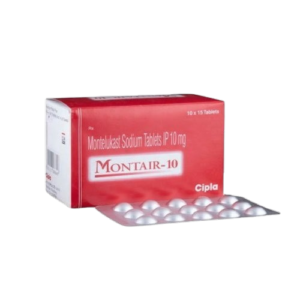
Montelukast 10mg (Montair) Tablet
$52.00 – $140.00Price range: $52.00 through $140.00 This product has multiple variants. The options may be chosen on the product page
🩺 Related Allergy Guides

Dr. Emily Carter specializes in evidence-based health education and wellness content. She focuses on simplifying complex medical topics related to cancer awareness, nutrition, preventive healthcare, skincare, and lifestyle wellness for readers worldwide.
This content is reviewed for medical accuracy, clarity, and alignment with current public health research. The article is intended for educational and informational purposes only and should not replace professional medical advice, diagnosis, or treatment.
3 Responses