
Allergies vs Cold vs Flu: How To Tell The Differences
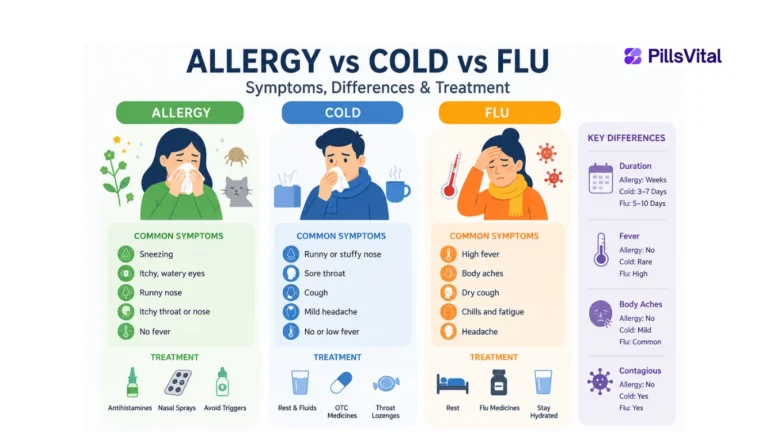
A runny nose, sneezing, congestion, coughing, headache, tiredness, and a sore throat can occur with several different conditions. That can make it difficult to know whether you’re dealing with seasonal allergies, a common cold, or influenza (flu).
Although these conditions can share some symptoms, they have important differences.
Allergies happen when the immune system reacts to substances that are usually harmless, such as pollen, dust mites, mold, or pet dander. A cold is a viral infection affecting the upper respiratory tract, while flu is a contagious respiratory illness caused by influenza viruses.
Knowing the pattern of your symptoms can help you understand what may be happening and choose an appropriate next step.
Important: Symptoms can overlap, and symptoms alone cannot always confirm the cause of an illness. If symptoms are severe, unusual, persistent, or getting worse, consult a healthcare professional.
Allergies vs Cold vs Flu: Quick Comparison
| Symptom | Allergies | Common Cold | Flu |
|---|---|---|---|
| Sneezing | Very common | Common | Sometimes |
| Runny nose | Common | Very common | Sometimes |
| Stuffy nose | Common | Very common | Common |
| Itchy eyes | Very common | Uncommon | Uncommon |
| Watery eyes | Common | Sometimes | Uncommon |
| Sore throat | Sometimes | Common | Common |
| Cough | Sometimes | Common | Common |
| Fever | Usually absent | Sometimes, especially in children | Common |
| Body aches | Uncommon | Mild or occasional | Often more noticeable |
| Chills | Uncommon | Uncommon | Common |
| Fatigue | Sometimes | Usually mild | Often significant |
| Headache | Sometimes | Sometimes | Common |
| Symptoms begin | After exposure to allergen | Gradually | Often suddenly |
| Typical duration | Weeks or longer while exposed | About 1–2 weeks | Usually several days to about 2 weeks |
This comparison is useful, but no single symptom can reliably distinguish every case.
What Are Allergies?
Allergies occur when the immune system overreacts to a normally harmless substance called an allergen. Common allergens include pollen, dust mites, mold, and pet dander. You can learn more about common allergy symptoms and causes through MedlinePlus allergy information
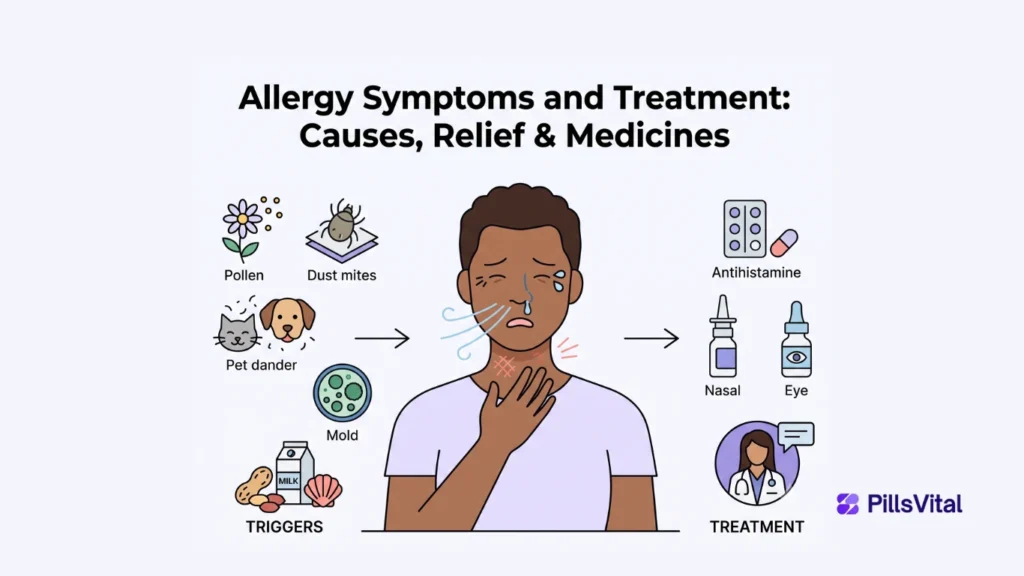
Common triggers include:
- Pollen
- Grass
- Tree pollen
- Mold
- Dust mites
- Pet dander
- Certain environmental particles
Seasonal allergies can become particularly noticeable during periods when pollen levels increase.
Common Allergy Symptoms
Allergic reactions affecting the nose and eyes may cause:
- Frequent sneezing
- Clear, watery nasal discharge
- Nasal congestion
- Itchy nose
- Itchy or watery eyes
- Postnasal drip
- Scratchy throat
- Cough caused by postnasal drainage
- Sinus pressure
- Fatigue or poor sleep
One of the strongest clues pointing toward allergies is itching.
If you repeatedly experience an itchy nose, itchy eyes, watery eyes, and sneezing after exposure to pollen, dust, or another trigger, allergies may be more likely than a viral infection.
What Is a Common Cold?
A common cold is a viral infection of the upper respiratory tract.
Many different viruses can cause cold symptoms, which is one reason people may experience slightly different symptoms from one cold to another. A common cold can be caused by many different respiratory viruses, and symptoms can vary from person to person. The CDC’s common cold information.
Typical symptoms include:
- Runny nose
- Nasal congestion
- Sneezing
- Sore throat
- Cough
- Mild headache
- Mild fatigue
- Occasionally a low-grade fever
Cold symptoms commonly develop gradually rather than appearing all at once.
Unlike allergies, a cold is contagious and can spread through respiratory droplets, close contact, and contaminated hands or surfaces.
What Is the Flu?
Influenza, commonly called the flu, is a contagious respiratory infection caused by influenza viruses.
Flu often differs from a typical cold because symptoms can develop more suddenly and may be more intense. Influenza, commonly called the flu, is a contagious respiratory illness caused by influenza viruses. For more information about influenza symptoms and prevention, see the CDC’s influenza information
Common flu symptoms include:
- Fever
- Chills
- Muscle or body aches
- Headache
- Significant tiredness
- Cough
- Sore throat
- Runny or stuffy nose
Not everyone with flu develops every symptom, and some people may not have a fever.
A sudden onset of fever, chills, body aches, headache, and pronounced fatigue is more suggestive of flu than uncomplicated allergies.
Allergy vs Cold: How Can You Tell?
Allergies and colds can look remarkably similar.
Both can cause:
- Sneezing
- Runny nose
- Nasal congestion
- Cough
- Sore throat
- Headache
The pattern is often more helpful than any individual symptom.
Allergies are more likely when:
- Symptoms appear after exposure to a known trigger.
- Your eyes are itchy or watery.
- Your nose or throat feels itchy.
- Symptoms continue for weeks.
- Symptoms return during the same season each year.
- You do not have fever or significant body aches.
A cold is more likely when:
- Symptoms develop after contact with someone who is sick.
- You develop a sore throat followed by congestion or coughing.
- Symptoms gradually improve over several days.
- You experience mild fatigue or headache.
- Other people around you have recently been ill.
Allergy vs Flu: What's the Difference?
Allergies generally do not cause an infectious illness, while influenza is a viral infection that can spread from person to person.
Allergies commonly cause:
- Itchy eyes
- Watery eyes
- Sneezing
- Clear runny nose
- Nasal congestion
- Symptoms related to environmental exposure
Flu more commonly causes:
- Sudden illness
- Fever
- Chills
- Body aches
- Headache
- Significant fatigue
- Cough
- Sore throat
If you suddenly become very unwell with fever, chills, muscle aches, and marked fatigue, flu may be more likely than seasonal allergies.
Cold vs Flu: Why Do They Feel Similar?
Both colds and flu are caused by viruses, but they are caused by different viruses.
A cold is generally associated with milder upper-respiratory symptoms.
Flu can cause more pronounced systemic symptoms, including:
- Fever
- Chills
- Body aches
- Headache
- Severe tiredness
The flu can also lead to complications in some people, particularly those at higher risk.
Because several respiratory infections can produce similar symptoms, testing may sometimes be necessary to identify the cause.
Do Allergies Cause Fever?
Usually, no.
Fever is not a typical feature of seasonal allergies.
If you have symptoms that resemble allergies but also develop a significant fever, chills, or pronounced body aches, consider that an infection may be involved.
However, fever can occur for many different reasons, so it should not be used alone to diagnose flu or another infection.
Can Allergies Cause a Cough?
Yes.
Allergies can cause coughing, particularly when nasal drainage moves down the back of the throat.
This is often associated with postnasal drip.
An allergy-related cough may occur alongside:
- Sneezing
- Nasal congestion
- Itchy eyes
- Runny nose
- Throat irritation
A persistent cough can also have many other causes, so prolonged or severe coughing should be evaluated by a healthcare professional.
Does Mucus Color Tell You Whether You Have a Cold or Allergies?
Mucus color alone is not a reliable way to distinguish allergies from an infection.
Allergy symptoms frequently involve clear, watery nasal discharge, but mucus can change during respiratory infections as well.
Instead of relying solely on mucus color, consider the complete symptom pattern:
- Fever
- Body aches
- Itching
- Eye symptoms
- Duration
- Sudden versus gradual onset
- Exposure to allergens
- Contact with someone who is sick
How Long Do Allergies, Colds and Flu Last?
Duration can provide another useful clue.
Allergies
Allergy symptoms may continue for weeks or even longer when exposure to the allergen continues.
For example, someone with seasonal pollen allergies may experience recurring symptoms throughout a pollen season.
Common Cold
Cold symptoms often improve within approximately 1–2 weeks, although cough or congestion can sometimes last longer.
Flu
Flu symptoms often begin suddenly and commonly improve over several days, although tiredness or coughing can persist longer.
If symptoms are not improving or are becoming progressively worse, medical advice may be appropriate.
Why Do Allergies Keep Coming Back?
A recurring pattern can be a major clue.
For example, someone might experience:
Sneezing → itchy eyes → runny nose → congestion
every spring or during a particular season.
This repeated pattern may suggest seasonal allergies.
By contrast, a cold generally resolves and does not repeatedly appear whenever the same season begins.
Allergy Symptoms That Feel Like a Cold
Some people describe their allergies as feeling like they have a permanent cold.
That’s because allergies can cause many of the same upper-airway symptoms:
- Stuffy nose
- Runny nose
- Sneezing
- Cough
- Sore throat
- Headache
- Fatigue
The important difference is that allergies are triggered by an immune response to an allergen, while a cold is caused by a viral infection.
If symptoms repeatedly return after exposure to pollen, dust, pets, or other triggers, discussing possible allergies with a healthcare professional may be worthwhile.
What Treatment Options Are Available for Allergies?
Treatment depends on the type and severity of the allergy.
Common approaches include:
1. Reduce exposure to triggers
If you know what causes your symptoms, reducing exposure can help.
For example:
- Keep windows closed when outdoor pollen levels are high.
- Shower after spending time outdoors.
- Wash bedding regularly.
- Reduce indoor dust.
- Keep living spaces well ventilated.
- Avoid known personal triggers when possible.
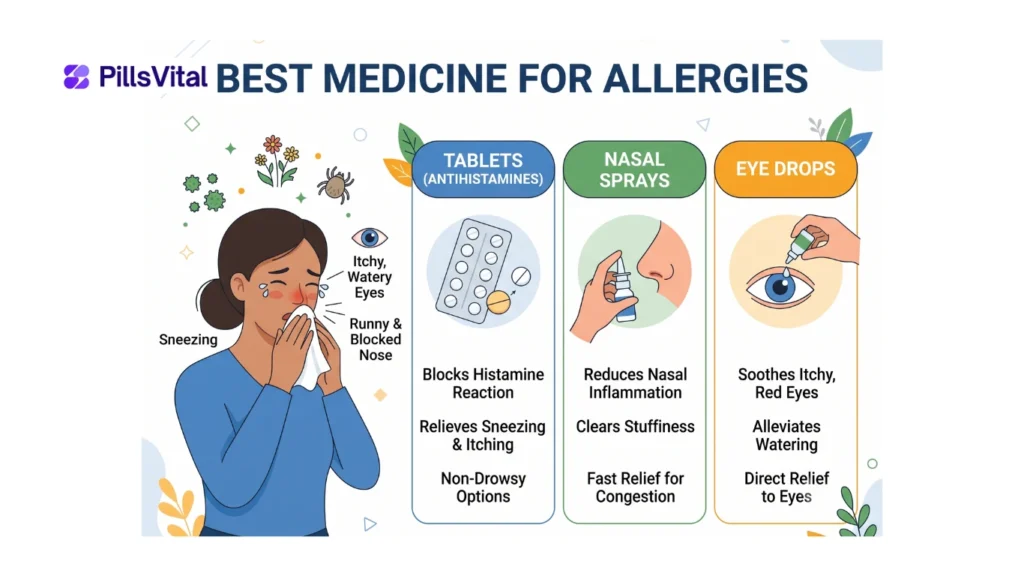
2. Antihistamines
Antihistamines are commonly used to relieve symptoms such as:
- Sneezing
- Itching
- Runny nose
- Watery eyes
Different antihistamines have different characteristics and potential side effects.
3. Nasal treatments
Some people may benefit from nasal medications for congestion or allergic rhinitis.
The appropriate option depends on the individual’s symptoms and medical history.
4. Allergy immunotherapy
For certain persistent allergies, healthcare professionals may consider allergen immunotherapy.
This approach gradually exposes the immune system to controlled amounts of a specific allergen under medical supervision.
What Treatment Options Are Available for a Cold?
Because the common cold is caused by viruses, antibiotics do not treat an uncomplicated cold.
Management generally focuses on symptom relief and rest.
Depending on individual circumstances, people may use:
- Adequate fluids
- Rest
- Saline nasal sprays or rinses
- Humidified air
- Throat-soothing measures
- Appropriate over-the-counter medicines for specific symptoms
Always check medication labels and consider potential drug interactions or existing medical conditions before using medicines.
What Treatment Options Are Available for Flu?
Treatment for influenza depends on factors such as:
- Age
- Overall health
- Pregnancy
- Symptom severity
- How long symptoms have been present
- Risk of complications
Some people may be prescribed antiviral medicines, particularly when treatment is started early or when a person has a higher risk of complications. Some people may benefit from prescription antiviral medicines, particularly when treatment is started early or when there is a higher risk of complications. The CDC’s flu antiviral treatment guidance explains who may benefit from antiviral treatment.
Because flu can become serious in some individuals, people with severe symptoms or risk factors should seek medical advice promptly.
Can You Have Allergies and a Cold at the Same Time?
Yes.
Having allergies does not prevent you from developing a viral infection.
For example, someone with seasonal allergies could develop a cold and suddenly notice that their usual allergy symptoms are accompanied by:
- A new sore throat
- Fever
- Body aches
- Increased fatigue
- A different pattern of symptoms
This can make diagnosis more difficult.
If symptoms change significantly from your usual allergy pattern, consider speaking with a healthcare professional.
What About COVID-19?
COVID-19 can also cause symptoms that overlap with allergies, colds, and flu.
Depending on the infection, symptoms may include:
- Cough
- Sore throat
- Congestion
- Runny nose
- Fever
- Fatigue
- Headache
- Body aches
Because symptoms overlap considerably, you cannot always distinguish COVID-19, flu, and a cold based only on symptoms. Because COVID-19, flu, and other respiratory infections can share symptoms, testing may sometimes be necessary. See the CDC’s COVID-19 symptoms guidance for current information about symptoms and warning signs.
Testing may be appropriate depending on your symptoms, exposure, local guidance, and risk factors.
When Should You Seek Medical Care?
Most mild allergy and cold symptoms can be managed without emergency care. However, seek medical attention when symptoms are severe, unusual, persistent, or worsening.
Urgent medical evaluation may be needed for symptoms such as:
- Difficulty breathing
- Chest pain or pressure
- Severe weakness
- Confusion
- Severe dehydration
- Bluish or grayish skin, lips, or nail beds
- Symptoms that improve and then become significantly worse
People at higher risk of complications from respiratory infections should contact a healthcare professional early when they develop concerning symptoms.
Allergy vs Cold vs Flu: A Simple Symptom Checklist
When trying to understand your symptoms, ask yourself:
1. Do I have itchy or watery eyes?
This can point toward allergies.
2. Do I have a fever?
Fever is generally not associated with ordinary allergies.
3. Did the illness start suddenly?
A sudden onset with fever and body aches can occur with flu.
4. Have I been exposed to pollen, dust, pets, or mold?
A clear relationship with an allergen supports an allergy pattern.
5. Has someone around me recently been sick?
This can increase the likelihood of a contagious respiratory infection.
6. How long have my symptoms lasted?
Persistent symptoms during ongoing allergen exposure may suggest allergies.
7. Are my symptoms becoming severe?
If yes, seek medical advice rather than trying to determine the cause yourself.
Allergy vs Cold vs Flu: Key Takeaways
The easiest way to remember the differences is to look at the overall pattern.
Allergies:
Usually involve sneezing, itching, watery eyes, runny or blocked nose, and symptoms linked to allergen exposure.
Common cold:
Usually develops gradually and causes congestion, runny nose, sneezing, sore throat, and cough.
Flu:
Often begins suddenly and is more likely to cause fever, chills, body aches, headache, significant fatigue, and cough.
But symptoms overlap, so these patterns are not a substitute for professional diagnosis or testing. Because respiratory symptoms can overlap between different conditions, reliable health information can help you understand when symptoms may require medical attention. The NHS health information provides patient-focused guidance on common illnesses and symptoms.
Frequently Asked Questions
How can I tell if I have allergies or a cold?
Itching, watery eyes, repeated sneezing, and symptoms that appear after allergen exposure are more suggestive of allergies. A cold is more likely when symptoms develop gradually after exposure to someone with a respiratory infection.
Do allergies cause fever?
Ordinary seasonal allergies generally do not cause fever. Fever may indicate an infection or another condition.
Is a runny nose more likely allergies or a cold?
Both can cause a runny nose. Clear nasal discharge combined with itchy eyes and repeated sneezing may suggest allergies, while a runny nose accompanied by sore throat, cough, or other cold symptoms may indicate a viral infection.
Can allergies cause body aches?
Significant body aches are not typical of seasonal allergies. Pronounced aches are more commonly associated with infections such as influenza.
Are allergies contagious?
No. Allergies themselves are not contagious because they are an immune response to allergens rather than an infection.
How long does a cold usually last?
Many common colds improve within about one to two weeks, although individual symptoms such as coughing may last longer.
How long do allergy symptoms last?
Allergy symptoms can continue as long as you remain exposed to the triggering allergen.
Can you have allergies and flu at the same time?
Yes. Having allergies does not prevent you from developing influenza or another respiratory infection.
Which is worse, a cold or flu?
Influenza generally causes more intense systemic symptoms than an uncomplicated cold, including fever, chills, body aches, headache, and significant fatigue. However, severity varies between individuals.
Should I take antibiotics for a cold or flu?
Antibiotics treat certain bacterial infections and do not treat viruses responsible for ordinary colds or influenza. A healthcare professional can determine whether an antibiotic is appropriate.
Final Thoughts
Allergies, colds, and flu can look similar at first, but the symptom pattern often provides useful clues.
If you have itchy eyes, frequent sneezing, and recurring symptoms after allergen exposure, allergies may be more likely.
If you have gradually developing congestion, sore throat, runny nose, and cough, a common cold may be responsible.
If you experience sudden fever, chills, body aches, headache, significant fatigue, and cough, influenza may be more likely.
Still, symptoms overlap, and other respiratory illnesses—including COVID-19—can produce similar patterns. When symptoms are severe, persistent, or concerning, getting advice from a qualified healthcare professional is the safest approach.
Related Health Resources
-

Prednisolone 20mg (Omnacortil) Tablets
$38.00 – $110.00Price range: $38.00 through $110.00 This product has multiple variants. The options may be chosen on the product page -

Prednisolone 40mg (Omnacortil) Tablets
$41.00 – $118.00Price range: $41.00 through $118.00 This product has multiple variants. The options may be chosen on the product page -
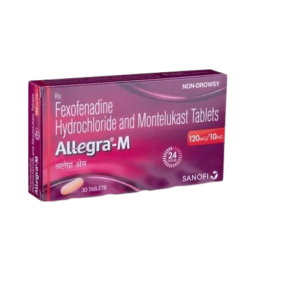
Allegra M (Fexofenadine) Tablets
$55.00 – $160.00Price range: $55.00 through $160.00 This product has multiple variants. The options may be chosen on the product page -

Montelukast 10mg (Montair) Tablet
$52.00 – $140.00Price range: $52.00 through $140.00 This product has multiple variants. The options may be chosen on the product page
🩺 Related Allergy Guides


Dr. Emily Carter specializes in evidence-based health education and wellness content. She focuses on simplifying complex medical topics related to cancer awareness, nutrition, preventive healthcare, skincare, and lifestyle wellness for readers worldwide.
This content is reviewed for medical accuracy, clarity, and alignment with current public health research. The article is intended for educational and informational purposes only and should not replace professional medical advice, diagnosis, or treatment.