Since the COVID-19 pandemic, there has been significant discussion surrounding ivermectin antiviral claims. While ivermectin is a well-established medication for treating certain parasitic infections, many people continue to wonder whether it can also treat viral illnesses.
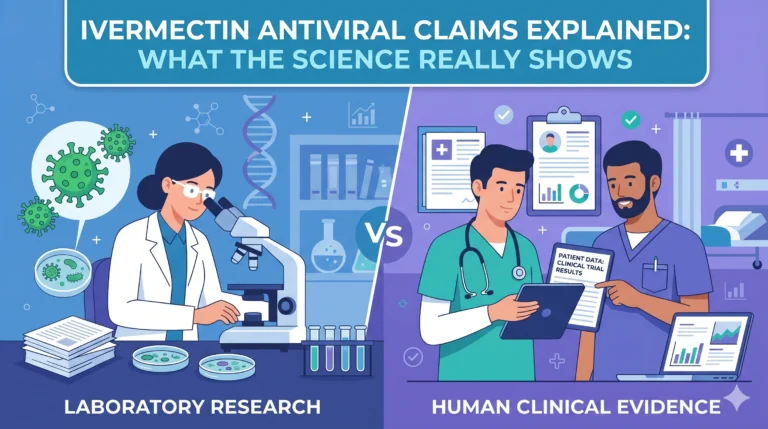
Understanding the difference between laboratory findings and real-world clinical outcomes is essential. Although some early studies suggested possible antiviral activity, larger human studies have not demonstrated consistent benefits against viral infections.
Understanding What Ivermectin Was Designed to Treat
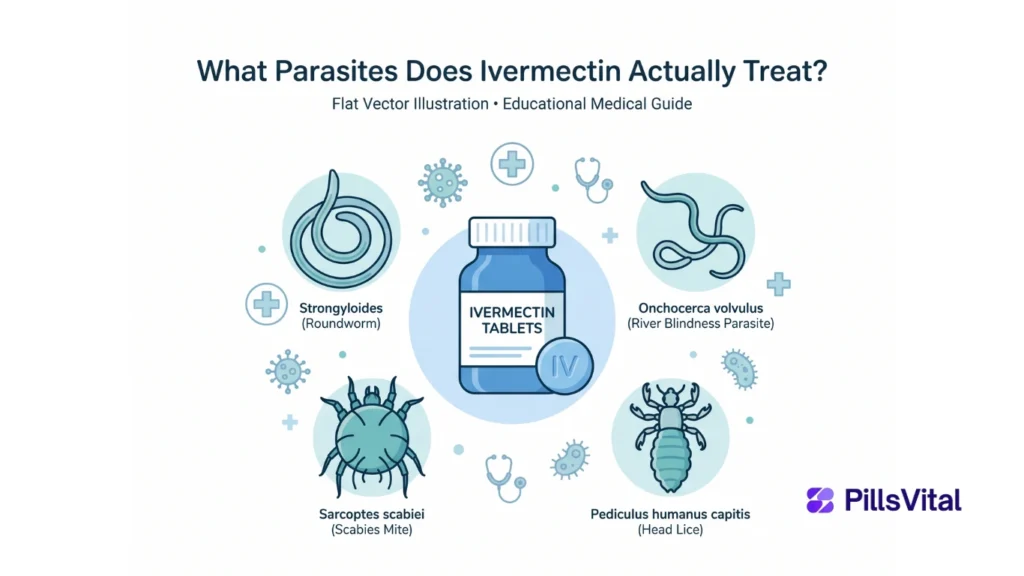
Ivermectin is an antiparasitic medication that has been used for decades to treat conditions such as:
- Scabies
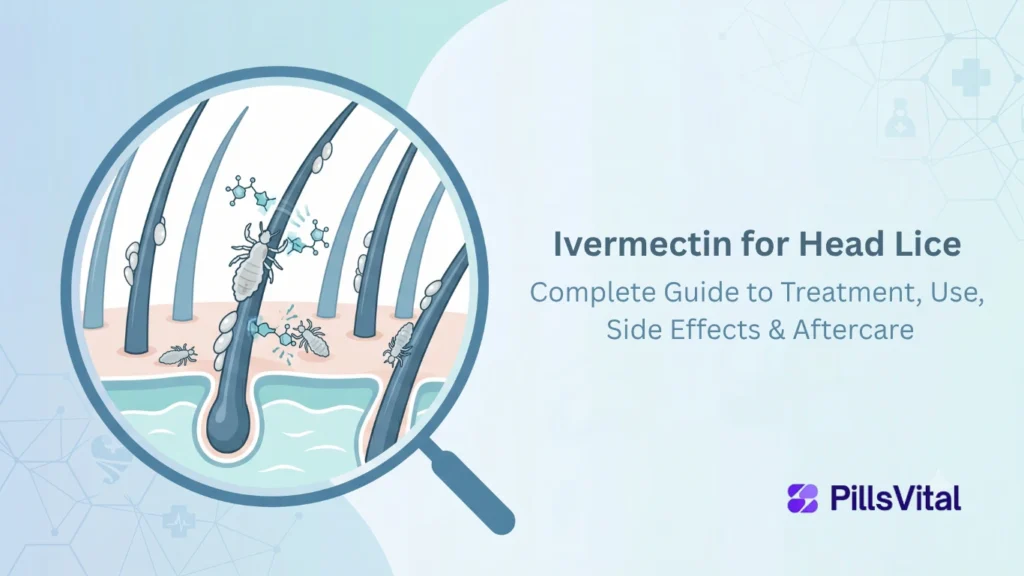
- Head lice
- River blindness (onchocerciasis)
- Strongyloidiasis
- Other parasitic worm infections
Its primary mechanism targets parasites by interfering with their nervous system and muscle function, leading to paralysis and death of the parasite.
Viruses, however, are fundamentally different organisms. They replicate inside human cells and require entirely different treatment approaches.
Where Did the Ivermectin Antiviral Claims Come From?
Interest in ivermectin as an antiviral medication increased after laboratory research showed that it could inhibit the replication of certain viruses under controlled conditions.
Scientists observed antiviral effects against:
- SARS-CoV-2 (the virus that causes COVID-19)
- Dengue virus
- Zika virus
- Influenza viruses
- Other RNA viruses
These findings generated excitement and led many people to speculate that ivermectin might become a broad-spectrum antiviral medication.
However, laboratory observations do not automatically translate into successful human treatments.
Laboratory Studies: What Researchers Actually Found
One of the most frequently cited studies involved ivermectin and SARS-CoV-2 in laboratory cell cultures.
Researchers found that ivermectin reduced viral replication in infected cells under experimental conditions.
Why Laboratory Results Are Limited
Laboratory studies are useful because they help scientists identify potential treatments, but they have important limitations:
- Experiments occur in isolated cells rather than the human body.
- Drug concentrations may be much higher than what is safely achievable in humans.
- Human immune responses are not represented.
- Laboratory conditions are tightly controlled and do not reflect real-world disease processes.
A medication that appears promising in a petri dish may ultimately fail when tested in people.
The Concentration Problem
One of the biggest challenges with ivermectin antiviral claims is the concentration required to achieve antiviral effects.
Researchers discovered that:
- Antiviral activity often occurred at drug levels far above standard therapeutic doses.
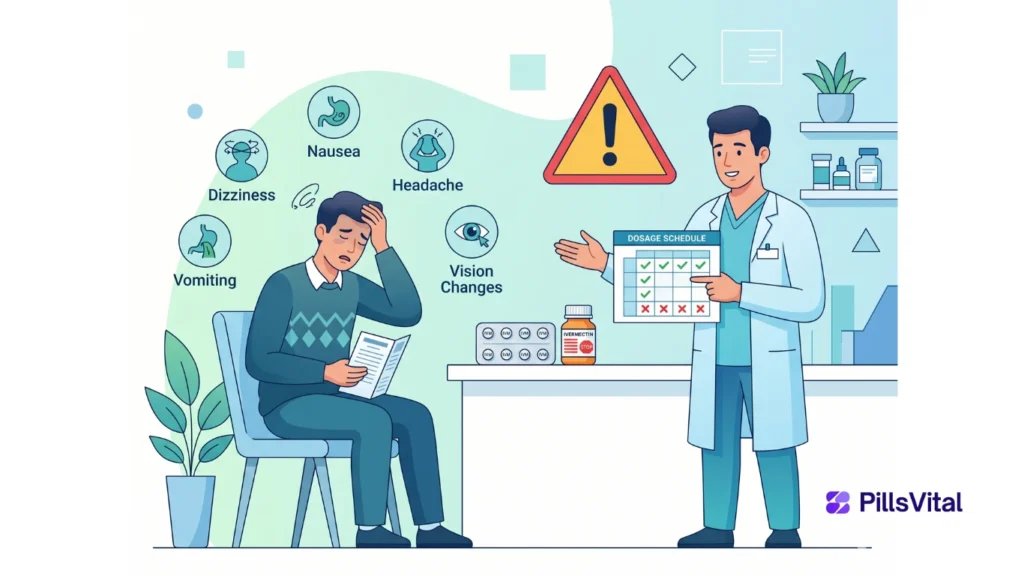
- Achieving similar concentrations in human tissues could require doses that may increase the risk of side effects.
- Safe dosing limits prevent the use of excessively high amounts of ivermectin.
Learn more about proper ivermectin dosage guidelines before using the medication.
In other words, the levels needed to suppress viral replication in laboratory experiments may not be realistically achievable in patients.
This is a major reason why laboratory success does not necessarily indicate clinical effectiveness.
Human Clinical Evidence: What Studies Show
When evaluating a medication, human clinical trials provide the most reliable evidence. The FDA states that ivermectin is approved for certain parasitic infections but not for treating viral illnesses.
Researchers conducted numerous studies examining ivermectin for viral infections, particularly COVID-19.
Early Studies
Some early studies suggested potential benefits such as:
- Faster symptom improvement
- Reduced viral load
- Shorter illness duration
However, many of these studies had limitations:
- Small sample sizes
- Inconsistent methodologies
- Lack of proper randomization
- Potential bias
- Variable dosing protocols
As a result, the findings were difficult to interpret.
Larger Clinical Trials
As larger and more rigorous studies were completed, the results became clearer.
Many high-quality clinical trials found:
- No significant reduction in hospitalization rates
- No meaningful decrease in mortality
- No consistent shortening of illness duration
- No reliable prevention of infection
Summaries of major studies are available through the National Institutes of Health (NIH).
When pooled together in systematic reviews and meta-analyses, the overall evidence failed to demonstrate a clear antiviral benefit.
Why Clinical Trials Matter More Than Laboratory Studies
Clinical trials evaluate what happens in actual patients.
They consider:
- Drug absorption
- Distribution throughout the body
- Immune system interactions
- Disease severity
- Real-world safety outcomes
A treatment can appear effective in a laboratory but still fail because the human body is far more complex.
This distinction is critical when evaluating ivermectin antiviral claims.
Common Misconception #1: "It Works in a Petri Dish, So It Must Work in Humans"
This is one of the most widespread misunderstandings.
Many substances show antiviral effects in laboratory settings, including compounds that never become approved medications.
Examples exist across pharmaceutical research where:
- Laboratory success looked promising.
- Human trials failed to show benefit.
- Development was eventually discontinued.
Laboratory findings represent an early stage of research, not proof of effectiveness.
Common Misconception #2: "If It's Safe for Parasites, It Must Work for Viruses"
Safety and effectiveness are separate issues.
A medication can be:
- Safe for one condition
- Ineffective for another condition
Ivermectin is effective for specific parasitic infections because it targets biological pathways found in parasites.
Viruses use different mechanisms, which means a drug effective against parasites may not necessarily affect viral replication in patients.
Common Misconception #3: "Positive Testimonials Prove It Works"
Personal experiences can be powerful, but they do not establish scientific effectiveness.
People may recover after taking ivermectin because:
- Many viral illnesses improve naturally.
- Symptoms resolve over time.
- Other treatments are also being used.
- Individual experiences vary.
Clinical trials are necessary because they compare outcomes across large groups of patients under controlled conditions.
Common Misconception #4: "All Studies Show Positive Results"
The scientific literature contains a mixture of findings.
Some studies suggested possible benefits, while others found no meaningful effect.
When researchers evaluate all available evidence together, higher-quality studies generally carry greater weight than smaller or less rigorous investigations.
Current evidence does not consistently support ivermectin as an effective antiviral treatment.
Why Medical Organizations Remain Cautious
Health authorities evaluate:
- Study quality
- Consistency of results
- Safety data
- Reproducibility
Organizations such as the World Health Organization (WHO) review available evidence before issuing treatment recommendations.
Because evidence supporting antiviral effectiveness remains inconsistent, many medical organizations have not recommended ivermectin as a standard antiviral therapy.
Treatment recommendations are based on the totality of evidence rather than isolated studies.
The Difference Between Antiparasitic and Antiviral Drugs
Antiparasitic Drugs
Designed to target:
- Worms
- Mites
- Lice
- Other parasites
Examples include:
- Ivermectin
- Albendazole
- Permethrin (for certain infestations)
Antiviral Drugs
Designed to interfere with viral replication.
Examples include:
- Antiviral medications used for influenza
- Treatments developed for COVID-19
- Medications used for hepatitis viruses
- Antiviral therapies for herpes infections
Each category works through different biological mechanisms.
What Patients Should Know
If you have a viral infection:
- Follow evidence-based medical advice. The Centers for Disease Control and Prevention (CDC) recommends consulting healthcare professionals for treatment decisions.
- Use medications prescribed specifically for that illness.
- Avoid self-medicating with unapproved doses.
- Consult a healthcare professional before starting any treatment.
Using medications outside their intended purpose may expose individuals to side effects without providing meaningful benefits.
Key Takeaways
The debate surrounding ivermectin antiviral claims largely stems from laboratory research that demonstrated antiviral activity under experimental conditions. However, laboratory findings alone are not sufficient to establish effectiveness in humans.
While ivermectin remains an important and effective treatment for several parasitic infections, human clinical studies have generally failed to demonstrate consistent antiviral benefits. Differences between cell culture experiments and real-world patient outcomes explain why promising laboratory results do not always translate into successful treatments.
Read our complete guide to how ivermectin works in the body for a deeper understanding of its approved uses.
For viral illnesses, healthcare decisions should be guided by high-quality clinical evidence, professional medical recommendations, and treatments that have been proven effective in human studies.
β FAQs
1. What are ivermectin antiviral claims?
Ivermectin antiviral claims are suggestions that ivermectin may help treat or prevent viral infections. These claims mainly arose from laboratory studies, but human clinical research has not consistently shown significant antiviral benefits.
2. Why was ivermectin studied for viral infections?
Researchers became interested in ivermectin after laboratory experiments showed it could inhibit the replication of certain viruses in cell cultures. However, promising laboratory results do not necessarily mean a drug will be effective in humans.
3. Does ivermectin work against viruses in humans?
Current human clinical evidence has not consistently demonstrated that ivermectin effectively treats viral infections. Large, well-designed studies generally have not found meaningful improvements in outcomes such as hospitalization rates, recovery time, or mortality.
4. Why can a drug work in the laboratory but not in people?
Laboratory studies are performed under controlled conditions using isolated cells. The human body is much more complex, involving immune responses, drug metabolism, and safety limitations that can affect whether a treatment works in real-world situations.
5. What is ivermectin officially approved to treat?
Ivermectin is primarily approved for certain parasitic infections, including strongyloidiasis, onchocerciasis, scabies, and head lice. Approved uses may vary depending on local healthcare regulations and medical guidelines.
π Related Ivermectin Guides

Dr. Emily Carter specializes in evidence-based health education and wellness content. She focuses on simplifying complex medical topics related to cancer awareness, nutrition, preventive healthcare, skincare, and lifestyle wellness for readers worldwide.
This content is reviewed for medical accuracy, clarity, and alignment with current public health research. The article is intended for educational and informational purposes only and should not replace professional medical advice, diagnosis, or treatment.