
Fenbendazole For Humans: What The Research Really Says About Safety, Uses& & 444mg vs 1000mg
Updated: Aug 25, 2026
Medical Content Reviewer, on Aug 25, 2026

Searches for “fenbendazole for humans,” “fenbendazole dosage,” “fenbendazole 444 mg,” and “fenbendazole 1000 mg” have grown as online discussions have explored whether this antiparasitic compound could have applications beyond its established veterinary use.
Fenbendazole belongs to the benzimidazole family of antiparasitic drugs. However, an important distinction is often missing from online discussions: fenbendazole is not FDA-approved for human use, and its human safety and effectiveness have not been established to the standard required for approved human medicines. The American Cancer Society likewise states that fenbendazole has not been approved by the FDA for humans for any purpose.
That does not mean the compound is scientifically uninteresting. Fenbendazole has been studied in laboratory and animal research, including research examining possible anticancer mechanisms. But preclinical findings are not the same as proven benefits in people, and current literature continues to identify the lack of adequate human clinical evidence as a major limitation.
This guide separates what is known, what is being researched, and what remains uncertain. For a broader comparison of related antiparasitic medicines, see our guide to Ivermectin vs Mebendazole.
Fenbendazole at a Glance
| Question | Current Answer |
|---|---|
| What is fenbendazole? | A benzimidazole antiparasitic compound |
| What is it traditionally used for? | Veterinary parasite control |
| Is it FDA-approved for humans? | No |
| Is it an approved cancer treatment? | No |
| Is it being discussed in scientific research? | Yes |
| Are laboratory findings the same as human proof? | No |
| Is human safety well established? | No |
| Are 444 mg and 1000 mg the same strength? | No |
| Can tablet strength alone determine a safe human dose? | No |
Current U.S. and scientific sources describe fenbendazole as a veterinary anthelmintic rather than an approved human medicine.
What Is Fenbendazole?
Fenbendazole is part of a group of compounds known as benzimidazole anthelmintics.
Related compounds include medicines such as:
- Mebendazole
- Albendazole
These compounds share some structural and mechanistic characteristics, but they are not interchangeable.
Fenbendazole has traditionally been used to control susceptible parasitic worms in animals. Its mechanism involves interaction with parasite cellular structures, particularly processes involving beta-tubulin and microtubules.
The growing interest in human use largely comes from research exploring whether mechanisms observed in laboratory settings could have applications beyond parasite control.
That question is still scientifically different from saying that fenbendazole has been proven to treat a disease in humans.
How Does Fenbendazole Work?
Fenbendazole belongs to a class of compounds that can interfere with microtubule-related cellular processes.
In parasites, disruption of these processes can interfere with essential cellular functions and contribute to immobilization or death of susceptible worms.
Simplified mechanism
Fenbendazole
↓
Interacts with cellular structures and microtubule-related processes
↓
Disrupts essential functions in susceptible parasites
↓
Produces antiparasitic effects in its established veterinary role
Why Are People Interested in Fenbendazole for Humans?
Interest in human fenbendazole use has grown for several reasons. Preclinical research has explored several possible biological effects of fenbendazole, including mechanisms potentially relevant to cancer biology; however, these findings require further investigation in humans. Readers interested in the scientific literature can review the relevant PubMed research.
1. Drug-repurposing research
Scientists sometimes investigate whether existing compounds might have applications beyond their original purpose.
2. Laboratory findings
Some studies have reported biological effects of fenbendazole in experimental models.
3. Cancer research
Researchers have investigated whether fenbendazole can influence pathways involved in cancer-cell survival.
4. Online testimonials
Personal stories have contributed significantly to public interest.
5. Social media
Fenbendazole-related cancer discussions have spread across online communities.
But these sources of interest do not all carry the same scientific weight.
Why Are Researchers Interested in This Mechanism?
Microtubules are important structures involved in cell division and other cellular functions.
Because rapidly dividing cells are an important area of cancer research, scientists have investigated whether benzimidazole compounds may have effects worth studying in cancer models.
Published experimental research has explored mechanisms involving:
- Microtubule disruption
- Cellular metabolism
- Glucose uptake
- Oxidative stress
- Apoptosis-related pathways
However, demonstrating an effect in a laboratory or animal model does not establish that the same result will occur safely or effectively in people.
Why Is Fenbendazole Being Researched for Human Health?
The interest is largely based on a process sometimes described as drug repurposing.
Drug repurposing investigates whether a known compound may have a useful application beyond its original purpose.
The scientific appeal is understandable:
| Research Question | Why Scientists Investigate It |
|---|---|
| Does the compound affect cell division? | Cell division is important in cancer biology |
| Does it affect microtubules? | Microtubules are involved in cellular function |
| Does it alter metabolic pathways? | Cancer cells can have altered metabolism |
| Does it produce effects in laboratory models? | Preclinical findings can guide further research |
| Has it been proven effective in humans? | This requires human clinical evidence |
The last question is the most important.
At present, the existence of preclinical research should not be interpreted as proof that fenbendazole is an effective treatment for cancer or other human diseases.
Fenbendazole and Cancer Research: What Does the Evidence Actually Show?
Fenbendazole has generated significant online attention because laboratory and animal studies have explored possible anticancer mechanisms. The American Cancer Society also notes that fenbendazole has not been FDA-approved for human use and that evidence supporting its use as a cancer treatment remains insufficient.
Researchers have investigated whether benzimidazole compounds could influence processes involved in:
- Microtubule function
- Cell division
- Cellular metabolism
- Glucose utilization
- Oxidative stress
- Programmed cell death
A 2024 review discussed fenbendazole’s experimental anticancer mechanisms while emphasizing the need for clinical trials to establish human safety, dosing and therapeutic effects.
The Evidence Hierarchy Matters
| Type of Evidence | What It Can Tell Us |
|---|---|
| Cell study | Whether an effect occurs in a laboratory setting |
| Animal study | Whether an effect occurs in a specific animal model |
| Case report | What happened in an individual case |
| Observational evidence | Patterns seen in groups of people |
| Clinical trial | Whether a treatment is safe and/or effective in people |
| Regulatory approval | Whether evidence supports a specific authorized use |
A positive result at the top of this table does not automatically prove a result at the bottom.
One of the easiest ways to misunderstand health research is to treat every study as equally strong.
They aren’t.
| Evidence Type | What It Can Tell Us | What It Cannot Prove |
|---|---|---|
| Cell/laboratory study | Whether a compound affects cells | That it treats people |
| Animal study | Effects in an animal model | Human effectiveness |
| Case report | What happened to one person | That the treatment caused the outcome |
| Observational study | Associations or patterns | Definitive cause and effect |
| Clinical trial | Safety/effectiveness in people | That every person will respond |
| Regulatory approval | Evidence supports a specific authorized use | That every possible use is effective |
This is particularly important when evaluating online claims about fenbendazole and cancer.
Are There Human Clinical Trials Showing That Fenbendazole Treats Cancer?
Current authoritative summaries continue to emphasize that fenbendazole lacks the level of human clinical evidence required to establish it as an effective cancer treatment.
The American Cancer Society states that fenbendazole has not been tested in human studies sufficiently to establish safety and effectiveness and warns that online cancer-treatment claims are not supported by solid evidence.
A 2024 scientific review similarly called for clinical trials to assess human safety, optimal dosing, tolerance and potential anticancer effects.
Important: Lack of proof is not the same thing as proof that a compound can never have medical value. It means that, at present, the evidence is insufficient to claim an established human therapeutic benefit.
Fenbendazole 444 mg vs Fenbendazole 1000 mg
For readers comparing Wormentel Fenbendazole 444 mg Tablets and Wormentel Fenbendazole 1000 mg Tablets, the most obvious difference is the amount of fenbendazole listed per tablet.
| Feature | Fenbendazole 444 mg | Fenbendazole 1000 mg |
|---|---|---|
| Active ingredient | Fenbendazole | Fenbendazole |
| Listed strength | 444 mg | 1000 mg |
| Same active ingredient? | Yes | Yes |
| Same strength? | No | No |
| Does a higher number automatically mean better? | No | No |
| Can tablet strength alone establish a human dose? | No | No |
| Automatically interchangeable? | No | No |
What Does 444 mg Mean?
A 444 mg label refers to the amount of active fenbendazole listed in the tablet or dosage unit.
It does not automatically answer:
- Who should take it
- How often it should be taken
- How long it should be used
- Whether it is appropriate for a particular medical condition
These questions require evidence, appropriate labeling and professional medical assessment.
What Does 1000 mg Mean?
A 1000 mg product contains a larger amount of fenbendazole per listed dosage unit than a 444 mg product.
But this does not automatically mean:
1000 mg is better.
Higher strength and better treatment are not the same concept.
The appropriate amount of a medicine depends on factors such as:
- The intended use
- Human pharmacokinetic data
- Safety information
- Treatment duration
- Individual characteristics
- Other medicines
- Medical conditions
Because fenbendazole does not have an established FDA-approved human dosing regimen, tablet strength should not be converted into a self-prescribed treatment plan.
Fenbendazole Dosage for Humans: Why Online Numbers Can Be Misleading
The search term “fenbendazole dosage for humans” produces many protocols, schedules and anecdotal recommendations online.
That does not make those protocols medically validated.
A key issue is that fenbendazole has not been approved for human use, and reliable human data establishing a standard therapeutic dose, duration and benefit-risk profile are lacking.
Why You Cannot Simply Copy an Online Protocol
| Factor | Why It Matters |
|---|---|
| Product strength | Strength is not the same as an established human dose |
| Intended use | Different diseases require different evidence |
| Duration | Longer exposure can change risk |
| Other medications | Interactions may matter |
| Liver function | Drug-related liver injury has been reported |
| Product formulation | Different products may not be equivalent |
| Individual health factors | Risks can vary significantly |
For this reason, a responsible guide should explain the difference between tablet strength and an evidence-based human dosing regimen, rather than presenting an unsupported schedule as medical fact.
Fenbendazole Safety in Humans: What Is Known?
Human safety data for fenbendazole remain limited.
This does not mean that every person who takes it will experience serious side effects. It does mean that the safety profile is not established in the same way as an approved medicine with extensive clinical data.
Recent medical literature and the NIH LiverTox database report that fenbendazole use in people has been associated with liver enzyme abnormalities and cases of clinically apparent liver injury. Some reported cases have been severe.
Potential Safety Concerns
Published reports and medical reviews have raised concerns involving:
- Elevated liver enzymes
- Drug-induced liver injury
- Possible gastrointestinal symptoms
- Unknown effects from prolonged or repeated exposure
- Uncertainty about drug interactions
- Lack of comprehensive human pharmacokinetic data
A 2024 report described histologically confirmed severe drug-induced liver injury associated with self-administration of fenbendazole.
Who Should Be Especially Cautious?
Because human safety is not fully established, people should be particularly cautious about self-directed use if they have:
- Existing liver disease
- A history of drug-induced liver injury
- Multiple prescription medications
- Ongoing cancer treatment
- Pregnancy or breastfeeding
- Significant chronic medical conditions
This is not a complete list of risks. A healthcare professional can evaluate individual circumstances more appropriately than a generalized internet protocol.
Fenbendazole and the Liver: An Important Safety Issue
One of the most significant concerns in published human reports involves the liver. Because liver-related concerns are particularly important when discussing human exposure, readers can review the NIH LiverTox information on fenbendazole for additional medical background.
The NIH LiverTox monograph, updated in April 2026, notes that fenbendazole has been associated with serum enzyme elevations and clinically apparent acute liver injury in people using it for purported anticancer purposes.
A separate published case report described severe drug-induced liver injury after self-administration.
Symptoms That May Require Prompt Medical Evaluation
Potential warning signs of liver problems can include:
- Yellowing of the skin or eyes
- Dark urine
- Persistent nausea or vomiting
- Severe fatigue
- Abdominal pain
- Unusual itching
These symptoms can have many causes, but they should not be ignored.
Fenbendazole vs Mebendazole vs Albendazole
One reason fenbendazole causes confusion is that related compounds may have different regulatory status and evidence.
| Feature | Fenbendazole | Mebendazole | Albendazole |
|---|---|---|---|
| Drug family | Benzimidazole | Benzimidazole | Benzimidazole |
| Same active ingredient? | No | No | No |
| Human antiparasitic use | Not FDA-approved | Has human uses depending on jurisdiction | Has human uses depending on jurisdiction |
| Same evidence base? | No | No | No |
| Automatically interchangeable? | No | No | No |
Being in the same drug family does not mean that one compound can simply replace another.
Each medicine has its own:
- Pharmacokinetics
- Approved uses
- Dosing information
- Safety profile
- Drug interactions
- Regulatory status
Fenbendazole vs Ivermectin
Fenbendazole and ivermectin are both associated with antiparasitic treatment, but they belong to different drug classes.
| Feature | Fenbendazole | Ivermectin |
|---|---|---|
| Drug class | Benzimidazole | Macrocyclic lactone |
| Same active ingredient? | No | No |
| Same mechanism? | No | No |
| Same approved uses? | No | No |
| Automatically interchangeable? | No | No |
For human medicine, ivermectin has approved uses for certain parasitic infections, while fenbendazole’s regulatory status is different. A general comparison should therefore avoid suggesting that the two medicines are interchangeable. For a more detailed discussion of these two antiparasitic compounds, read our Fenbendazole vs Ivermectin comparison guide.
Why Fenbendazole Became Popular Online
Fenbendazole’s popularity is not driven only by scientific papers.
It has also been influenced by:
- Personal testimonials
- Social media discussions
- Cancer communities
- Drug-repurposing interest
- Viral stories
- Online treatment protocols
Anecdotal experiences can be meaningful to the person sharing them, but they cannot reliably establish:
- Causation
- Effectiveness
- The correct dose
- Long-term safety
- Whether another treatment caused the improvement
- Whether the result can be reproduced
The FDA has previously issued a warning letter concerning online marketing claims that promoted fenbendazole products for cancer treatment and included unsupported treatment directions.
Common Myths About Fenbendazole
Myth 1: “If it works in a laboratory, it works in humans.”
Reality: Many compounds show promising laboratory effects but fail to become effective human treatments.
Myth 2: “A higher-strength tablet is automatically better.”
Reality: More milligrams do not automatically mean more benefit or an appropriate human dose.
Myth 3: “Because it is sold online, it must be safe.”
Reality: Availability does not replace clinical safety evaluation.
Myth 4: “Veterinary and human medicines are automatically equivalent.”
Reality: Medicines intended for different species can have different formulations, labeling, quality requirements and approved uses.
Myth 5: “A personal cancer recovery story proves fenbendazole caused the recovery.”
Reality: Individual experiences cannot establish causation without controlled scientific evidence.
Fenbendazole for Humans: Questions to Ask a Healthcare Professional
If you are considering fenbendazole or have already used it, useful questions include:
- What evidence exists for the condition I am concerned about?
- Could fenbendazole interact with my current medications?
- Are there specific liver-related risks in my situation?
- Could this interfere with my current treatment?
- Are there evidence-based alternatives available?
- What symptoms should prompt urgent medical attention?
- Should I have medical monitoring based on my individual situation?
These questions are particularly important for people undergoing cancer treatment, taking multiple medicines or living with chronic health conditions.
Fenbendazole 444 mg vs 1000 mg: Quick Comparison
| Question | 444 mg | 1000 mg |
|---|---|---|
| Active ingredient | Fenbendazole | Fenbendazole |
| Listed strength | 444 mg | 1000 mg |
| Same ingredient | Yes | Yes |
| Same strength | No | No |
| Automatically interchangeable | No | No |
| Establishes a human dose by itself | No | No |
| Higher amount automatically means better | No | No |
Frequently Asked Questions
What is fenbendazole used for in humans?
Fenbendazole is not FDA-approved for human use. It is primarily known as a veterinary antiparasitic drug, although researchers have investigated its biological effects in laboratory and preclinical studies.
Is fenbendazole approved for humans?
No. The FDA has not approved fenbendazole for human use.
What is the difference between Fenbendazole 444 mg and 1000 mg?
The main difference is the amount of fenbendazole listed per tablet or dosage unit. They contain the same active ingredient but at different strengths.
Is 1000 mg better than 444 mg?
Not necessarily. A higher tablet strength does not automatically mean a better treatment or establish an appropriate human dose.
What is the correct fenbendazole dosage for humans?
There is no established FDA-approved human dosing regimen for fenbendazole. Online protocols should not be treated as validated medical dosing instructions.
Can humans take fenbendazole?
Fenbendazole has been used by some individuals outside its approved veterinary role, but it is not FDA-approved for humans and its safety and effectiveness for human treatment have not been established.
Is fenbendazole used to treat cancer?
Fenbendazole has been investigated in preclinical cancer research, but it is not an FDA-approved cancer treatment and current evidence does not establish it as a proven cancer therapy for people.
Does fenbendazole kill cancer cells?
Laboratory studies have investigated possible effects on cancer cells, but laboratory findings cannot be interpreted as proof that fenbendazole treats cancer in humans.
What are the possible side effects of fenbendazole in humans?
Human safety data are limited. Published reports include liver enzyme abnormalities and cases of clinically apparent liver injury associated with self-administration.
Can fenbendazole affect the liver?
Yes, published case reports and the NIH LiverTox database describe potential liver injury associated with human self-administration.
Is fenbendazole the same as mebendazole?
No. They belong to the same broader benzimidazole family but are different active compounds with different regulatory status and evidence.
Is fenbendazole the same as ivermectin?
No. Fenbendazole and ivermectin belong to different drug classes and have different mechanisms and regulatory uses.
Final Takeaway
Fenbendazole is generating significant interest among people searching for alternative approaches to parasites, cancer and other health concerns.
The most accurate way to understand the current evidence is to separate three different things:
1. Established use
Fenbendazole is primarily a veterinary antiparasitic compound.
2. Scientific research
Laboratory and preclinical research has explored mechanisms that may warrant further investigation, including possible anticancer activity.
3. Proven human treatment
Fenbendazole has not been established as an FDA-approved treatment for cancer or other human diseases, and human safety data remain limited.
Related Health Resources
-
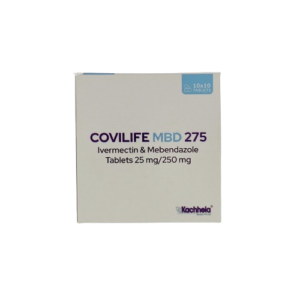
Covilife MBD 275 (Ivermectin 25mg + Mebendazole 250mg) Tablets
$92.00 – $260.00Price range: $92.00 through $260.00 This product has multiple variants. The options may be chosen on the product page -
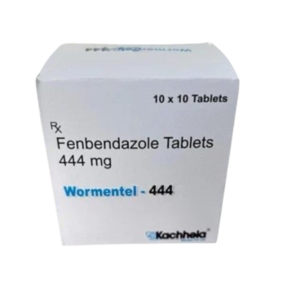
Fenbendazole 444mg (Wormentel) Tablets
$76.00 – $302.00Price range: $76.00 through $302.00 This product has multiple variants. The options may be chosen on the product page -
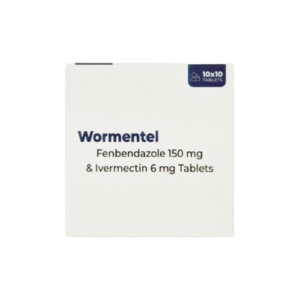
Wormentel DUO 156 (Fenbendazole 150mg & Ivermectin 6mg) Tablets
$92.00 – $260.00Price range: $92.00 through $260.00 This product has multiple variants. The options may be chosen on the product page -
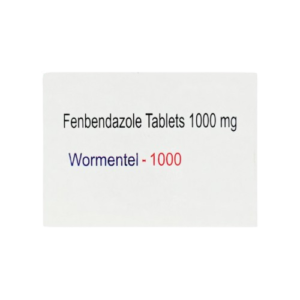
Fenbendazole 1000mg (Wormentel) Tablet
$92.00 – $260.00Price range: $92.00 through $260.00 This product has multiple variants. The options may be chosen on the product page
💊 Related Ivermectin Safety & Treatment Guides



Dr. Emily Carter specializes in evidence-based health education and wellness content. She focuses on simplifying complex medical topics related to cancer awareness, nutrition, preventive healthcare, skincare, and lifestyle wellness for readers worldwide.
This content is reviewed for medical accuracy, clarity, and alignment with current public health research. The article is intended for educational and informational purposes only and should not replace professional medical advice, diagnosis, or treatment.