
Allopurinol for Gout: Uses, Dosage, Side Effects, How Long It Takes to Work & Long-Term Safety
Medically reviewed/updated: August 2026
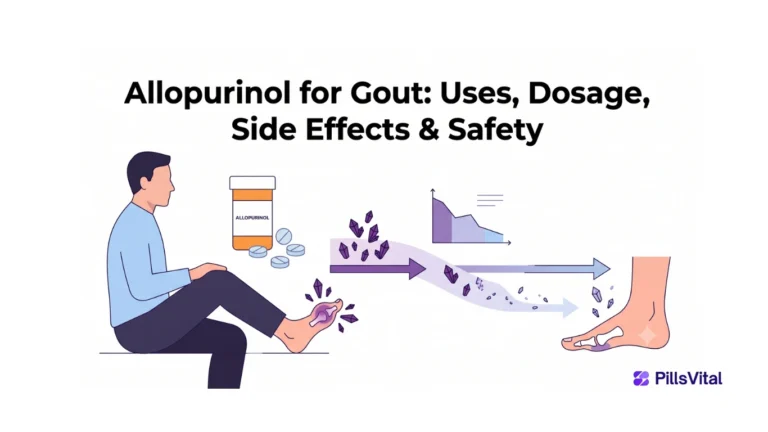
If you’ve been prescribed allopurinol for gout, you may have several questions:
- How does allopurinol work?
- How long does allopurinol take to lower uric acid?
- Can you take allopurinol during a gout flare?
- Why can gout get worse when you first start allopurinol?
- What is the usual allopurinol dosage?
- Is allopurinol 100 mg enough?
- What are the side effects of allopurinol?
- How long should you take allopurinol?
- Can you stop allopurinol when your gout gets better?
- Is allopurinol better than febuxostat?
Allopurinol is one of the main urate-lowering medicines used for gout. If you’re new to gout, our guide to gout treatment, causes, symptoms and management explains how gout develops and the main treatment approaches. It works differently from medicines used for immediate gout pain because its purpose is to lower uric acid over time and prevent future gout attacks, rather than provide rapid relief during an acute attack. The American College of Rheumatology recommends a treat-to-target approach, generally aiming for a serum urate level below 6 mg/dL for people receiving urate-lowering therapy.
What Is Allopurinol Used For?
Allopurinol is a xanthine oxidase inhibitor. It reduces the body’s production of uric acid.
Gout develops when urate accumulates and forms monosodium urate crystals in and around joints. Because gout can sometimes be confused with other types of joint inflammation, see our guide to gout vs arthritis to understand the key differences.These crystals can trigger episodes of severe pain, swelling, redness and inflammation.
Instead of directly treating that inflammation, allopurinol addresses one of the underlying causes: excess uric acid.
Common allopurinol uses include:
- Long-term gout management
- Prevention of recurrent gout attacks
- Lowering persistently elevated uric acid
- Management of gout associated with tophi
- Certain uric-acid-related kidney stone conditions
- Other specific conditions involving excessive uric acid production, depending on the clinical situation
The U.S. prescribing information lists allopurinol for adults with signs and symptoms of primary or secondary gout, including acute attacks, tophi, joint destruction, uric acid stones and/or uric-acid-related kidney disease.
Important: Allopurinol is not a painkiller
This distinction is extremely important.
Allopurinol does not provide immediate relief from gout pain.
During an acute attack, your clinician may recommend a separate treatment such as colchicine, an NSAID, or a corticosteroid, depending on your medical history and contraindications.
Allopurinol’s role is to lower urate over time so that existing crystals gradually dissolve and new crystals are less likely to form.
How Does Allopurinol Work for Gout?
Allopurinol inhibits an enzyme called xanthine oxidase.
This enzyme participates in the production of uric acid. By inhibiting it, allopurinol decreases uric acid production.
The process can be simplified as:
Purines → breakdown products → uric acid
Allopurinol interferes with this pathway and reduces uric acid formation.
When serum urate remains below the appropriate treatment target for long enough, existing urate crystals can gradually dissolve.
This is why successful gout treatment is not simply about making the pain disappear.
The long-term goal is to:
- Lower serum urate.
- Prevent new crystals from forming.
- Gradually dissolve existing crystals.
- Reduce the frequency of gout flares.
- Prevent progressive joint damage and other complications.
The ACR specifically recommends a treat-to-target strategy, rather than simply prescribing a fixed allopurinol dose and leaving it unchanged.
How Long Does Allopurinol Take to Work?
This is one of the most important questions patients have.
How long does allopurinol take to lower uric acid?
Allopurinol begins reducing uric acid production after treatment starts, but the dose is usually adjusted gradually.
That means there are actually several different timelines to understand:
| What you’re measuring | Typical expectation |
|---|---|
| Effect on uric acid production | Begins after treatment starts |
| Blood urate response | Evaluated through follow-up testing |
| Reaching the individual urate target | May require dose adjustments over weeks/months |
| Fewer gout attacks | Usually takes longer than the initial urate reduction |
| Dissolution of established crystals | Can take months or longer |
The important point is that lowering uric acid and feeling better are not the same thing.
You may have a lower uric acid level while still experiencing gout attacks.
This does not automatically mean that allopurinol is failing.
Why Does Gout Get Worse After Starting Allopurinol?
A surprisingly common long-tail search is:
Can allopurinol make gout worse at first?
Yes, gout flares can occur when urate-lowering therapy is initiated.
This can seem confusing because the medication is supposed to prevent gout.
During the early treatment period, changes in urate levels can mobilize urate deposits in tissues and trigger flares. The official prescribing information specifically warns that gout flares can occur during initiation, even after serum urate has reached normal or low levels.
Therefore:
A gout flare shortly after starting allopurinol does not necessarily mean the medication isn’t working.
This is one reason guidelines recommend anti-inflammatory prophylaxis when starting urate-lowering therapy. The ACR recommends prophylaxis, when appropriate, for at least 3–6 months, with longer treatment considered when flares continue.
Can You Take Allopurinol During a Gout Flare?
Current gout-management guidance supports starting urate-lowering therapy during a flare when it is indicated, rather than necessarily waiting for the flare to disappear.
The ACR recommends that allopurinol can be initiated during an acute gout flare when appropriate, provided the patient also receives appropriate management for the flare.
If you’re already taking allopurinol and develop a gout attack, do not automatically stop your regular allopurinol dose. Stopping and restarting treatment without medical guidance can interfere with consistent urate control.
Instead, acute flare treatment and long-term urate lowering are generally handled as two separate issues.
If you’re unsure whether you should continue your medication during an attack, contact your prescriber or pharmacist.
Allopurinol Dosage for Gout
the Usual Allopurinol Starting Dose
A common approach is:
Start low and gradually increase the dose according to serum urate response and patient factors.
For many adults with normal kidney function, 100 mg once daily is a commonly used starting dose. Lower starting doses may be appropriate in people with reduced kidney function.
The exact starting dose should be determined by the prescriber.
The goal is not simply to reach a particular milligram dose.
The goal is to reach and maintain the patient’s serum urate target safely.
The ACR recommends low-dose initiation followed by dose escalation based on the treat-to-target approach.
Allopurinol 100 mg for Gout: Is It Enough?
Allopurinol 100 mg is commonly used as a starting dose, but it may not be sufficient to achieve the desired urate level for every patient.
Some people eventually require a higher dose.
The important question is therefore not:
“Is 100 mg enough?”
but:
“Has my serum urate reached the treatment target on this dose?”
Your healthcare professional may gradually adjust your dose based on:
- Serum urate level
- Kidney function
- Response to treatment
- Gout flare frequency
- Other medicines
- Side effects
- Individual risk factors
Do not increase the dose yourself.
Is allopurinol 300 mg a common dose?
Yes, 300 mg is a commonly encountered maintenance strength, but it is not automatically the correct dose for everyone.
Some people may reach their target at a lower dose, while others may require further adjustment.
The ACR’s treat-to-target approach means that treatment is guided by serum urate rather than assuming every patient should remain at the same fixed dose.
This is particularly important for people whose uric acid remains above target despite taking allopurinol consistently.
Allopurinol Dosage and Kidney Function
Kidney function is an important consideration when prescribing allopurinol.
People with impaired kidney function may require a lower starting dose and careful dose escalation and monitoring.
The current U.S. prescribing information specifically includes dosage modifications for renal impairment.
This is why patients should not copy another person’s allopurinol dose.
A dose that is appropriate for one person may be inappropriate for another.
Your doctor may consider:
- Estimated kidney function
- Serum urate
- Age
- Other medications
- Previous reactions to medicines
- Severity of gout
- Presence of tophi or kidney stones
When Should You Take Allopurinol?
Allopurinol is generally taken regularly as prescribed, rather than only when you experience gout symptoms.
Depending on your prescription, it may be taken once daily or divided into multiple doses at higher total daily doses.
Taking it consistently is important because its purpose is long-term urate control.
If it causes stomach upset, taking it after food may be helpful, but follow the instructions provided with your prescription.
The NHS lists allopurinol under the brand names Zyloric and Uricto and provides guidance on how and when it is taken.
What Happens If You Miss an Allopurinol Dose?
If you forget a dose, follow the instructions supplied with your prescription or ask your pharmacist.
Generally, patients should not double the next dose simply because a previous dose was missed.
If missed doses happen frequently, discuss practical ways to improve adherence with your pharmacist or doctor.
Allopurinol Side Effects
Most people do not develop serious side effects, but allopurinol can cause adverse reactions.
Possible side effects include:
- Skin rash
- Nausea
- Diarrhea
- Stomach discomfort
- Headache
- Drowsiness or dizziness
However, the most important safety issue is a rare but potentially severe hypersensitivity reaction. The official allopurinol prescribing information provides detailed warnings about serious skin reactions and hypersensitivity.
Allopurinol Rash: When Should You Be Concerned?
What should you do if you get a rash from allopurinol?
This is one area where patients should be particularly cautious.
The official U.S. prescribing information warns about serious skin reactions including:
- Stevens-Johnson syndrome (SJS)
- Toxic epidermal necrolysis (TEN)
- DRESS
- Other serious hypersensitivity reactions
The prescribing information instructs patients to discontinue allopurinol at the first appearance of a skin rash and seek prompt medical evaluation.
A rash accompanied by symptoms such as:
- Fever
- Facial swelling
- Mouth sores
- Blistering
- Skin peeling
- Difficulty breathing
- Significant illness
requires urgent medical attention.
Do not attempt to diagnose the rash yourself.
Who Has a Higher Risk of Allopurinol Hypersensitivity?
A genetic marker called HLA-B*58:01 is associated with a higher risk of serious allopurinol hypersensitivity.
The frequency of this allele varies among populations.
The ACR conditionally recommends HLA-B*58:01 testing before starting allopurinol in certain higher-risk populations, including people of Southeast Asian ancestry and African American patients.
The current U.S. prescribing information similarly recommends considering screening in populations where the allele is prevalent.
Testing is not universally required for everyone.
Your clinician can determine whether genetic testing is appropriate based on your ancestry and other risk factors.
Allopurinol and Liver or Kidney Problems
Allopurinol treatment may require monitoring in people with kidney or liver problems.
The prescribing information includes warnings regarding kidney effects and hepatotoxicity.
Tell your healthcare professional if you have:
- Chronic kidney disease
- Liver disease
- Previous reactions to allopurinol
- A history of kidney stones
- Other significant medical conditions
Your doctor may order blood tests to monitor treatment.
Allopurinol Drug Interactions
Allopurinol can interact with other medicines.
Important examples include certain medications such as:
- Azathioprine
- Mercaptopurine
- Warfarin
- Certain antibiotics
- Diuretics
- Other medicines affecting kidney function
The exact interaction and clinical significance vary by medication.
For this reason, tell your doctor or pharmacist about all prescription medicines, OTC products, vitamins and supplements you use before starting allopurinol.
The prescribing information also identifies increased hypersensitivity concerns in certain patients taking allopurinol with thiazide diuretics and notes interactions with some medicines such as ampicillin/amoxicillin.
How Long Should You Take Allopurinol?
Is allopurinol a lifelong medication?
For many people with recurrent gout, urate-lowering treatment is long-term and may continue indefinitely.
This is because allopurinol controls uric acid while it is being taken.
If treatment is stopped, uric acid can rise again, allowing urate crystals to accumulate and gout attacks to return.
That does not mean everyone must take allopurinol forever under every circumstance. Decisions about stopping treatment are individualized and should be made with a healthcare professional.
Can You Stop Allopurinol When Your Gout Gets Better?
Generally, you should not stop allopurinol simply because your pain has disappeared.
Feeling better may actually indicate that urate-lowering treatment is successfully controlling the underlying problem.
Stopping treatment without medical guidance can allow serum urate to rise again.
If you want to stop allopurinol because of side effects, cost, pregnancy planning, another medical issue, or another concern, speak with your prescriber first.
Allopurinol and Gout Flares: What to Expect
One of the biggest misconceptions is:
“If I’m still getting gout attacks, allopurinol isn’t working.”
That isn’t necessarily true.
During the early stages of urate-lowering therapy, flares can occur as urate deposits are mobilized.
The official prescribing information recognizes this phenomenon, and ACR guidelines recommend anti-inflammatory prophylaxis when initiating urate-lowering therapy.
Over time, maintaining serum urate below the treatment target helps reduce the crystal burden and the likelihood of future attacks. For additional strategies, read our guide on how to prevent future gout attacks.
What Should Your Uric Acid Level Be on Allopurinol?
For most patients receiving urate-lowering therapy, the ACR recommends a target serum urate of:
Less than 6 mg/dL
The goal is not simply to take a particular dose of allopurinol. The American College of Rheumatology gout guideline provides additional information on treat-to-target urate-lowering therapy
Instead, the medication is adjusted to achieve and maintain the target urate level.
People with more severe gout, such as those with tophi, may sometimes be managed toward a lower target according to clinical judgment and other guidelines.
How Do You Know If Allopurinol Is Working?
You cannot reliably judge allopurinol’s success from symptoms alone.
Your healthcare professional may evaluate:
1. Serum uric acid
This is the primary laboratory measure used to determine whether treatment is reaching the target.
2. Gout flare frequency
Fewer attacks over time can indicate improved control.
3. Tophi
In people with visible or palpable urate deposits, successful long-term urate lowering can gradually reduce the crystal burden.
4. Kidney and liver monitoring
Depending on your health and treatment, your clinician may monitor relevant laboratory values.
Allopurinol vs Febuxostat: Which Is Better?
Both allopurinol and febuxostat reduce uric acid by inhibiting xanthine oxidase.
However, they aren’t interchangeable for every patient.
| Feature | Allopurinol | Febuxostat |
|---|---|---|
| Drug class | Xanthine oxidase inhibitor | Xanthine oxidase inhibitor |
| Main purpose | Long-term urate lowering | Long-term urate lowering |
| Common role | First-line option | Alternative in appropriate patients |
| Generic availability | Widely available | Available in many markets |
| Kidney considerations | Dose initiation/titration requires attention | Different dosing considerations |
| Hypersensitivity concern | Important | Different adverse-effect profile |
| Monitoring | Serum urate and clinical factors | Serum urate and clinical factors |
The ACR strongly recommends allopurinol as the preferred first-line urate-lowering therapy, including for patients with chronic kidney disease, while febuxostat is an important alternative in appropriate circumstances.
The choice should be individualized rather than based on the assumption that one medicine is universally better.
Allopurinol vs Zyloric: Are They the Same?
What is Zyloric?
Zyloric is a brand name for allopurinol in some markets. The NHS allopurinol medicine guide also lists Zyloric among the brand names used for allopurinol.
The active ingredient is allopurinol.
Therefore, when discussing:
- Allopurinol uses
- Allopurinol dosage
- Allopurinol side effects
- Allopurinol interactions
- Allopurinol precautions
the same active-drug principles generally apply to a Zyloric product containing allopurinol.
However, always check the product packaging and prescription because brand availability and formulations vary between countries. The NHS lists Zyloric as a brand name for allopurinol.
Allopurinol and Lifestyle: Does Diet Still Matter?
Medication is an important part of gout management, but lifestyle factors can also influence urate levels and flare risk.
Depending on your individual situation, your clinician may recommend:
- Maintaining a healthy weight
- Avoiding crash diets
- Staying adequately hydrated
- Limiting alcohol
- Reducing sugar-sweetened beverages
- Following an overall balanced diet
- Managing blood pressure, diabetes and cholesterol when applicable
Lifestyle changes should complement—not replace—prescribed urate-lowering therapy when medication is indicated.
❓ FAQs
Does allopurinol stop gout attacks immediately?
No. Allopurinol is a long-term urate-lowering medication and is not designed to provide immediate relief from acute gout pain.
How long does allopurinol take to lower uric acid?
It starts reducing uric acid production after treatment begins, but reaching the individual’s target may require gradual dose adjustment and follow-up blood tests.
Can allopurinol make gout worse at first?
Gout flares can occur when allopurinol is initiated. This does not necessarily mean the medicine is failing.
Can you take allopurinol during a gout flare?
Current ACR guidance supports initiating urate-lowering therapy during a flare when appropriate. People already taking allopurinol generally should not stop it during a flare unless instructed by their healthcare professional.
Is allopurinol 100 mg enough for gout?
It may be enough for some people, but it is commonly used as a starting dose. Treatment should be adjusted according to serum urate and individual factors.
Is 300 mg of allopurinol a lot?
300 mg is a commonly prescribed strength, but whether it is appropriate depends on the individual patient’s urate level, kidney function, response and other factors.
Can you stop taking allopurinol when gout goes away?
Do not stop it simply because symptoms disappear. Discuss any decision to discontinue treatment with your prescriber.
What happens if you stop allopurinol suddenly?
Stopping can allow uric acid to rise again and may increase the likelihood of recurrent gout over time.
What is the most serious side effect of allopurinol?
A rare but potentially life-threatening hypersensitivity reaction can occur. A new rash after starting allopurinol should be treated seriously and evaluated promptly.
Does allopurinol damage the kidneys?
Allopurinol can be used in people with kidney disease, but dosing and monitoring require particular attention. Kidney function should be considered when determining the treatment plan.
Is allopurinol better than febuxostat?
Neither is universally better. Allopurinol is generally recommended as the preferred first-line urate-lowering medication, while febuxostat can be an alternative for selected patients.
When Should You Contact a Doctor?
Contact your healthcare professional if:
- Your gout attacks continue frequently despite treatment.
- Your uric acid remains above your prescribed target.
- You experience troublesome side effects.
- You have concerns about your dose.
- You have kidney or liver problems.
- You are taking multiple medications.
- You are considering stopping allopurinol.
Seek urgent medical attention for:
- A new widespread rash
- Blistering or peeling skin
- Mouth or eye sores
- Facial swelling
- Difficulty breathing
- Fever associated with a rash
- Severe illness after starting allopurinol
Serious hypersensitivity reactions can be life-threatening, and official prescribing information recommends stopping allopurinol at the first appearance of a skin rash and obtaining prompt medical attention.
Key Takeaways
Allopurinol for gout is a long-term urate-lowering treatment, not an immediate painkiller.
The most important points are:
- Allopurinol reduces uric acid production.
- It is commonly used to prevent recurrent gout.
- Treatment is generally started at a low dose and adjusted gradually.
- 100 mg may be a starting dose, not necessarily the final dose.
- The treatment target is generally serum urate below 6 mg/dL.
- Gout flares can temporarily increase after starting treatment.
- Anti-inflammatory prophylaxis may be used when starting urate-lowering therapy.
- Do not automatically stop allopurinol during a gout attack.
- A new rash after starting allopurinol requires prompt medical attention.
- HLA-B*58:01 testing may be appropriate for certain higher-risk populations.
- Allopurinol is generally the preferred first-line urate-lowering medicine.
- Treatment duration is often long-term and may be lifelong.
- Dose changes should be based on your clinical situation and laboratory results, not another person’s prescription.
Related Health Resources
-
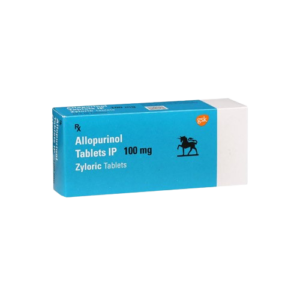
Allopurinol 100mg (Zyloric) Tablets
$34.00 – $98.00Price range: $34.00 through $98.00 This product has multiple variants. The options may be chosen on the product page -
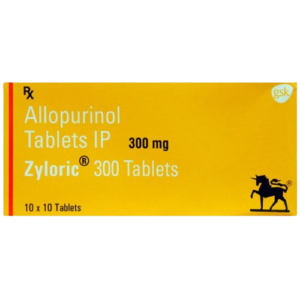
Allopurinol 300mg (Zyloric) Tablets
$38.00 – $774.00Price range: $38.00 through $774.00 This product has multiple variants. The options may be chosen on the product page




Dr. Emily Carter specializes in evidence-based health education and wellness content. She focuses on simplifying complex medical topics related to cancer awareness, nutrition, preventive healthcare, skincare, and lifestyle wellness for readers worldwide.
This content is reviewed for medical accuracy, clarity, and alignment with current public health research. The article is intended for educational and informational purposes only and should not replace professional medical advice, diagnosis, or treatment.