
Gout vs Arthritis: 7 Shocking Differences Doctors Wish You Knew Sooner
Medically reviewed/updated: August 2026
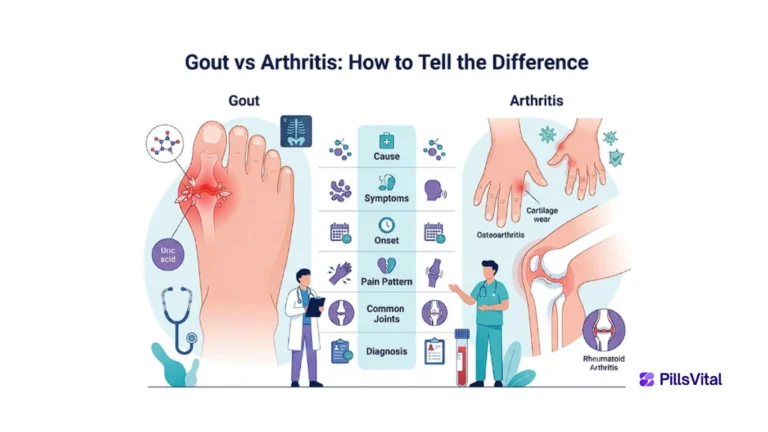
Joint pain can be confusing, especially when it strikes suddenly and you’re left wondering what’s actually causing it. Two of the most commonly confused conditions are gout and arthritis. Many people search for answers because their symptoms overlap — swelling, redness, stiffness, and pain that limits movement — but the underlying causes, and the treatments that work, are very different. If you’re looking for a complete overview of diagnosis, medications, and lifestyle changes, read our complete guide to gout treatment.
This guide breaks down gout vs arthritis in plain language: what each condition is, how their symptoms differ, how doctors diagnose them, and what treatment options actually help. By the end, you’ll be able to recognize the warning signs and know exactly what to ask your doctor.
Gout vs Arthritis: 7 Key Differences
| Difference | Gout | Other Arthritis (e.g., Osteoarthritis) |
|---|---|---|
| 1. Main Cause | Caused by buildup of uric acid crystals inside a joint. | Often caused by joint wear and tear, aging, injury, or inflammation depending on the type. |
| 2. How Pain Starts | Often begins suddenly and intensely, sometimes overnight. | Usually develops gradually and may worsen over time. |
| 3. Common Joints Affected | Frequently affects the big toe, but can also affect ankles, knees, and other joints. | Commonly affects the knees, hips, hands, spine, and other weight-bearing joints. |
| 4. Swelling & Redness | Joint can become very swollen, red, hot, and extremely tender during an attack. | Swelling and stiffness can occur, but severe redness and heat are less typical of osteoarthritis. |
| 5. Duration | A gout attack may last several days to a few weeks if untreated. | Symptoms can persist for months or years, with pain often fluctuating over time. |
| 6. Triggers | Attacks may be triggered by high-purine foods, alcohol, dehydration, illness, or certain medications. | Pain may worsen with overuse, physical activity, joint stress, or previous injury. |
| 7. Diagnosis & Treatment | Diagnosis may involve uric acid testing, joint-fluid analysis, or imaging. Treatment focuses on controlling the attack and lowering uric acid when appropriate. | Diagnosis usually involves medical history, physical examination, and sometimes imaging. Treatment depends on the specific type of arthritis. |
Is Gout a Type of Arthritis?
Let’s clear up the most common point of confusion first: is gout a type of arthritis?
Yes — gout is technically classified as a form of inflammatory arthritis. But that doesn’t mean gout and arthritis are interchangeable terms. “Arthritis” is actually an umbrella term covering more than 100 different joint conditions, including osteoarthritis, rheumatoid arthritis, psoriatic arthritis, and gout itself.
So when people ask about gout vs arthritis, what they usually mean is: how is gout different from the other, more common types of arthritis — particularly osteoarthritis and rheumatoid arthritis? That’s exactly what we’ll cover below.
What Is Gout?
Gout is a specific type of inflammatory arthritis caused by a buildup of uric acid crystals in the joints. Uric acid is a waste product your body normally filters out through the kidneys. When uric acid levels get too high, sharp, needle-like crystals form inside a joint, triggering sudden and intense inflammation. According to the American College of Rheumatology gout guidelines, long-term management focuses on lowering uric acid levels to prevent recurrent flares and joint damage.
Gout is notorious for causing gout flares — sudden, severe attacks that often begin at night and can reach peak pain within 12 to 24 hours. It has a strong reputation for one specific pattern: gout or arthritis in the big toe. In fact, the big toe joint is the single most common site for a first gout attack, a condition doctors call podagra.
Common gout triggers include:
- Red meat, organ meat, and shellfish
- Alcohol, especially beer and spirits
- Sugary drinks (fructose-heavy beverages)
- Dehydration
- Certain medications (like diuretics)
- Rapid weight loss or fasting
- Genetics and family history
What Is Arthritis?
As mentioned, “arthritis” refers to inflammation of one or more joints, and it includes many distinct conditions. The Centers for Disease Control and Prevention (CDC) notes that arthritis includes more than 100 different conditions affecting joints, connective tissues, and surrounding structures. The two most common types people compare gout to are:
Osteoarthritis (OA)
A “wear-and-tear” condition where the cartilage cushioning your joints gradually breaks down over time. It develops slowly, usually over years, and tends to affect weight-bearing joints like the knees, hips, and spine, as well as the hands.
Rheumatoid Arthritis (RA)
An autoimmune disease where the immune system mistakenly attacks the joint lining (synovium), causing chronic joint inflammation. RA typically affects joints symmetrically — meaning both hands, both wrists, or both knees at the same time — and can also affect organs beyond the joints.
Gout vs Arthritis: Key Differences at a Glance
| Feature | Gout | Osteoarthritis | Rheumatoid Arthritis |
|---|---|---|---|
| Cause | Uric acid crystal buildup in joints | Cartilage breakdown over time | Autoimmune attack on the joints |
| Onset | Sudden, often overnight | Gradual, develops over years | Gradual to moderate onset |
| Common Joints Affected | Big toe, ankle, knee | Knees, hips, hands, spine | Hands, wrists, feet (usually symmetrical) |
| Pain Pattern | Intense pain with sudden flares | Dull, aching pain that worsens with activity | Persistent pain and stiffness, especially in the morning |
| Swelling | Severe, red, hot, and tender | Mild to moderate swelling | Moderate to severe, usually affects both sides equally |
| Age of Onset | Common in men aged 30–50; women after menopause | Usually age 50 and older | Can occur at any age, most commonly 30–60 |
| Diagnosis Method | Joint fluid analysis, uric acid blood test | Physical examination, X-ray | Blood tests (RF, anti-CCP), imaging (X-ray, ultrasound, or MRI) |
Gout Symptoms vs Arthritis Symptoms
When comparing gout symptoms vs arthritis symptoms, timing and intensity are the biggest clues. Persistent joint pain may also be an early indicator of other chronic conditions. Read about the early warning signs of chronic diseases to understand when medical evaluation is recommended.
Gout symptoms typically include:
- Sudden, intense joint pain — often described as the worst pain a person has ever felt
- Swollen joints that feel hot to the touch
- Skin that appears red or purplish over the joint
- Extreme sensitivity — even a bedsheet touching the toe can be unbearable
- Symptoms that peak within 24 hours, then gradually ease over 1–2 weeks
- Attacks that come and go, with pain-free periods in between
Osteoarthritis symptoms typically include:
- Gradual, aching joint pain that worsens with use and improves with rest
- Stiffness, especially after waking up or sitting for a while (usually under 30 minutes)
- A grinding or clicking sensation in the joint
- Reduced range of motion over time
- No dramatic redness or heat like gout
Osteoarthritis is among the top 10 most common chronic diseases worldwide, affecting millions of adults each year.
Rheumatoid arthritis symptoms typically include:
- Symmetrical joint pain and swelling (both hands, both feet, etc.)
- Morning stiffness lasting more than 30 minutes, sometimes hours
- Fatigue, low-grade fever, and general malaise
- Small joints (fingers, wrists) affected early
- Joint damage that can progress without treatment
Gout Pain vs Arthritis Pain: What Does It Actually Feel Like?
People often want to know how gout pain vs arthritis pain actually differs in real life.
- Gout pain hits fast and hard — often described as a “burning” or “crushing” sensation. It’s the kind of pain that wakes people up in the middle of the night. A single joint is usually involved, and the area becomes so tender that even light pressure is agonizing.
- Arthritis pain (osteoarthritis or rheumatoid) tends to build gradually. It’s more of an ache or stiffness that worsens with activity (OA) or is worse first thing in the morning (RA). It rarely reaches the sudden, explosive intensity of a gout attack.
This difference in pain onset is one of the clearest ways to distinguish the two without even seeing a doctor — though a proper diagnosis is still essential.
Can Gout Be Mistaken for Arthritis?
Yes, absolutely — gout can be mistaken for arthritis, and it happens more often than you’d think. Here’s why:
- Overlapping symptoms: Swelling, redness, and joint pain appear in both conditions.
- Location confusion: While gout favors the big toe, it can also affect the knees, ankles, wrists, and fingers — joints commonly associated with RA or OA.
- First-time attacks: People experiencing their first gout flare often assume it’s a sprain, infection, or general arthritis rather than a distinct condition.
- Chronic gout mimicking RA: In long-term, poorly managed gout, tophi (hardened uric acid deposits) can form near joints and resemble rheumatoid nodules, further blurring the picture.
This is exactly why self-diagnosis is risky — the treatments for gout, osteoarthritis, and rheumatoid arthritis are fundamentally different, and using the wrong approach can delay real relief.
Gout vs Rheumatoid Arthritis
Since both are inflammatory and autoimmune-adjacent in how they present, gout vs rheumatoid arthritis confusion is common. Key distinguishing points:
- Symmetry: RA usually affects joints on both sides of the body at once. Gout typically strikes one joint at a time, especially during early flares.
- Speed of onset: Gout pain can peak within hours. RA develops more gradually, often over weeks.
- Blood markers: RA is associated with specific antibodies (rheumatoid factor, anti-CCP) that gout does not produce.
- Root cause: Gout is metabolic (uric acid buildup); RA is autoimmune (immune system attacking joint tissue).
Gout vs Osteoarthritis
Gout vs osteoarthritis is a slightly easier comparison because OA lacks the sudden, fiery inflammation of gout.
- Onset: OA develops over years; gout can appear in a matter of hours.
- Pain trigger: OA pain worsens with activity and improves with rest. Gout pain often begins at rest, frequently at night.
- Appearance: Gout causes visible redness and warmth; OA rarely does.
- Underlying cause: OA is mechanical wear-and-tear; gout is a crystal-deposition disease tied to uric acid levels.
How Doctors Diagnose Gout vs Arthritis
Understanding how doctors diagnose gout — and how that differs from diagnosing other arthritis types — can help you know what to expect at your appointment. Learn more about what chronic diseases are and why early diagnosis can improve long-term health outcomes. The National Institute of Arthritis and Musculoskeletal and Skin Diseases (NIAMS) recommends early diagnosis because timely treatment can help reduce symptoms, protect joint function, and prevent long-term complications.
Gout Diagnosis
- Joint fluid analysis: A needle is used to draw fluid from the affected joint, which is examined under a microscope for uric acid crystals. This is the gold-standard test.
- Blood uric acid test: Measures serum uric acid levels, though this alone isn’t definitive since levels can be normal during a flare.
- Imaging: X-rays, ultrasound, or dual-energy CT scans can detect urate crystal deposits in more advanced cases.
Osteoarthritis Diagnosis
- Physical exam: Checking for joint tenderness, swelling, and range of motion.
- X-rays: Reveal cartilage loss, bone spurs, and joint space narrowing.
Rheumatoid Arthritis Diagnosis
- Blood tests: Rheumatoid factor (RF) and anti-CCP antibodies, along with inflammatory markers like ESR and CRP.
- Imaging: X-rays or MRI to assess joint damage and erosion.
This comparison of gout diagnosis vs arthritis diagnosis highlights why seeing a doctor matters — the tests used to confirm each condition are quite different, and getting it right shapes your entire treatment plan.
Best Treatment for Gout vs Arthritis
Because the causes differ, the best treatment for gout vs arthritis looks quite different depending on which condition you actually have.
Gout Treatment Options
During a flare (acute treatment):
- NSAIDs (like ibuprofen or naproxen) to reduce pain and inflammation
- Colchicine for gout — a long-standing anti-inflammatory medication specifically effective for gout flares when taken early
- Corticosteroids, either oral or injected directly into the joint, for severe flares
Long-term management (preventing future flares):
- Allopurinol for gout — a widely prescribed medication that lowers uric acid production
- Febuxostat for gout — an alternative uric-acid-lowering medication, often used when allopurinol isn’t well tolerated
- Dietary changes: reducing red meat, alcohol, and sugary drinks
- Staying well-hydrated
- Maintaining a healthy weight
Osteoarthritis Treatment Options
- Acetaminophen or NSAIDs for pain
- Physical therapy to strengthen supporting muscles
- Weight management to reduce joint stress
- Joint injections (corticosteroids or hyaluronic acid)
- Joint replacement surgery in advanced cases
Rheumatoid Arthritis Treatment Options
- Disease-modifying antirheumatic drugs (DMARDs) like methotrexate
- Biologic therapies targeting specific immune pathways
- Corticosteroids for flare control
- Physical therapy to maintain joint function
Medicine for Gout Pain: What Actually Works
If you’re dealing with an active flare, here’s a quick reference for medicine for gout pain:
- NSAIDs — first-line for mild to moderate flares
- Colchicine — most effective when started within 24 hours of flare onset
- Corticosteroids — used when NSAIDs or colchicine aren’t suitable, or for severe attacks
- Uric-acid-lowering drugs (allopurinol, febuxostat) — not for acute pain, but essential for preventing future flares when taken consistently
Always talk to a doctor before starting any new medication, especially since some gout drugs interact with other conditions like kidney disease or heart medications.
How to Tell the Difference Between Gout and Arthritis: Quick Checklist
Use this checklist as a general guide — not a diagnosis:
✅ Sudden, severe pain that peaks within a day → More likely gout
✅ Big toe is the primary joint affected → More likely gout
✅ Pain and swelling on both sides of the body → More likely rheumatoid arthritis
✅ Gradual pain that worsens with activity over months or years → More likely osteoarthritis
✅ Joint is red, hot, and extremely tender to touch → More likely gout
✅ Morning stiffness lasting over 30 minutes → More likely rheumatoid arthritis
✅ History of high uric acid, red meat/alcohol consumption → More likely gout
If your symptoms match multiple categories, or you’re unsure, the safest step is a proper medical evaluation.
Does Gout Always Affect Only One Joint?
Many people believe gout only affects a single joint, but that’s not always true.
During the first attack, gout most often affects one joint—especially the big toe. However, if gout remains untreated, repeated uric acid crystal deposits can spread to multiple joints over time.
Advanced gout may affect:
- Both feet
- Ankles
- Knees
- Elbows
- Wrists
- Fingers
When several joints become involved, gout can resemble rheumatoid arthritis, making an accurate diagnosis even more important.
Can Stress Trigger a Gout Attack?
Stress itself doesn’t directly increase uric acid levels, but it may contribute to gout flares indirectly.
Periods of physical or emotional stress can lead to:
- Poor sleep
- Dehydration
- Unhealthy eating habits
- Increased alcohol consumption
- Hormonal changes affecting inflammation
Managing stress through regular exercise, adequate sleep, and healthy lifestyle habits may help reduce flare frequency.
Is Gout Curable?
There is currently no permanent cure for gout, but it is one of the most manageable forms of arthritis.
With appropriate treatment, many people can:
- Lower uric acid levels
- Prevent future attacks
- Avoid permanent joint damage
- Live symptom-free for years
Long-term success depends on following your healthcare provider’s treatment plan and maintaining healthy lifestyle habits.
What Happens During a Gout Flare?
A gout flare develops when uric acid crystals suddenly trigger an intense inflammatory response inside a joint.
A typical flare often follows this pattern:
| Time | What Happens |
|---|---|
| 0–6 hours | Sudden severe pain begins |
| 6–24 hours | Pain reaches its highest intensity |
| 1–3 days | Swelling, redness, and warmth remain significant |
| 4–14 days | Symptoms gradually improve |
| After recovery | The joint may feel completely normal until another flare occurs |
Why Does Gout Usually Start at Night?
Many first gout attacks occur during the night.
Experts believe several factors contribute:
- Slight drop in body temperature during sleep
- Mild dehydration overnight
- Reduced joint movement
- Crystal formation becomes easier in cooler joints
This explains why many people wake up with sudden, severe toe pain.
Who Has the Highest Risk of Developing Gout?
Several factors increase the likelihood of gout.
You may have a higher risk if you:
- Have a family history of gout
- Are overweight or obese
- Have chronic kidney disease
- Have diabetes or metabolic syndrome
- Have high blood pressure
- Frequently consume alcohol
- Eat large amounts of purine-rich foods
- Take certain medications, such as diuretics
Having one or more risk factors does not guarantee gout, but it increases the likelihood.
Can Women Get Gout?
Although gout is more common in men, women can also develop the condition.
Before menopause, estrogen helps remove uric acid from the body, reducing gout risk. After menopause, uric acid levels may rise, making gout more common in older women.
Women often experience gout in:
- Fingers
- Knees
- Ankles
- Feet
instead of only the big toe.
Can Gout Damage Bones?
Yes.
Repeated inflammation caused by uric acid crystals may gradually erode nearby bone and cartilage.
Without proper treatment, chronic gout may lead to:
- Bone erosion
- Joint deformities
- Loss of joint function
- Permanent mobility problems
Early treatment greatly reduces these risks.
Can Kidney Stones and Gout Be Related?
Yes.
Both conditions involve uric acid.
When uric acid levels remain high:
- Crystals may collect inside joints, causing gout.
- Crystals may also form in the urinary tract, leading to uric acid kidney stones.
People with recurrent gout should discuss kidney stone prevention with their healthcare provider.
Foods That May Help Lower Gout Risk
Although food alone cannot cure gout, some dietary choices may support healthy uric acid levels.
Foods commonly recommended include:
- Cherries
- Low-fat dairy products
- Fresh vegetables
- Whole grains
- Citrus fruits
- Coffee (in moderation)
- Plenty of water
These foods should complement—not replace—medical treatment.
Can Gout Return After Treatment?
Yes.
Even after symptoms disappear, uric acid crystals may remain in the body.
Without long-term uric acid control:
- Future flares may become more frequent.
- More joints can become affected.
- Permanent joint damage may occur.
This is why preventive treatment is often recommended for people with recurrent gout attacks
Gout vs Arthritis: Symptoms That Need Emergency Care
Seek immediate medical attention if you experience:
- Severe joint pain with a fever
- A hot, swollen joint after an injury
- Inability to move the affected joint
- Sudden swelling involving multiple joints
- Red streaks spreading from the joint
- Persistent pain despite medication
- Difficulty walking because of severe joint pain
These symptoms could indicate a serious infection or another medical emergency rather than gout alone.
When to See a Doctor
Don’t wait out severe joint pain hoping it will resolve on its own. See a doctor promptly if you experience:
- Sudden, intense joint pain, especially in the big toe
- A joint that’s hot, swollen, and red
- Fever alongside joint pain (could indicate infection, which needs urgent care)
- Joint pain lasting more than a few days
- Recurring flares in the same or different joints
- Joint stiffness that limits your daily activities
Early, accurate diagnosis prevents joint damage and gets you on the right treatment path faster — whether that means uric-acid-lowering medication for gout, DMARDs for rheumatoid arthritis, or physical therapy for osteoarthritis.
Common Myths About Gout vs Arthritis
| Myth | Fact |
|---|---|
| Gout only affects the big toe. | Gout can affect many joints, including the knees, ankles, wrists, elbows, and fingers. |
| Arthritis is a single disease. | Arthritis is a group of more than 100 different joint disorders. |
| Only older adults get gout. | Gout can develop in younger adults, especially men with elevated uric acid levels. |
| Every painful joint is arthritis. | Joint pain can also result from gout, injuries, infections, bursitis, or tendon disorders. |
| Diet alone can cure gout. | A healthy diet helps, but many people also need medication to control uric acid levels and prevent future flares. |
❓ FAQs
Is gout worse than arthritis?
Gout flares are often more sudden and intense than typical arthritis pain, but “worse” depends on the individual and how well the condition is managed over time. Untreated, both gout and other forms of arthritis can lead to permanent joint damage.
Can you have gout and arthritis at the same time?
Yes. It’s possible to have gout alongside osteoarthritis or rheumatoid arthritis, which is part of why professional diagnosis is so important — treatments don’t overlap neatly between conditions.
Does gout show up on an X-ray?
In early stages, gout often doesn’t show clear changes on X-ray. Joint fluid analysis is more reliable early on; X-rays become more useful for detecting long-term joint damage from chronic gout.
What foods trigger gout but not arthritis?
Purine-rich foods (red meat, organ meats, shellfish) and alcohol raise uric acid levels and can trigger gout flares. These foods don’t have the same direct triggering effect on osteoarthritis or rheumatoid arthritis, though a healthy diet benefits all joint conditions.
Final Takeaway
When comparing gout vs arthritis, remember: gout is technically a form of arthritis, but it behaves very differently from osteoarthritis or rheumatoid arthritis. Gout strikes suddenly, often in the big toe, and is driven by uric acid crystals — while osteoarthritis develops gradually from joint wear, and rheumatoid arthritis stems from an autoimmune response affecting joints symmetrically.
If you’re experiencing unexplained joint pain, don’t guess. A doctor can run the right tests — from joint fluid analysis to blood work — and get you started on a treatment plan built for your specific condition, not a generic one. For additional patient-friendly information about gout symptoms, diagnosis, and treatment, visit the MedlinePlus gout overview provided by the U.S. National Library of Medicine.
Related Health Resources
-
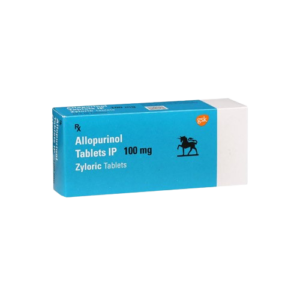
Allopurinol 100mg (Zyloric) Tablets
$34.00 – $98.00Price range: $34.00 through $98.00 This product has multiple variants. The options may be chosen on the product page -
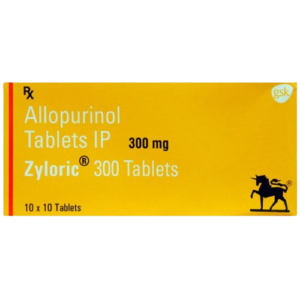
Allopurinol 300mg (Zyloric) Tablets
$38.00 – $774.00Price range: $38.00 through $774.00 This product has multiple variants. The options may be chosen on the product page
❤️ Related Guides


Dr. Emily Carter specializes in evidence-based health education and wellness content. She focuses on simplifying complex medical topics related to cancer awareness, nutrition, preventive healthcare, skincare, and lifestyle wellness for readers worldwide.
This content is reviewed for medical accuracy, clarity, and alignment with current public health research. The article is intended for educational and informational purposes only and should not replace professional medical advice, diagnosis, or treatment.