
What Is Pirfenidone? Uses, Dosage, Side Effects & Safety Guide
Medically reviewed/updated: August 2026
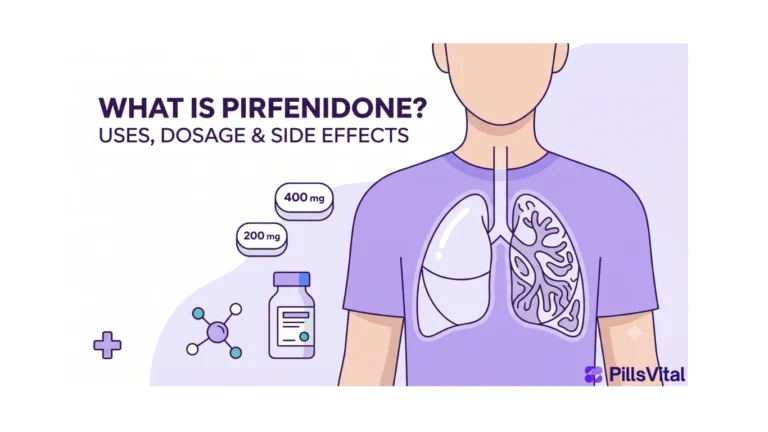
Pirfenidone is a prescription antifibrotic medicine used primarily to treat idiopathic pulmonary fibrosis (IPF), a chronic lung disease that causes progressive scarring of lung tissue. By slowing processes involved in fibrosis, pirfenidone may help slow the decline in lung function in people with IPF. Idiopathic pulmonary fibrosis is one example of a long-term health condition. Learn more about chronic diseases, their types, causes, symptoms, and prevention.
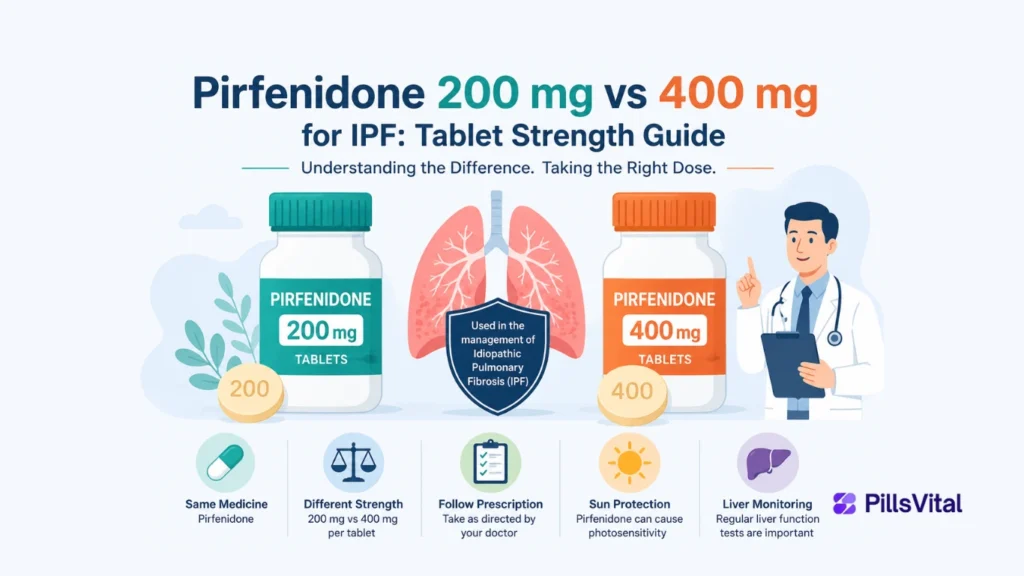
Pirfenidone is available under several brand names and in different tablet strengths. Pirfenex 200 mg Tablet and Pirfenex 400 mg Tablet contain pirfenidone and are prescription medicines used according to a doctor’s treatment plan.
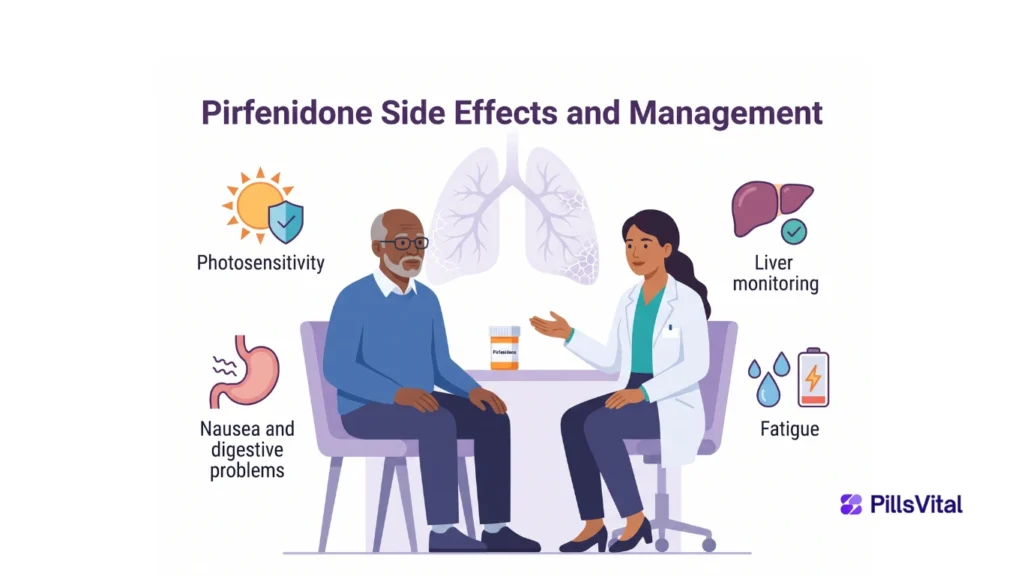
Because pirfenidone can affect the liver and may cause photosensitivity and gastrointestinal side effects, treatment generally requires medical supervision and appropriate monitoring.
Important: This article is for educational purposes and does not replace a doctor’s diagnosis or prescription. Do not start, stop, or change your pirfenidone dose without medical advice.
What Is Pirfenidone?
Pirfenidone is an antifibrotic medication used to treat idiopathic pulmonary fibrosis.
Idiopathic pulmonary fibrosis is a chronic condition in which lung tissue becomes progressively scarred and stiff. As fibrosis develops, the lungs may become less able to transfer oxygen efficiently into the bloodstream, which can lead to symptoms such as persistent dry cough and shortness of breath.
Pirfenidone works by reducing processes involved in the development and progression of fibrosis. It does not remove existing lung scarring or cure IPF, but treatment can help slow disease progression.
Pirfenidone is approved for the treatment of IPF in several countries, including the United States. U.S. prescribing information identifies pirfenidone as a treatment for idiopathic pulmonary fibrosis. For detailed prescribing information, dosing recommendations, warnings, and contraindications, refer to the official U.S. prescribing information for pirfenidone.
What Is Pirfenex?
Pirfenex is a brand of pirfenidone.
The products available in different markets can vary in strength and formulation. Your Pirfenex 200 mg Tablet and Pirfenex 400 mg Tablet contain pirfenidone.
The strength printed on the package indicates the amount of pirfenidone in each tablet. However, the tablet strength does not mean that patients should independently calculate their daily dose.
Pirfenidone treatment is normally started and adjusted according to the prescribing instructions provided by a healthcare professional.
Pirfenex 200 mg Tablet
The Pirfenex 200 mg Tablet contains 200 mg of pirfenidone per tablet.
A doctor may prescribe a specific number of tablets at particular times of the day depending on the patient’s treatment plan, tolerability, other medicines, and the formulation being used.
Pirfenex 400 mg Tablet
The Pirfenex 400 mg Tablet contains 400 mg of pirfenidone per tablet.
The 400 mg strength should not automatically be substituted for another pirfenidone formulation because dosing schedules and available tablet strengths can differ between products and countries.
Always follow the strength and dosing instructions on your prescription.
What Is Pirfenidone Used For?
The main established use of pirfenidone is the treatment of idiopathic pulmonary fibrosis (IPF). Idiopathic pulmonary fibrosis is a chronic condition that requires long-term medical management. You can also learn more about chronic diseases and how they are managed
1. Idiopathic Pulmonary Fibrosis
IPF is a chronic, progressive lung disease characterized by scarring and thickening of lung tissue.
Common symptoms can include:
- Persistent dry cough
- Shortness of breath, especially during activity
- Reduced exercise tolerance
- Fatigue
- Unexplained weight loss in some people
- Reduced oxygen levels as the disease progresses
Pirfenidone is an antifibrotic treatment intended to slow the progression of IPF rather than reverse established lung scarring.
Does Pirfenidone Cure Pulmonary Fibrosis?
No.
Pirfenidone does not cure idiopathic pulmonary fibrosis and does not restore already scarred lung tissue to normal.
Its purpose is to help slow disease progression and preserve lung function for as long as possible.
Treatment decisions should be individualized by a pulmonologist or other qualified healthcare professional.
How Does Pirfenidone Work?
The exact mechanism of pirfenidone is not completely understood.
However, research indicates that pirfenidone has antifibrotic and anti-inflammatory effects that may interfere with biological processes involved in the development of fibrosis.
In IPF, excessive scar tissue gradually replaces healthy lung tissue.
Pirfenidone is believed to reduce signaling and cellular processes associated with fibrosis, potentially slowing the progression of lung scarring.
In simple terms:
IPF → progressive lung scarring → reduced lung function
Pirfenidone works to help:
Slow fibrosis → slow decline in lung function
It is therefore considered a disease-modifying treatment, rather than a medicine that simply relieves symptoms.
Pirfenidone Dosage
Pirfenidone dosage must be individualized and prescribed by a healthcare professional. Pirfenidone is available in different tablet strengths, including Pirfenex 200 mg Tablet and Pirfenex 400 mg Tablet. The appropriate strength and dosing schedule depend on the individual prescription and the specific product.
For the U.S.-approved pirfenidone tablet regimen, treatment is gradually increased over the first 14 days to improve tolerability.
The prescribing information specifies:
| Treatment period | Standard U.S. regimen |
|---|---|
| Days 1–7 | 267 mg three times daily |
| Days 8–14 | 534 mg three times daily |
| Day 15 onward | 801 mg three times daily |
| Maintenance total | 2,403 mg/day |
The recommended maintenance dose is 801 mg three times daily, and doses should be taken with food. Doses above 2,403 mg/day are not recommended in the U.S. labeling.
Important note about Pirfenex 200 mg and 400 mg
The above regimen should not be used as a self-dosing instruction for Pirfenex 200 mg or 400 mg tablets.
Different pirfenidone products may have different tablet strengths and approved dosing instructions. Your doctor or pharmacist should determine exactly how many tablets you should take.
Do not calculate the dose yourself simply by multiplying or dividing tablet strengths.
How Should Pirfenidone Be Taken?
Follow your prescription and the product information supplied with your specific medicine.
For the U.S. tablet formulation:
- Pirfenidone is taken with food.
- Doses should be taken at approximately the same times each day.
- Tablets should be taken according to the prescribed schedule.
- Do not take extra tablets to compensate for a missed dose.
- Do not exceed the prescribed daily dose.
Taking pirfenidone with food may also help reduce some gastrointestinal side effects.
What If You Miss a Dose of Pirfenidone?
If you miss a dose, follow the instructions provided by your doctor or the medication’s prescribing information.
Do not take two doses at the same time to make up for a missed dose.
According to U.S. prescribing information, patients who interrupt treatment for 14 days or longer should generally restart the initial 2-week titration schedule. For interruptions of less than 14 days, the previous dose may be resumed according to the prescribing information.
If you have missed several doses, contact your healthcare professional before restarting at your usual dose.
Pirfenidone Side Effects
Like all medicines, pirfenidone can cause side effects.
Some of the commonly reported adverse effects include:
- Nausea
- Diarrhea
- Indigestion
- Stomach discomfort or abdominal pain
- Vomiting
- Loss of appetite
- Fatigue
- Headache
- Dizziness
- Skin rash
- Photosensitivity reactions
- Increased liver enzymes
Gastrointestinal problems and skin-related reactions are among the important adverse effects associated with pirfenidone.
Not everyone experiences these effects, and their severity can vary.
Pirfenidone and Sun Sensitivity
One important side effect of pirfenidone is photosensitivity.
This means your skin may become more sensitive to sunlight or ultraviolet light.
People taking pirfenidone are generally advised to:
- Limit unnecessary exposure to sunlight.
- Use broad-spectrum sunscreen.
- Wear protective clothing.
- Avoid tanning beds and sunlamps.
- Contact their healthcare professional if a significant rash or severe sun reaction develops.
The prescribing information specifically warns about photosensitivity and rash and recommends sun protection during treatment.
Can Pirfenidone Affect the Liver?
Yes.
Pirfenidone can cause increases in liver enzymes and, rarely, serious drug-induced liver injury.
For this reason, liver function testing is important before and during treatment.
The prescribing information recommends liver testing before starting treatment and monitoring during therapy.
Contact your healthcare professional promptly if you develop symptoms that could indicate liver problems, such as:
- Yellowing of the skin or eyes
- Dark urine
- Unusual or persistent nausea
- Severe fatigue
- Loss of appetite
- Pain in the upper right abdomen
Do not ignore these symptoms.
Who Should Be Careful With Pirfenidone?
Pirfenidone may not be appropriate for everyone.
Tell your healthcare professional if you have:
- Liver disease
- Kidney problems
- A history of severe medication reactions
- A history of significant photosensitivity
- Other chronic medical conditions
- A history of smoking
- Pregnancy or plans to become pregnant
- Breastfeeding
Your doctor may need to adjust treatment or monitor you more closely depending on your medical history.
Pirfenidone Drug Interactions
Pirfenidone can interact with certain medicines. For detailed information about contraindications, warnings, dosage adjustments, and drug interactions, review the FDA-approved prescribing information for pirfenidone.
One particularly important interaction involves medicines that affect the CYP1A2 enzyme pathway.
For example, fluvoxamine can increase pirfenidone exposure, and high-dose ciprofloxacin can also increase pirfenidone concentrations.
Patients should tell their doctor and pharmacist about all medicines they use, including:
- Prescription medicines
- Over-the-counter medicines
- Vitamins
- Herbal products
- Dietary supplements
The Pulmonary Fibrosis Foundation specifically notes interactions involving fluvoxamine and high-dose ciprofloxacin. Patients taking pirfenidone should discuss all prescription medicines, over-the-counter medicines, vitamins, and supplements with their healthcare professional. The Pulmonary Fibrosis Foundation’s pirfenidone information provides additional patient-focused information about treatment and precautions.
Do not start a new medicine or supplement without checking whether it is compatible with your pirfenidone treatment.
Pirfenidone and Smoking
Smoking can affect pirfenidone exposure.
Smoking may lower the amount of pirfenidone in the body and potentially reduce its effectiveness.
If you smoke, tell your doctor. For additional patient education about pirfenidone and pulmonary fibrosis, see the Pulmonary Fibrosis Foundation’s educational resources
Stopping smoking is also an important part of managing chronic lung disease and protecting remaining lung function. The Pulmonary Fibrosis Foundation advises patients taking pirfenidone to discuss smoking cessation with their healthcare professional.
Pirfenidone Monitoring
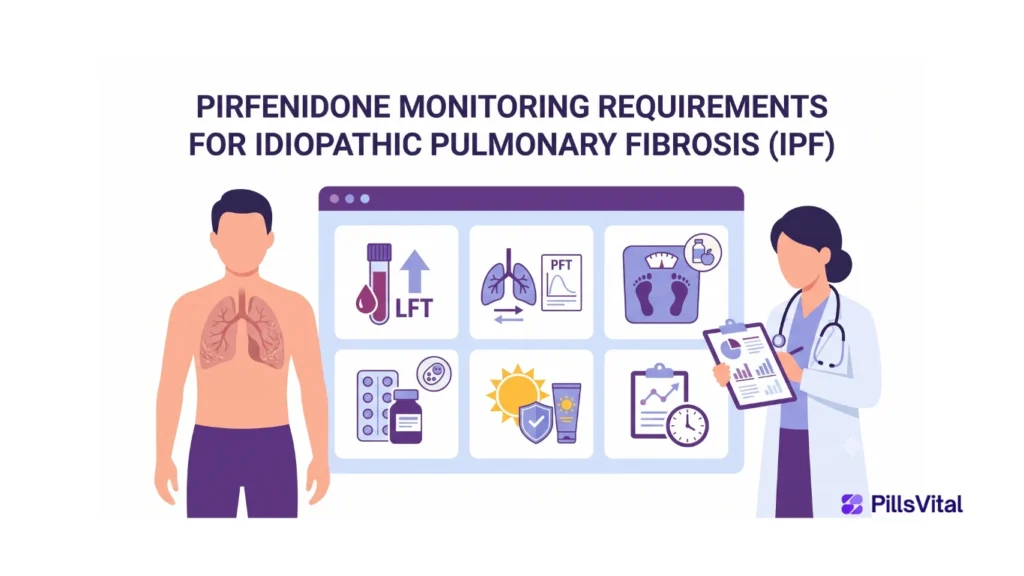
People taking pirfenidone may require regular medical monitoring.
Your doctor may monitor:
Liver function
Blood tests can check markers such as:
- ALT
- AST
- Bilirubin
Lung function
Depending on your condition, your pulmonologist may monitor:
- Pulmonary function tests
- Forced vital capacity (FVC)
- Oxygen saturation
- Exercise tolerance
- Symptoms and disease progression
Side effects
Your healthcare team may also ask about:
- Nausea
- Diarrhea
- Appetite changes
- Skin reactions
- Sun sensitivity
- Fatigue
- Other new symptoms
Regular follow-up is important because treatment may need adjustment if significant adverse effects develop.
Pirfenidone vs Nintedanib
Pirfenidone and nintedanib are two antifibrotic medicines used in the management of idiopathic pulmonary fibrosis.
They are not the same medicine and have different mechanisms, dosing schedules, interactions, and side-effect profiles.
| Feature | Pirfenidone | Nintedanib |
| Drug class | Antifibrotic | Antifibrotic |
| Main established use | Idiopathic pulmonary fibrosis | Idiopathic pulmonary fibrosis |
| Administration | Oral | Oral |
| Common concerns | GI effects, photosensitivity, liver enzyme changes | GI effects, liver enzyme changes |
| Monitoring | Liver function and tolerability | Liver function and tolerability |
| Prescription required | Yes | Yes |
The choice between antifibrotic treatments should be made with a pulmonologist based on the patient’s diagnosis, other medical conditions, medications, side-effect risks, and treatment goals.
Is Pirfenidone a Steroid?
No.
Pirfenidone is not a corticosteroid.
It belongs to a class of medicines known as antifibrotic agents.
Its purpose is to modify processes associated with fibrosis rather than provide the same type of anti-inflammatory effects as corticosteroids.
Is Pirfenidone an Antibiotic?
No.
Pirfenidone is not an antibiotic and does not treat bacterial infections.
It is an antifibrotic medicine primarily used for idiopathic pulmonary fibrosis.
Can Pirfenidone Reverse Lung Scarring?
Pirfenidone is not considered a treatment that reverses established lung scarring.
Its role is to help slow the progression of fibrosis in people with IPF.
Existing scar tissue generally cannot simply be removed by taking an antifibrotic medication.
Because IPF can progress differently from person to person, regular assessment by a pulmonary specialist is important.
When Should You Contact a Doctor?
Seek medical advice if you develop:
- Severe or persistent nausea or vomiting
- Significant diarrhea
- Severe skin rash
- Severe sunburn-like reaction
- Yellow skin or eyes
- Dark urine
- Unusual bleeding or bruising
- Significant weakness or fatigue
- New or worsening breathing difficulty
- Symptoms of an allergic reaction
Severe skin reactions and serious liver injury are uncommon but important potential risks associated with pirfenidone and require prompt medical attention.
Frequently Asked Questions About Pirfenidone
What is pirfenidone used for?
Pirfenidone is primarily used to treat idiopathic pulmonary fibrosis (IPF). It is an antifibrotic medicine that can help slow the progression of the disease.
What is Pirfenex 200 mg used for?
Pirfenex 200 mg contains pirfenidone. It is used according to a doctor’s prescription for conditions for which that specific pirfenidone formulation is approved, most importantly IPF where indicated.
What is Pirfenex 400 mg used for?
Pirfenex 400 mg contains pirfenidone. The appropriate dose and schedule depend on the prescription and the specific product information applicable to the patient.
Can I take Pirfenex without a prescription?
No. Pirfenidone is a prescription medicine and should be used under medical supervision.
Does pirfenidone cure pulmonary fibrosis?
No. Pirfenidone does not cure pulmonary fibrosis or restore established scar tissue. Its primary role in IPF is to slow disease progression.
Should pirfenidone be taken with food?
For the U.S. pirfenidone tablet formulation, doses should be taken with food. Follow the instructions for your specific product.
Can pirfenidone cause liver problems?
Yes. Pirfenidone can cause elevated liver enzymes and, rarely, serious drug-induced liver injury. Liver function should be assessed before and during treatment.
Can pirfenidone make your skin sensitive to sunlight?
Yes. Photosensitivity and rash are recognized adverse effects. Sun protection is recommended during treatment.
What happens if I stop pirfenidone?
Do not stop treatment without speaking with your healthcare professional. If treatment is interrupted for an extended period, the dose may need to be restarted gradually rather than immediately returning to the previous dose.
Can pirfenidone be taken with other medicines?
Some medicines can interact with pirfenidone. Tell your doctor about every prescription medicine, over-the-counter medicine, vitamin, and supplement you use.
Key Takeaways
Pirfenidone is an antifibrotic prescription medicine primarily used for idiopathic pulmonary fibrosis.
The most important points are:
- Pirfenidone is used to help slow the progression of IPF.
- Pirfenex 200 mg and Pirfenex 400 mg contain pirfenidone.
- Pirfenidone does not cure pulmonary fibrosis.
- Dosage should be individualized and prescribed by a healthcare professional.
- Standard U.S. pirfenidone therapy uses gradual dose titration before reaching the maintenance dose.
- Taking pirfenidone with food is recommended for the U.S. tablet formulation.
- Common side effects include gastrointestinal symptoms, fatigue, rash, and photosensitivity.
- Liver function should be monitored during treatment.
- Sun protection is important.
- Pirfenidone has clinically important drug interactions.
- Never change your dose or stop treatment without medical advice.
Related Health Resources
-
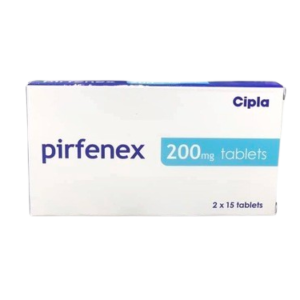
Pirfenex 200 mg Tablet
$70.00 – $190.00Price range: $70.00 through $190.00 This product has multiple variants. The options may be chosen on the product page -
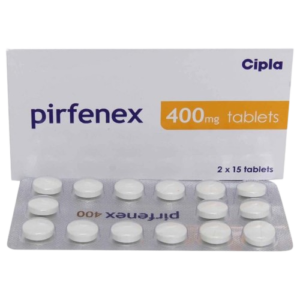
Pirfenex 400 mg Tablet
$95.00 – $285.00Price range: $95.00 through $285.00 This product has multiple variants. The options may be chosen on the product page
💜 Related Guides About Pirfenidone

Dr. Emily Carter specializes in evidence-based health education and wellness content. She focuses on simplifying complex medical topics related to cancer awareness, nutrition, preventive healthcare, skincare, and lifestyle wellness for readers worldwide.
This content is reviewed for medical accuracy, clarity, and alignment with current public health research. The article is intended for educational and informational purposes only and should not replace professional medical advice, diagnosis, or treatment.